

 vi
vi 27-Jun-2026
 45,695
 If you’ve ever gone for a refractive surgery consultation and been told, “Your cornea is too thin for LASIK,” don’t lose hope just yet. There is another option that doesn’t require reshaping the cornea but can still provide clear vision without glasses: Phakic ICL (Implantable Collamer Lens) surgery.
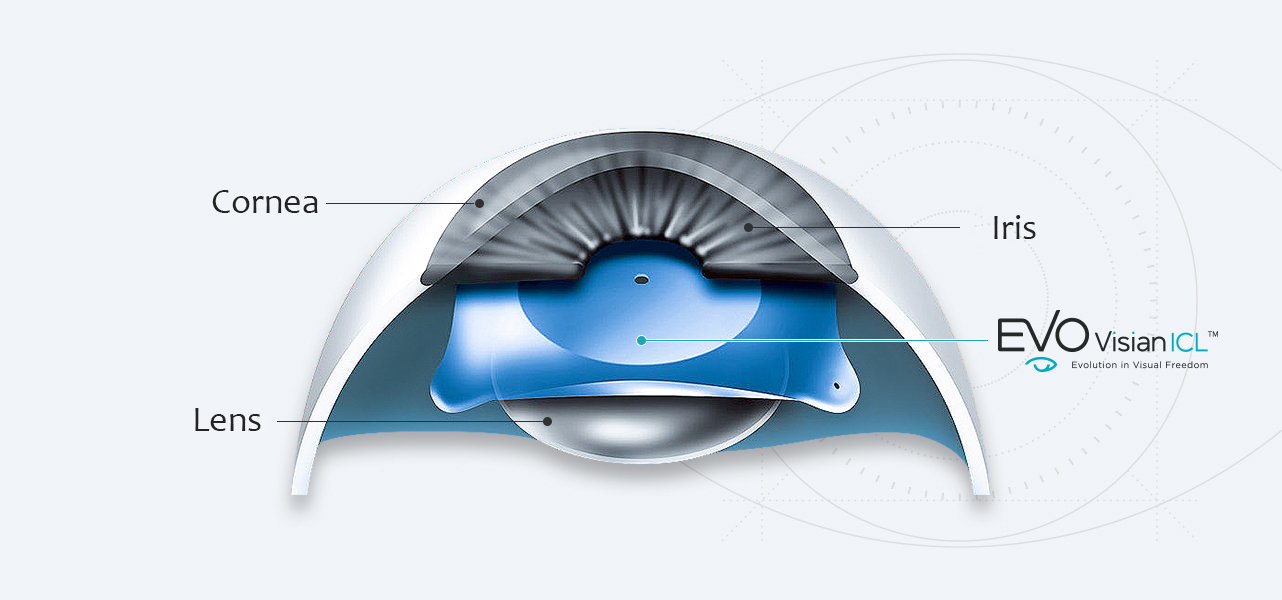
Phakic ICL implantable lens for high myopia and thin corneas
What Is a Phakic ICL?
ICL stands for Implantable Collamer Lens. It is an ultra-thin, ultra-small implantable intraocular lens made from Collamer—a unique biomaterial that combines collagen with a biocompatible polymer, offering excellent compatibility with the human body.
Unlike LASIK or SMILE, which use lasers to reshape and thin the cornea to correct refractive errors, Phakic ICL does not alter the cornea at all. Instead, the surgeon inserts the lens through a very small incision (approximately 2–3 mm) and positions it behind the iris and in front of your natural crystalline lens. Essentially, this procedure complements your natural lens, creating a dual optical system that corrects refractive errors and functions like a pair of prescription glasses placed inside the eye.
The term “Phakic” means that the eye’s natural crystalline lens remains intact (unlike cataract or refractive lens replacement surgery, where the natural lens is removed).
History of Phakic ICL
Phakic ICL is not a new technology. It has been approved in Europe since 1997 and received approval from the U.S. Food and Drug Administration (FDA) in 2005. The earliest generation of ICLs was positioned in front of the iris. Although effective in improving vision, those lenses were associated with nighttime glare and could sometimes be visible from the outside.
As a result, the second-generation design—positioned deeper inside the eye and hidden behind the iris—quickly became the standard of care. Modern models such as Visian ICL and EVO+ Visian ICL feature a central port that allows natural aqueous humor circulation, reducing the risk of elevated intraocular pressure.
Today, this technology is FDA-approved for safety and effectiveness and is widely used in more than 70 countries, with millions of successful procedures performed worldwide.
Who Is a Good Candidate for Phakic ICL?
Not everyone is eligible for Phakic ICL implantation. This procedure is typically recommended for patients who are not suitable candidates for LASIK or SMILE, including those who meet the following criteria:
- Adults between 18 and approximately 40–45 years of age
- Stable refractive error (myopia, astigmatism, or hyperopia) with little or no change during the previous 6–12 months
- High refractive errors, including myopia up to approximately 16–18 diopters, astigmatism up to around 6 diopters, and hyperopia up to approximately 10 diopters
- Thin or abnormally shaped corneas (such as keratoconus), making laser vision correction unsafe
- No serious eye diseases such as cataracts, glaucoma, keratitis, or retinal disorders
- No uncontrolled systemic conditions affecting hormonal or immune function, such as uncontrolled diabetes, lupus, or rheumatoid arthritis
- Not pregnant or breastfeeding, as hormonal changes during these periods may temporarily affect refractive stability
Who is a good candidate for Phakic ICL?
Before deciding on the procedure, your ophthalmologist will carefully measure several important eye parameters, including anterior chamber depth, pupil size, and corneal endothelial cell density. These measurements are used to custom-order an ICL specifically designed for your eyes, as each Phakic ICL is individually manufactured rather than being a standard, one-size-fits-all lens like a contact lens.
How is the surgical procedure performed?
One of the things that gives many people greater peace of mind when researching Phakic ICL is the very short surgery time. Each procedure usually takes only about 5-7 minutes per eye, performed under local anesthesia (numbing eye drops, no general anesthesia required). The surgeon will create a tiny incision at the edge of the cornea, roll up the lens, insert it into the eye through this incision, and then unfold and properly position the lens between the iris and the natural crystalline lens.
Because the incision is extremely small, stitches are generally not required, and the wound heals naturally over time. After the surgery, patients can usually go home on the same day, and their vision improves significantly after just about 24 hours, although the eyes need a few days to a few weeks to fully stabilize.
Outstanding Advantages
No impact on the cornea. This is the biggest difference compared to LASIK or SMILE. The corneal structure and thickness are kept completely intact, so individuals with thin corneas or a risk of corneal ectasia can still undergo the procedure safely.
Minimized dry eye symptoms. One of the common nuisances after laser surgery is dry eyes, caused by the nerves and tear glands on the cornea being affected. Since Phakic ICL does not interfere with the corneal surface, post-operative dry eye occurs significantly less often.
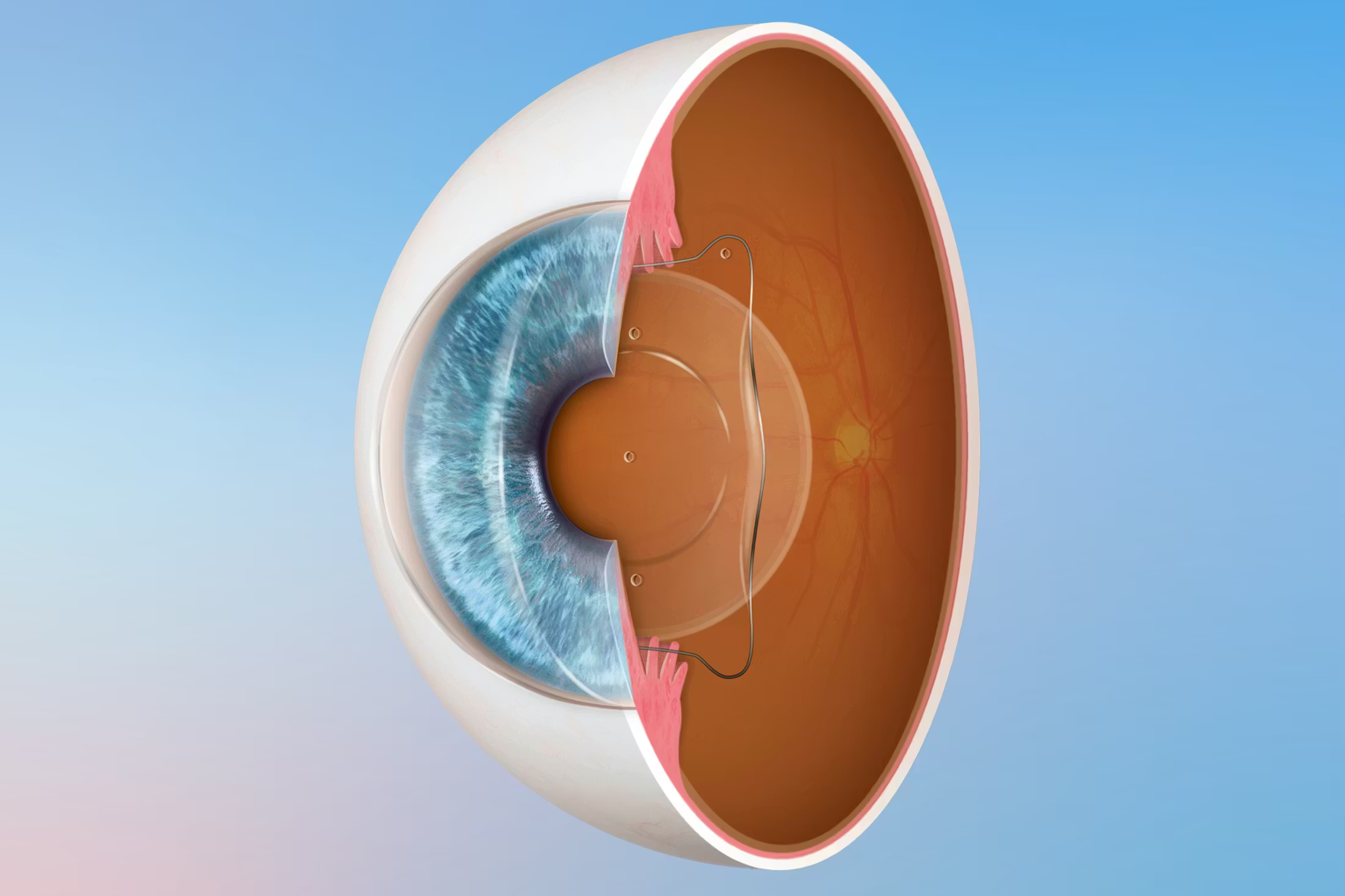
Outstanding advantages of Phakic ICL in the treatment of refractive errors
High visual quality. Many people describe their post-surgery vision as “full HD” – providing sharp images during both day and night, with minimal halos or glare thanks to the advanced optical design of the lens.
Removable or replaceable. Unlike corneal reshaping—which is an irreversible change—the ICL lens can be removed or replaced with another lens if necessary, such as when there is a significant shift in refractive error or if cataract surgery is required in the future.
UV protection. The Collamer material used to make the lens features built-in UV-blocking capabilities, contributing an extra layer of protection for the eyes.
How does it compare to LASIK and SMILE?
While LASIK and SMILE “shave off” a portion of the corneal tissue to alter the refraction of light passing through, Phakic ICL leaves the cornea untouched and adds a supportive lens instead. Therefore, these two groups of methods do not directly compete but rather complement each other:
- LASIK/SMILE is suitable for moderate nearsightedness and sufficient corneal thickness.
- Phakic ICL is suitable for very high nearsightedness, severe astigmatism, or thin/abnormal corneas—cases where laser treatment is unsafe or insufficient for correction.
In terms of cost, Phakic ICL is usually significantly higher than LASIK or SMILE, partly because the lenses are custom-manufactured for each individual eye and the pre-operative screening process requires more comprehensive testing steps.
Conclusion
Phakic ICL is a remarkable advancement in the field of refractive surgery, opening up the opportunity to go glasses-free for many people who were previously “turned away” by laser methods due to thin corneas or excessively high nearsightedness. However, this is still an intraocular procedure, so the decision to undergo it should be based on a thorough examination and a frank discussion with an ophthalmologist about your specific condition, rather than relying solely on online references. If you are considering it, look for reputable eye care centers equipped with complete pre-operative measurement tools and a team of doctors experienced in the Phakic technique to ensure optimal safety and effectiveness for your eyes.

 14/10/2026











 0916.741.763
 Appointment