

 vi
vi 04-Oct-2026
 380
380 Eye allergy is a very common condition that affects people of all ages. Although it rarely threatens vision, it causes considerable discomfort such as itching, redness and watery eyes, and can interfere with daily life. In the United States, an estimated 30% of adults and 40% of children experience allergy-related problems involving the eyes, eyelids and tear glands. Understanding the causes, recognizing symptoms early and knowing how to prevent them will help you manage this condition more effectively.

Eye allergy: Causes, symptoms and effective prevention
What is eye allergy?
Eye allergy occurs when the eyes come into contact with irritants known as allergens. In response, the immune system mistakes these normally harmless substances for invaders and releases histamine to fight them. This reaction causes symptoms such as itching, redness and burning in one or both eyes.
Eye allergy often occurs together with nasal allergy, with symptoms such as an itchy nose, nasal congestion and sneezing. The condition is not contagious and is more common in spring, summer and autumn.
Eye allergy is divided into two types:
- Seasonal allergy: occurs at certain times of the year, usually from early spring through summer and into autumn. The main triggers are pollen from trees and grasses and mold spores.
- Perennial allergy: occurs year-round and is caused by triggers such as dust mites, pet dander, perfume, smoke, cosmetics and certain medications.
Causes of eye allergy
Pollen
Pollen is a common cause, especially during the flowering season. The immune system identifies pollen as a foreign substance that must be eliminated, while the components of pollen (protein, cellulose, pentose, dextrin, phosphorus) readily stimulate an immune response. Pollen from grasses and wind-pollinated plants is more likely to cause allergies than pollen from other flowering plants. Common symptoms include itching, redness and watery eyes.
Dust mites
Dust mites are microscopic organisms that live in beds, carpets and other household items. They do not bite or live on the human body, yet they can still trigger allergies ranging from mild to severe. With a dust mite allergy, the eyes are often red, itchy and watery. Severe cases may also involve sneezing, coughing, nasal congestion or persistent asthma.
Smoke and dust
Cigarette smoke and polluted environments can both trigger allergic reactions. A stinging sensation and watery eyes are typical signs when the eyes are exposed to smoke.
Perfume
Perfume contains many fragrances and chemicals, some of which are not clearly listed on the packaging. An estimated 2% of the world’s population is allergic to fragrances in perfume. Symptoms include red eyes, itching, watery eyes, headache and nasal congestion, lasting from a few minutes to several hours and becoming worse with prolonged exposure.
Pet dander
Pet fur itself does not cause allergies, but it can carry pollen, dust mites and mold. The proteins in pet dander, saliva and urine, most commonly from dogs and cats, are the main culprits. Symptoms include swelling, redness, itchy eyes, a runny nose and skin rash, usually appearing 15-30 minutes after exposure, or after a few days in mild allergies.
Cleaning chemicals and cosmetics
Hair dye, cosmetics and personal care products can cause an overreaction of the immune system. Symptoms such as redness, swollen eyes, itching and burning, or skin blistering usually appear 24-48 hours after exposure.
Symptoms of eye allergy
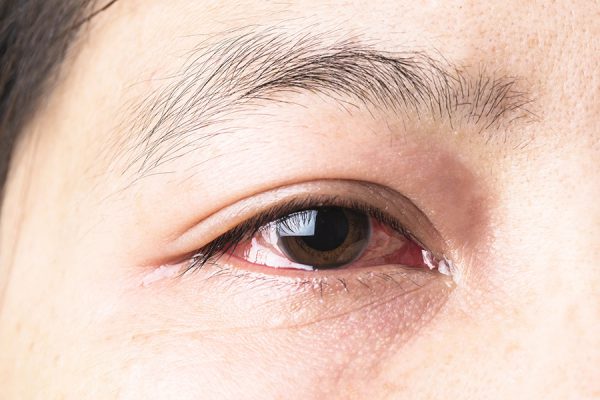
Symptoms of eye allergy
- Red eyes: caused by the dilation of tiny blood vessels between the sclera and the conjunctiva when exposed to smoke, dust or chemicals.
- Watery eyes: the body releases histamine to deal with harmful agents, resulting in tearing along with itching.
- Sensitivity to light: sufferers have to squint or close their eyes in sunlight or bright lamps. This is a symptom of allergy or infection, not a separate eye disease.
- Itchy eyes: not harmful in itself, but if you rub your eyes frequently it can scratch the cornea, even leave scars and seriously impair vision.
- Burning: occurs when the eyes are exposed to cigarette smoke, dust mites, pollen or chemicals such as shampoo, pool chlorine, sunscreen and soap.
- Swollen eyelids: caused by fluid buildup or inflammation in the thin tissues around the eyes, often accompanied by itching, redness and soreness.
- Gritty sensation: usually caused by dust or foreign particles, along with watery eyes and itching. Accompanying signs may include discharge, blurred vision, stinging or eye pain.
Symptoms may occur in one or both eyes, along with a runny nose and sneezing. To determine whether you truly have an eye allergy, you should see an eye specialist.
Diagnosing eye allergy
The doctor will take your medical history and your family’s history, then perform a clinical examination. Ophthalmologists usually use a slit-lamp microscope to examine the allergic condition. In severe cases or when symptoms are unclear, the doctor may order a test for eosinophils to make an accurate diagnosis.
Treating eye allergy
Avoid contact with allergens
This is the most important step:
- Close windows facing the garden and turn on the air conditioner during pollen season. Keep air conditioning units clean and do not place fans next to windows, as they can draw pollen into the house.
- Wear sunglasses when outdoors.
- Keep indoor humidity at 30-50% and clean areas prone to mold such as basements, bathrooms and kitchens.
- Regularly clean beds, pillows, mattresses and carpets to limit dust mites.
- Keep pets out of the bedroom, choose wood or tile flooring instead of carpet, and wash your hands with soap after touching pets.
- Do not rub your eyes.
Use medication
- Artificial tears: help flush out allergens, relieve dryness and add moisture. They can be bought over the counter without a prescription and used up to 6 times a day.
- Oral antihistamines: relieve itching and burning, but may dry out the eyes or worsen symptoms in some people.
- Mast cell stabilizer eye drops: reduce itching, redness, watering and burning, used about 1-2 times a day.
- Corticosteroid eye drops: for severe, long-lasting allergies. Use only as prescribed by an eye specialist to avoid serious side effects.
- Immunotherapy (allergy shots): used when eye drops and other measures are not effective. The doctor injects a small amount of the allergen so that the body gradually builds up immunity.
How to prevent eye allergy
- Avoid rubbing your eyes: rubbing can trigger mast cells to release more histamine, making the allergy harder to improve. Instead, you can apply a cold compress to relieve itching and burning.
- Keep your living space clean and well ventilated: vacuum thoroughly in every corner and control humidity to limit mold.
- Wash your hands regularly: dry them with disposable paper towels and avoid touching your eyes.
- Keep pets away from the bed: do not let pets get on beds, carpets or upholstered chairs; wash your hands and launder your clothes thoroughly after contact with them.
Conclusion
Although eye allergies rarely lead to serious complications, they can significantly affect quality of life. Identifying and avoiding allergens, maintaining a clean living environment, and refraining from rubbing the eyes are simple yet effective preventive measures. If symptoms persist or worsen, consult an ophthalmologist for timely diagnosis and appropriate treatment.

 14/10/2026





 0916.741.763
 Appointment