

 vi
 19-Nov-2026
 760
At eye clinics, parents often ask: “Was my child born with astigmatism, or did it develop from studying too much or spending too much time on a smartphone?” Adults, on the other hand, tend to ask the opposite question: “My vision used to be normal, so why have I suddenly developed astigmatism?” These two questions highlight the key distinction between congenital and acquired astigmatism.

Astigmatism may be present from childhood or develop during adulthood.
What Is Astigmatism?
The cornea is the transparent layer at the front of the eyeball that acts as the eye’s primary focusing lens. A normal cornea has an evenly curved surface, similar to a round ball. In an eye with astigmatism, the cornea (or sometimes the crystalline lens) has a shape resembling an oval ball, with one meridian more curved than the other. As a result, light entering the eye is refracted unevenly, preventing the image from focusing properly and causing distant objects to appear blurred or distorted.
People with astigmatism often experience blurred or shadowed text, eye strain, headaches after prolonged reading, and reduced vision in low-light conditions. Astigmatism may occur on its own or alongside myopia or hyperopia.
Congenital Astigmatism
Congenital astigmatism is a condition in which a child is born with an unevenly curved cornea. This is the most common form of astigmatism and is usually not associated with any underlying eye disease. Its primary cause is genetic. Children whose parents or close relatives have refractive errors are at greater risk, and a study involving twins in Australia estimated that approximately 60% of astigmatism cases may be associated with genetic factors. Premature or low-birth-weight infants are also more likely to experience abnormalities during eye development. Some children have congenital eye abnormalities, such as congenital ptosis, which can alter the shape of the cornea.

Regular eye examinations help detect astigmatism early in children and reduce the risk of amblyopia caused by uncorrected refractive errors.
The cornea of a child with congenital astigmatism usually has a regular and symmetrical curvature pattern, making the condition relatively easy to measure and correct with glasses. Mild astigmatism is quite common in newborns and may gradually decrease as the eyes develop. However, children with high degrees of astigmatism require close monitoring.
The greatest risk is amblyopia, commonly known as lazy eye. Young children may not yet know how to express that their vision is blurred. If the image received by one eye is consistently unclear, the brain may gradually begin to ignore visual signals from that eye. This condition, known as amblyopia, is more common in children with high refractive errors or significant differences in prescription between the two eyes. Without timely treatment, it can lead to permanent vision impairment.
Therefore, children with a family history of astigmatism should undergo vision screening from infancy. Possible warning signs include frequent squinting, tilting the head when looking at objects, rubbing the eyes regularly, sitting too close to the television, or holding books very close to the face.
Acquired Astigmatism
Acquired astigmatism occurs in individuals whose corneas were previously normal but later underwent changes in shape due to specific factors. The following are some common causes.
Eye injuries and corneal scarring: Impacts during sports, traffic accidents, chemical burns, or foreign objects entering the eye can leave scars on the cornea. Scar tissue may cause uneven contraction of the cornea, altering its natural curvature. Astigmatism caused by corneal scarring is often irregular and difficult to correct with conventional glasses.
Eye surgeries such as cataract surgery, corneal transplantation, and pterygium removal can change the structure of the eye and lead to postoperative astigmatism. Ophthalmologists usually anticipate this possibility and apply techniques to minimize the risk. When postoperative astigmatism occurs, it can often be measured and corrected with glasses or managed through additional treatment.
Keratoconus is a condition in which the cornea gradually becomes thinner and bulges outward into a cone-like shape. The disease typically begins during adolescence or early adulthood, and one of its earliest signs is rapidly increasing astigmatism that requires frequent prescription changes. A case involving a child with nearly 5 diopters of astigmatism examined at Tam Anh General Hospital demonstrates that high astigmatism in children may be associated with keratoconus. Therefore, corneal topography and corneal thickness measurements should be considered for screening.
Other eye conditions, such as diseases affecting the cornea or eyelids (including chalazia or large eyelid tumors pressing against the eyeball), may temporarily or permanently distort the shape of the cornea.
Age-related astigmatism. Over time, the curvature of the cornea changes, which may cause astigmatism to develop or its axis to shift in older adults. Because the degree of astigmatism can fluctuate, eye care professionals recommend regular eye examinations to update prescriptions when necessary.
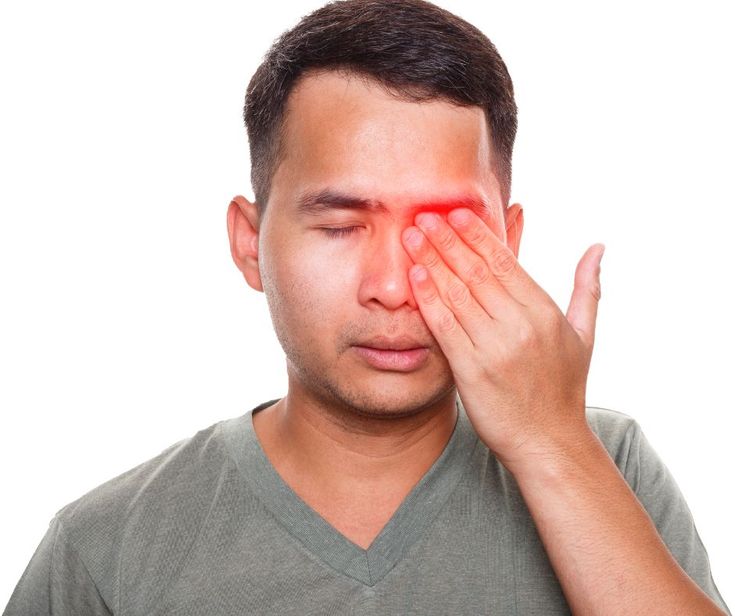
Astigmatism associated with contact lenses and eye rubbing. Improper contact lens use or a prolonged habit of vigorous eye rubbing is considered a risk factor for corneal deformation. People with allergies should address this habit early.
How Can You Distinguish Between Congenital and Acquired Astigmatism?
| Criteria | Congenital Astigmatism | Acquired Astigmatism |
|---|---|---|
| Time of Onset | Present at birth or during early childhood | Develops after a specific event or over time |
| Main Causes | Genetics, premature birth, abnormal eye development | Injuries, scarring, surgery, keratoconus, eye diseases, aging |
| Corneal Shape | Usually regular and symmetrical curvature | May be distorted, asymmetrical, or irregular |
| Progression | Relatively stable, with minor prescription changes | May change rapidly or progressively worsen |
| Correction with Glasses | Usually responds well to glasses | Irregular forms may require specialized contact lenses or additional treatment |
| Key Considerations | Risk of amblyopia in young children | Identifying and treating the underlying cause |

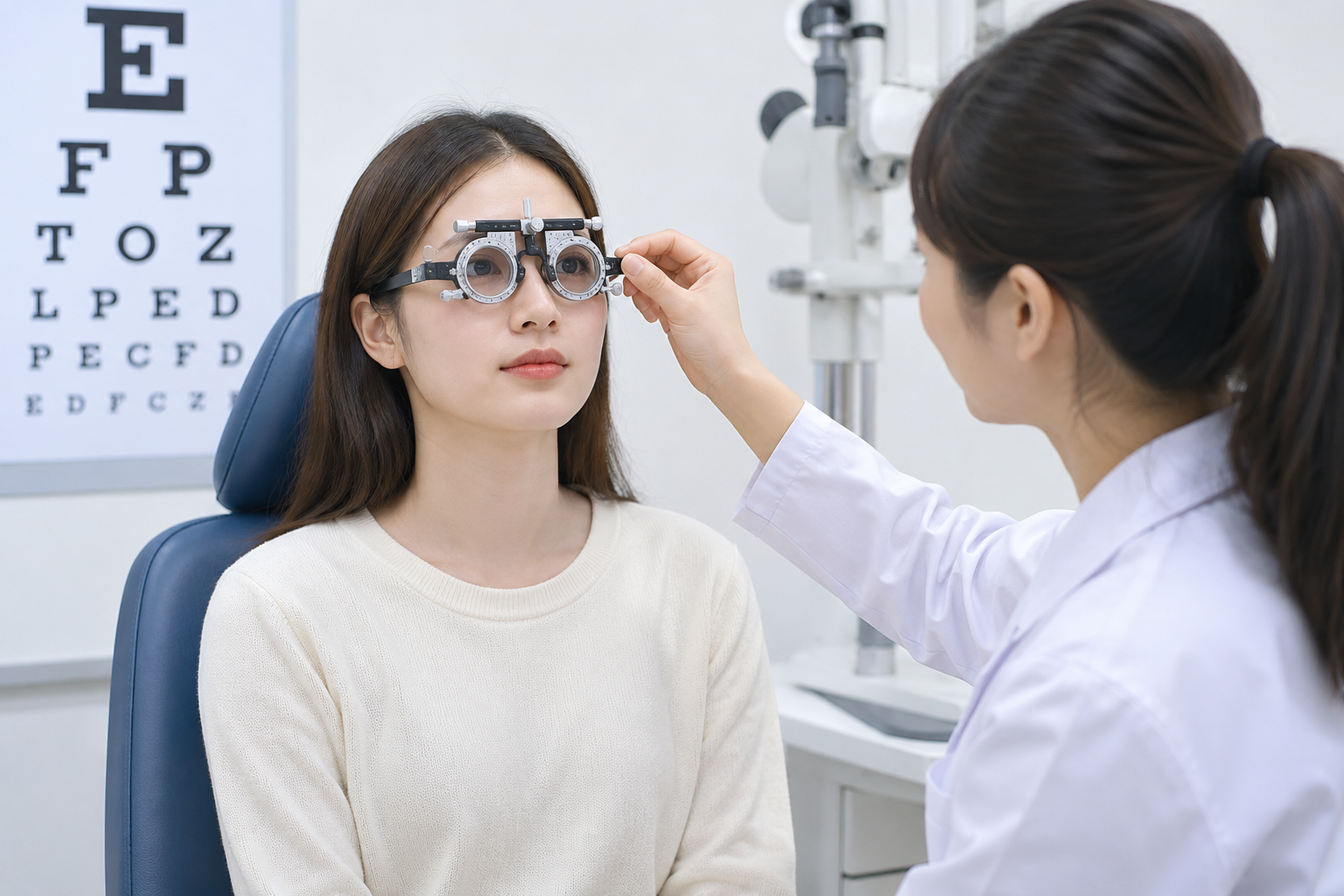
Specialized diagnostic equipment helps ophthalmologists evaluate corneal shape and identify abnormalities associated with astigmatism.
Patients cannot distinguish between the two types based on symptoms alone. Ophthalmologists rely on three main sources of information. The first is medical history: whether astigmatism developed in childhood or after an injury or surgery, and whether any family members have astigmatism. The second is a direct eye examination, including visual acuity testing, automated refraction, and examination of the corneal surface for scarring or signs of deformation. The third is corneal topography, which reveals whether the cornea has a regular or irregular curvature and identifies areas of thinning. This examination is particularly important when astigmatism increases rapidly, as it may be an early sign of keratoconus.
Treatment Options for Astigmatism
Prescription glasses remain the first-line option, as they are safe and suitable for most children with astigmatism. Contact lenses provide a wider field of vision and often offer better correction for irregular astigmatism. Ortho-K, a type of rigid contact lens worn overnight to temporarily reshape the cornea, is used for certain suitable patients. Refractive procedures such as Phakic ICL, LASIK, PRK, or SMILE are options for adults with stable astigmatism and corneas that meet the necessary requirements. For keratoconus, specialized treatment focuses on strengthening the cornea to slow disease progression, while conventional laser refractive surgery is generally unsuitable.
For children with amblyopia, additional vision therapy measures may be prescribed alongside glasses to help both eyes work together more effectively.
How to Prevent Astigmatism
Congenital astigmatism caused by genetic factors cannot be completely prevented. However, maintaining good health during pregnancy, avoiding polluted environments and harmful chemicals, and arranging early eye examinations for children at risk are important preventive measures.
For acquired astigmatism, prevention is much more practical:
- Wear a helmet and protective eyewear when playing sports or working with tools or chemicals.
- Avoid vigorous eye rubbing and treat allergy-related itching promptly.
- Clean and wear contact lenses according to instructions, and avoid sleeping in them unless they are specifically approved for overnight use.
- Have your eyes examined after an injury, even if the initial discomfort seems mild.
- Follow postoperative eye care instructions to support proper corneal healing.
Conclusion
Congenital astigmatism is a refractive error that is present from the beginning of life, primarily associated with genetics and eye development. It requires particular attention in young children because of the risk of amblyopia. Acquired astigmatism develops later and may be related to injuries, surgery, corneal diseases, or aging. A comprehensive eye examination is necessary to identify the underlying cause. Therefore, regular eye examinations remain the safest way to help maintain stable vision.

 19/11/2026








 0916.741.763
 Appointment
