

 vi
vi 29-Apr-2026
 63,555
 Astigmatism testing is a simple way to help you detect vision problems early, right at home. This article will help you better understand astigmatism, its causes, and several simple yet effective methods for checking your vision.
What Is Astigmatism?
Astigmatism is one of the most common refractive errors and can significantly affect visual quality if not detected and corrected promptly.
Normally, the eyeball has a perfectly spherical shape, much like a round ball, allowing light to focus precisely on the retina for clear, sharp vision.
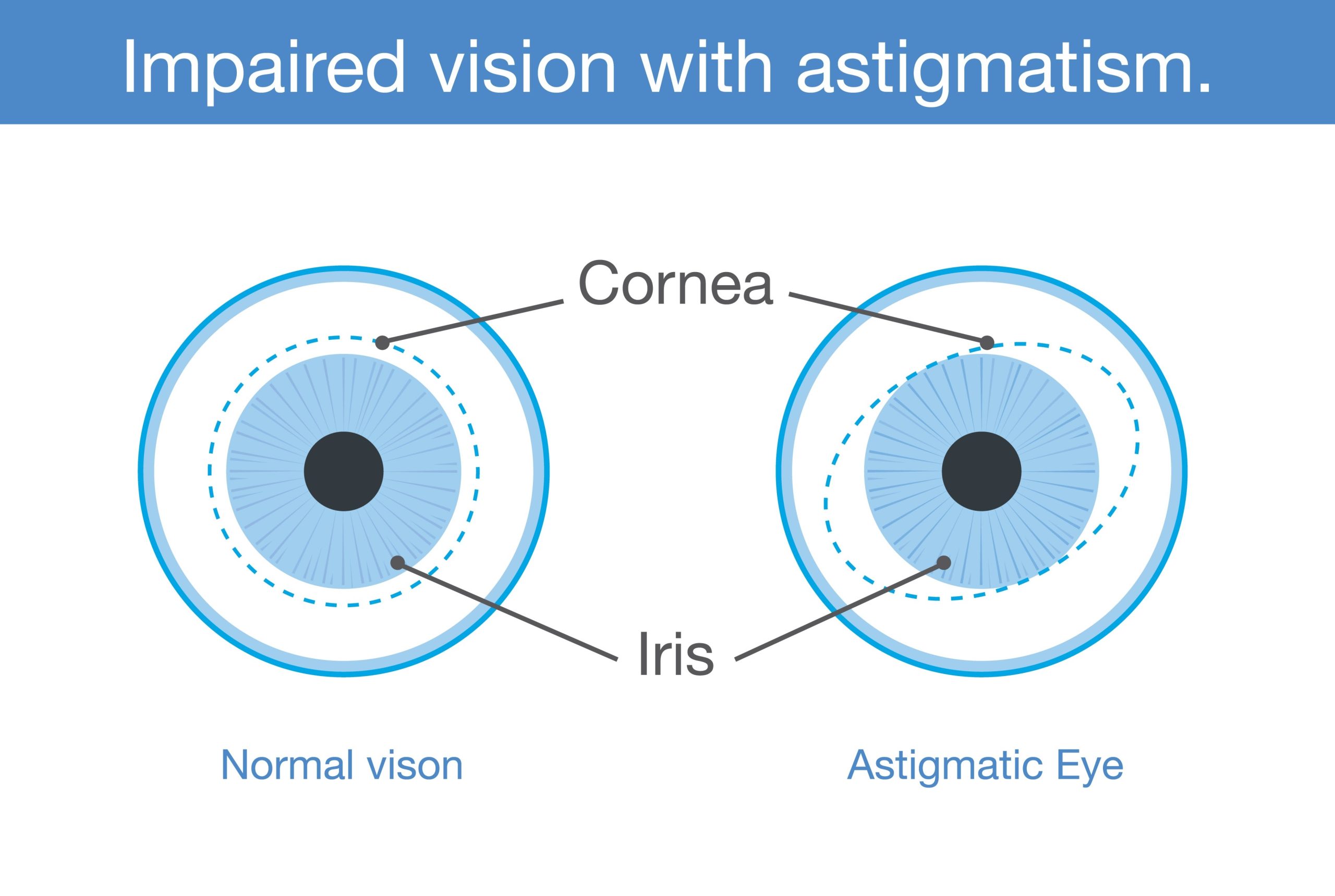
Comparison between an astigmatic eye and a normal eye
Astigmatism occurs when the front surface of the eye, primarily the cornea, becomes irregularly curved or oval-shaped. This uneven curvature causes incoming light rays to refract in multiple directions. As a result, images may appear blurred, distorted, or only partially clear, making it difficult to see objects both near and far.
People with astigmatism often experience challenges in daily life, especially when reading, driving, or working on a computer screen.
Common Degrees of Astigmatism
Based on diopter measurements, astigmatism is classified into the following levels:
- Mild Astigmatism (less than 1.00 diopter): Usually causes few or no noticeable symptoms and has minimal impact on daily activities.
- Moderate Astigmatism (1.00 – 2.00 diopters): May cause eye strain, headaches, and blurred vision, especially when driving at night or using a computer.
- Severe Astigmatism (2.00 – 3.00 diopters): Significantly affects reading ability and facial recognition.
- Very Severe Astigmatism (greater than 3.00 diopters): Carries a high risk of amblyopia, where vision remains blurry even with corrective lenses.
What Causes Astigmatism?
Irregular corneal curvature may result from the following factors:
- Genetics: Having family members with refractive errors increases your risk of developing astigmatism.
- Other Refractive Errors: Severe nearsightedness or farsightedness can place long-term stress on the cornea.
- Eye Injuries: Trauma or accidents can leave corneal scars that alter its natural curvature.
- Surgical Complications: Eye surgeries such as cataract procedures may sometimes affect corneal shape if healing is not optimal.
- Aging: The aging process can reduce tissue elasticity and alter the natural curvature of the eye.
How to Test for Astigmatism at Home
You can perform these three simple tests to assess your vision:
Test 1: Radial Line Chart
Look at an image consisting of straight lines radiating from a central point. If some lines appear darker, sharper, or blurrier than others, this may indicate astigmatism. With normal vision, all lines should appear equally clear.
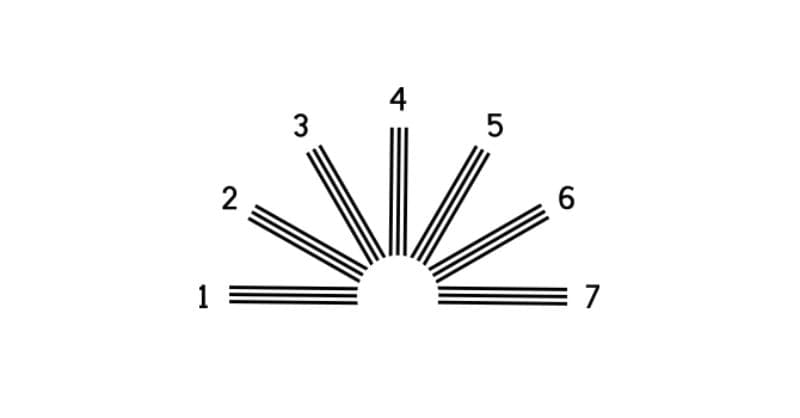
Radial line chart for astigmatism testing
Test 2: Parallel Line Pattern
Look at rows of parallel lines arranged horizontally, vertically, or diagonally. If the lines appear distorted, vary in darkness, or seem unevenly spaced, you may have astigmatism.
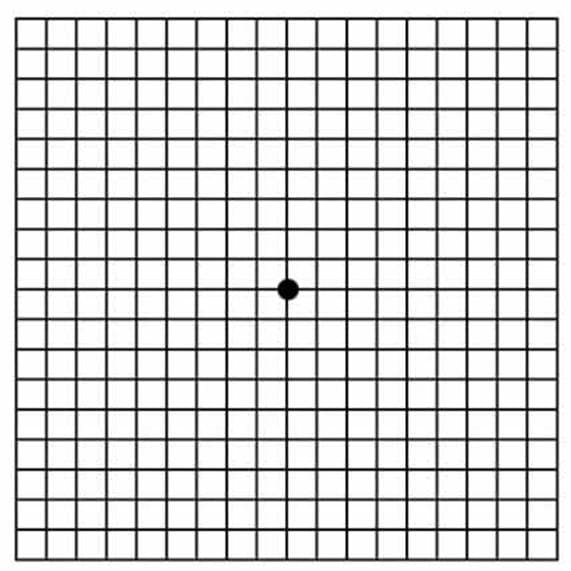
Parallel lines can help identify the degree of astigmatism
Test 3: Concentric Circles
This method is commonly used in eye clinics as an initial screening tool. The image consists of multiple circles sharing the same center, arranged from the inside outward.
Observe the concentric circles from the center outward. People with normal vision can clearly distinguish each black and white ring. Those with astigmatism may see the pattern fade into a gray blur or may struggle to differentiate individual circles.
Astigmatism test using concentric circles
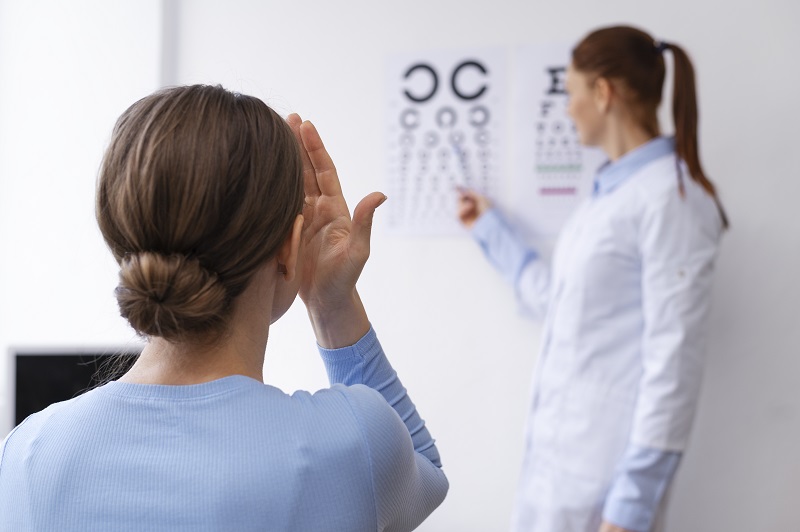
Test 4: Snellen Chart Astigmatism Test

Astigmatism test using a Snellen chart
The Snellen chart is a standard visual acuity testing tool consisting of rows of letters or symbols that gradually decrease in size according to international standards. During the test, the doctor will ask you to cover one eye at a time and read the letters from the largest to the smallest.
People with astigmatism often experience the following symptoms when viewing the Snellen chart:
- Letters appear blurry, shadowed, or doubled
- Certain characters look distorted or are harder to recognize than others on the same line
- Difficulty reading smaller lines even when the viewing distance remains unchanged
- Rapid eye fatigue or strain when trying to focus clearly
The Snellen chart provides a general assessment of visual acuity but cannot accurately diagnose astigmatism on its own. Afterward, your doctor will perform a refraction test using specialized equipment to determine the final diagnosis.
When Should You See an Eye Doctor?
You should schedule an eye examination if you frequently experience any of the following symptoms:
- Blurred or distorted vision
- Persistent eye strain
- Headaches while reading or using a computer
- Difficulty seeing clearly at night
At-home astigmatism testing is a convenient way to detect early warning signs of vision problems. However, it should only be considered an initial screening tool.
For an accurate diagnosis and the most appropriate treatment plan, you should visit a qualified eye care specialist. Regular eye examinations are the best way to protect your vision and maintain your quality of life.

 14/10/2026











 0916.741.763
 Appointment