

 vi
vi 01-Aug-2026
 33,155
 Over the past five years, Phakic ICL (EVO ICL) has consistently appeared in major scientific publications and international ophthalmology conferences as one of the safest treatment options for high myopia and astigmatism when appropriately indicated.

The Latest Updates on the Safety of Phakic ICL
Unlike the first-generation ICL lenses introduced more than a decade ago, today’s EVO ICL incorporates several important design improvements that have significantly reduced the risks of cataract formation, elevated intraocular pressure, and complications related to aqueous humor circulation.
So, what do the latest clinical studies in 2026 reveal about the safety of Phakic ICL?
From Early ICL Generations to Modern Phakic ICL
Long-term studies of the previous Visian ICL V4 generation reported higher-than-expected rates of cataract development and elevated intraocular pressure after many years of follow-up. These findings prompted STAAR Surgical to redesign the lens.
The most significant advancement was the introduction of CentraFLOW (KS-AquaPORT®), a microscopic central port that allows natural aqueous humor circulation through the lens.
This innovation provides several important benefits:
- More natural aqueous humor circulation.
- No need for preoperative laser peripheral iridotomy.
- More stable intraocular pressure after surgery.
- A significantly lower risk of cataract formation caused by impaired nutrition of the natural crystalline lens.
This breakthrough is widely regarded as the milestone that fundamentally transformed the safety profile of modern Phakic ICL.
What Do Long-Term Studies Show?
One of the reasons Phakic ICL is highly regarded is the growing body of long-term clinical evidence supporting its safety and effectiveness.
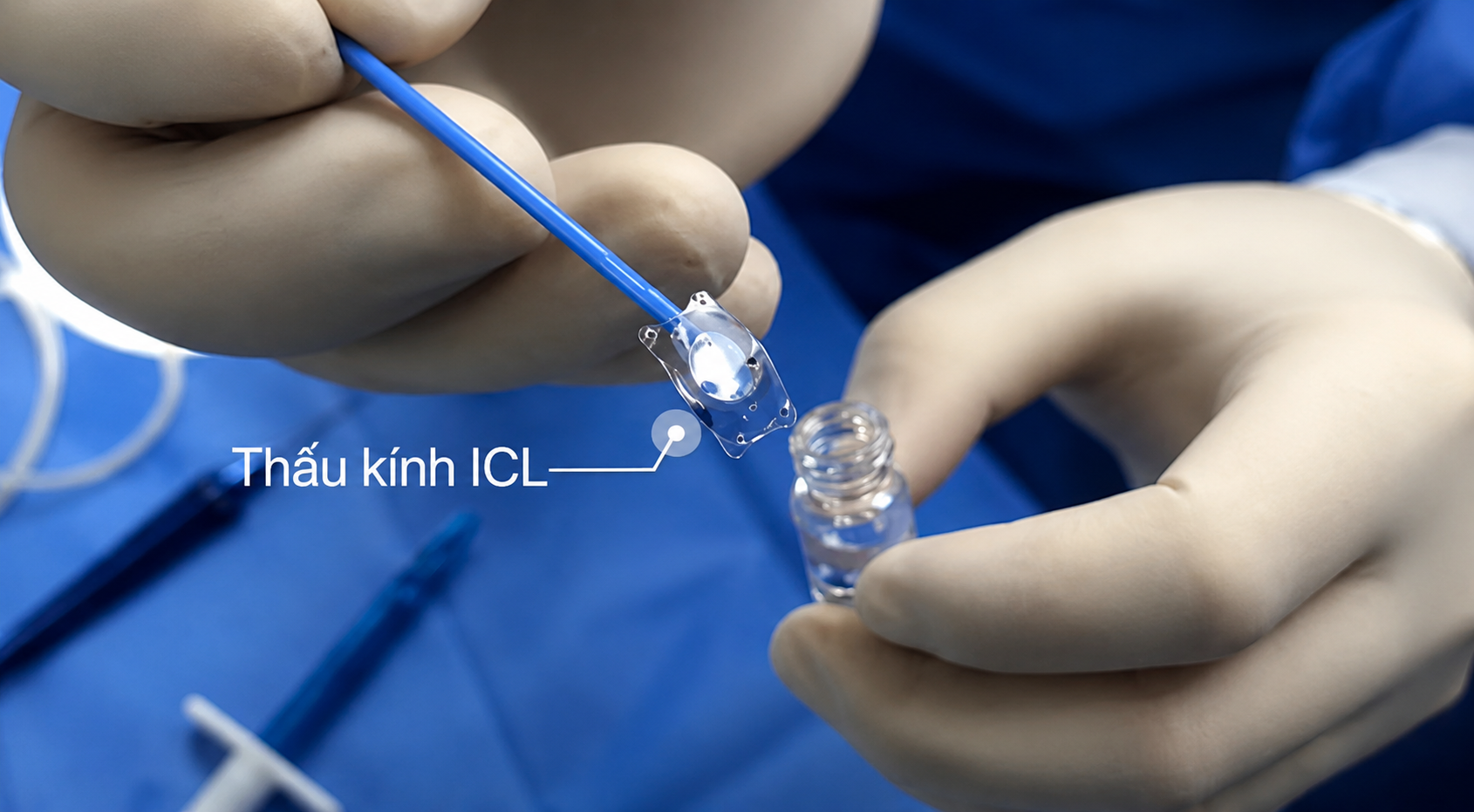
Phakic ICL Lens
According to pooled analyses involving thousands of eyes implanted with Phakic ICL and followed for 5 to 7 years:
- The incidence of visually significant cataracts in patients younger than 40 years remains very low.
- Intraocular pressure generally remains stable thanks to aqueous humor flow through the AquaPORT.
- Most patients maintain stable visual outcomes for many years following surgery.
These findings indicate that complications previously associated with older ICL generations have been substantially reduced with EVO ICL when appropriate candidates are selected and the correct lens size is implanted.
Collamer Remains One of EVO ICL’s Greatest Advantages
Unlike conventional contact lenses, Phakic ICL is made from Collamer, a highly biocompatible material. This material minimizes inflammatory reactions, maintains excellent optical clarity within the eye, and reduces the likelihood of biological rejection.
As a result, once properly implanted, the lens can remain in place for many years without adversely affecting surrounding ocular tissues.
Is Phakic ICL Completely Safe?
The answer is no surgical procedure can be considered completely risk-free.
Even with EVO ICL, certain complications may still occur, including halos, glare while driving at night, inappropriate vault, or elevated intraocular pressure if the wrong lens size is selected.
However, the vast majority of serious complications today can be minimized through comprehensive preoperative evaluation and accurate lens sizing.
Safety Depends on More Than Just the Lens
Today, many ophthalmologists believe that the safety of Phakic ICL depends more on the quality of the preoperative assessment than on the lens itself.
A patient is considered an appropriate candidate only when all essential criteria are met, including sufficient anterior chamber depth, adequate corneal endothelial cell density, healthy corneal structure, absence of glaucoma, no cataract, and stable refractive error.
In addition, many eye centers now use advanced diagnostic technologies such as Pentacam, anterior segment OCT, and UBM (Ultrasound Biomicroscopy) to evaluate ocular anatomy and determine the most appropriate ICL size.
Postoperative Follow-Up Also Contributes to Long-Term Safety
A successful surgery does not end when the patient leaves the operating room. According to the manufacturer’s recommendations, patients should attend regular follow-up visits to monitor visual acuity, intraocular pressure, lens vault, crystalline lens status, and corneal endothelial cell density.
Routine follow-up enables ophthalmologists to detect rare changes early and provide timely treatment if necessary.
Common Misconceptions About the Safety of Phakic ICL
“ICL Makes the Cornea Thinner”
False. Phakic ICL is implanted behind the iris and in front of the natural crystalline lens, so it does not remove or thin corneal tissue like laser vision correction procedures.
“ICL Will Definitely Cause Cataracts”
This misconception mainly comes from data involving earlier ICL generations. With modern EVO ICL, the risk has been significantly reduced thanks to the CentraFLOW design and proper patient selection.
“No Follow-Up Is Needed After Surgery”
This is incorrect. Even when vision is excellent, patients should continue regular eye examinations to monitor intraocular pressure, lens vault, and overall ocular health for many years after surgery.
In summary, the latest clinical evidence demonstrates that Phakic EVO ICL offers a significantly improved safety profile compared with previous ICL generations, thanks to the CentraFLOW design, Collamer material, and increasingly precise preoperative assessment protocols.
Nevertheless, the long-term safety of Phakic ICL depends not only on the quality of the lens itself but also on appropriate patient selection, accurate lens sizing, the surgeon’s expertise, and the patient’s adherence to postoperative follow-up. When all of these factors are carefully managed, Phakic ICL is considered one of the safest and most stable long-term solutions for correcting moderate to high myopia and astigmatism.

 01/10/2026











 0916.741.763
 Appointment