

 vi
 07-Apr-2026
 458,660

FDA (USA) officially expands the indicated age range for EVO ICL
Early 2026, LAKE FOREST, California — (BUSINESS WIRE) — STAAR Surgical Company (NASDAQ: STAA), the global leader in Phakic intraocular lenses with its implantable Collamer® lens line (EVO ICL™), announced that the U.S. Food and Drug Administration (FDA) has approved an expanded age indication for the EVO/EVO+ Visian ICL, extending the eligible patient age range to 21 to 60 years.
This approval follows the release of three-year FDA clinical trial safety data, reinforcing the long-term safety profile of EVO ICL. Previously, EVO ICL was approved in the U.S. for patients aged 21 to 45. Expanding the age range increases the potential market for EVO ICL in the U.S. and benefits a broader patient population. This milestone is part of STAAR’s ongoing efforts to expand access to EVO ICL for patients worldwide.
Shifting Patient Preferences
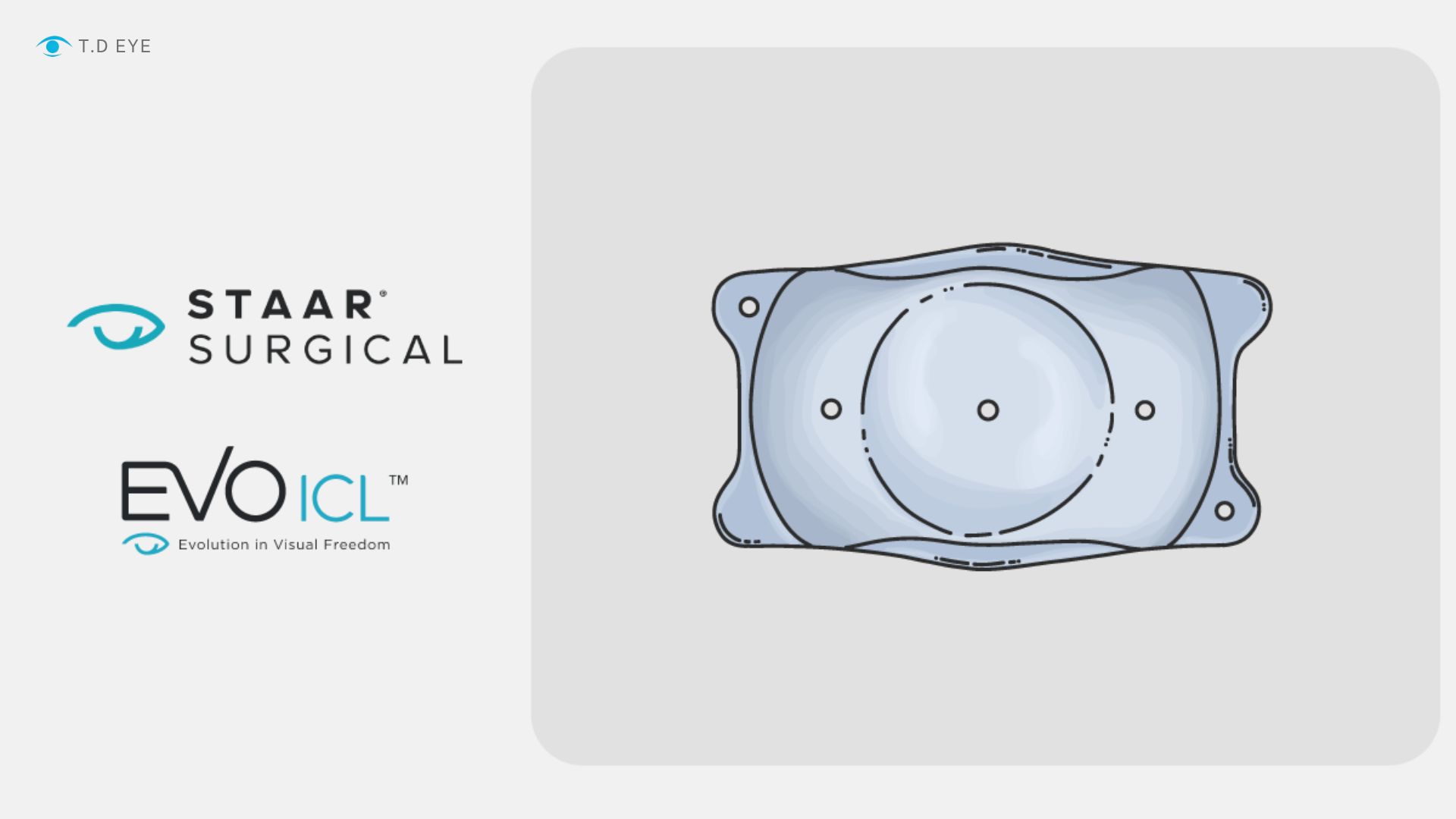
Shift in patient preferences toward EVO ICL
This additional approval comes amid a significant shift in the U.S. refractive vision correction market. Laser-based procedures (which require removal of corneal tissue) are at their lowest levels in decades, declining by nearly 40% over the past three years.
Meanwhile, EVO ICL implantation in the U.S. is growing. Recent patient research shows that more than half (53%) of U.S. vision correction consumers are now interested in LASIK alternatives, signaling a meaningful change in how patients approach refractive care.
Changing Treatment Paradigm for High Myopia
The shift away from laser procedures is particularly evident among patients with high levels of myopia.
A recent AECOS study conducted across 19 clinics in the U.S., led by top refractive surgeons, found that EVO ICL is the most commonly performed refractive procedure (72%) for patients with myopia of -8.0 diopters or higher. This indicates that lens-based solutions are increasingly shaping the treatment approach for high myopia.
Long-Term Safety
Alongside these market trends, long-term clinical evidence for EVO ICL continues to strengthen. In the FDA clinical trial, 629 eyes were followed for three years, demonstrating a strong safety profile with a safety index of 1.25 at three years; no cases of pupillary block or pigment dispersion were reported, and the rate of anterior subcapsular cataract was very low (0.16%). These results are consistent with globally published data on the EVO platform.

EVO ICL accounts for over 70% of procedures in patients with -8.0 diopters or higher.
“The AECOS study provides real-world insight into the direction of refractive surgery in the U.S.,” said Warren Foust, Interim Co-CEO, President and Chief Operating Officer of STAAR Surgical. “Across 19 leading refractive clinics, EVO ICL accounts for more than 70% of procedures in patients with myopia of -8.0 diopters or higher.”
“As experienced surgeons consistently prioritize lens-based approaches for high myopia, it reflects a clear shift in the treatment paradigm. Combined with FDA long-term safety data and expanded age indications, we believe EVO ICL is helping define the future pathway for treating a wide range of myopia.”
An estimated 24 million adults in the U.S. have myopia, including nearly 8 million aged 46–60, who may be potential candidates for EVO ICL—a biocompatible, implantable lens designed to correct distance vision while preserving both the cornea and the eye’s natural lens.
Outside the United States, EVO lenses have already been widely used in patients aged 21–60 for many years. Clinical experience and over 100 peer-reviewed studies have demonstrated the safety and effectiveness of the EVO ICL platform.
By preserving corneal tissue and the natural crystalline lens, EVO ICL offers a reversible vision correction option, maintaining flexibility for future treatments.
For many patients, this supports a long-term vision care strategy by providing visual freedom today while allowing doctors to tailor future solutions as visual needs evolve over time. It reflects the ongoing evolution of refractive surgery toward personalized, tissue-preserving solutions that expand choice and meet patient needs at every stage of life.
Indications for Use in the U.S.
The EVO lens is implanted through a quick procedure with minimal invasiveness, where the lens is placed behind the iris and in front of the natural crystalline lens. In the United States, EVO Visian ICL is indicated for patients aged 21–60:
- To correct/reduce myopia in patients with a spherical equivalent refractive error from -3.0 D to -20.0 D.
- To correct/reduce myopic astigmatism in patients with a spherical equivalent from -3.0 D to -20.0 D and astigmatism from 1.0 D to 4.0 D.
- With an anterior chamber depth (ACD) of 3.00 mm or greater.
- And with a history of stable refraction (no more than 0.5 D change within 1 year prior to surgery).

 14/11/2026









 0916.741.763
 Appointment
