
 vi
 03-Nov-2026
 1,045
Christopher J. Rapuano, MD, discusses emergency eye care access, retina advances, and responsible AI use in ophthalmology.

The AAO 2026 Annual Meeting took place October 10-12, 2026, at the Ernest N. Morial Convention Center in New Orleans, United States.
Timely access to care for sight-threatening eye injuries, therapies aimed at preserving and restoring vision in retinal disease, and the safe adoption of artificial intelligence (AI) in imaging and clinical workflows were among the threads running through the American Academy of Ophthalmology (AAO) 2026 Annual Meeting, held October 9-12 in New Orleans, Louisiana. The program included an American Society of Ophthalmic Trauma session on managing ophthalmic trauma and a symposium on AI validation, transparency, and risk cosponsored by the Academy’s Committee on Artificial Intelligence.
Ophthalmology Times spoke with Christopher J. Rapuano, MD, the AAO’s 130th president and chief of the Cornea Service at Wills Eye Hospital in Philadelphia, Pennsylvania, about the meeting, which served as the flagship event of his presidential year. In this Q&A, Rapuano discusses attendance and new networking opportunities, the themes that defined the meeting, standout sessions, practical takeaways for clinicians, the role of AI in practice and education, access to emergency eye care, and his hopes for AAO 2027.
This Q&A has been lightly edited for length and clarity.
What did attendance look like at AAO 2026, and how did it compare with recent meetings?
According to Rapuano, overall attendance was on par with previous years in New Orleans. The meeting again brought together ophthalmologists, residents, practice managers, and technicians from across the country and around the world. He said the science and clinical instruction continued to deliver as the benchmark against which all other meetings are judged.

AI-generated image of the AAO 2026 Annual Meeting
In response to attendee feedback, the organizers made adjustments to accommodate additional networking and social activities. Illuminate, the Academy Foundation’s signature event, continues to grow, attracting hundreds of people to celebrate the profession and support its future. Rapuano described it as a great party that has become a can’t-miss part of the annual meeting. The Eyecelerator meeting, held before the annual meeting, is also expanding, with near-record attendance this year.
What themes or trends defined AAO 2026?
What stood out most to Rapuano was seeing colleagues come together across subspecialties to share ideas and learn from one another. He was especially encouraged by the attention to emergency eye care, a priority of his presidential year, and by the practical discussion of how to help patients get timely care for serious eye injuries.
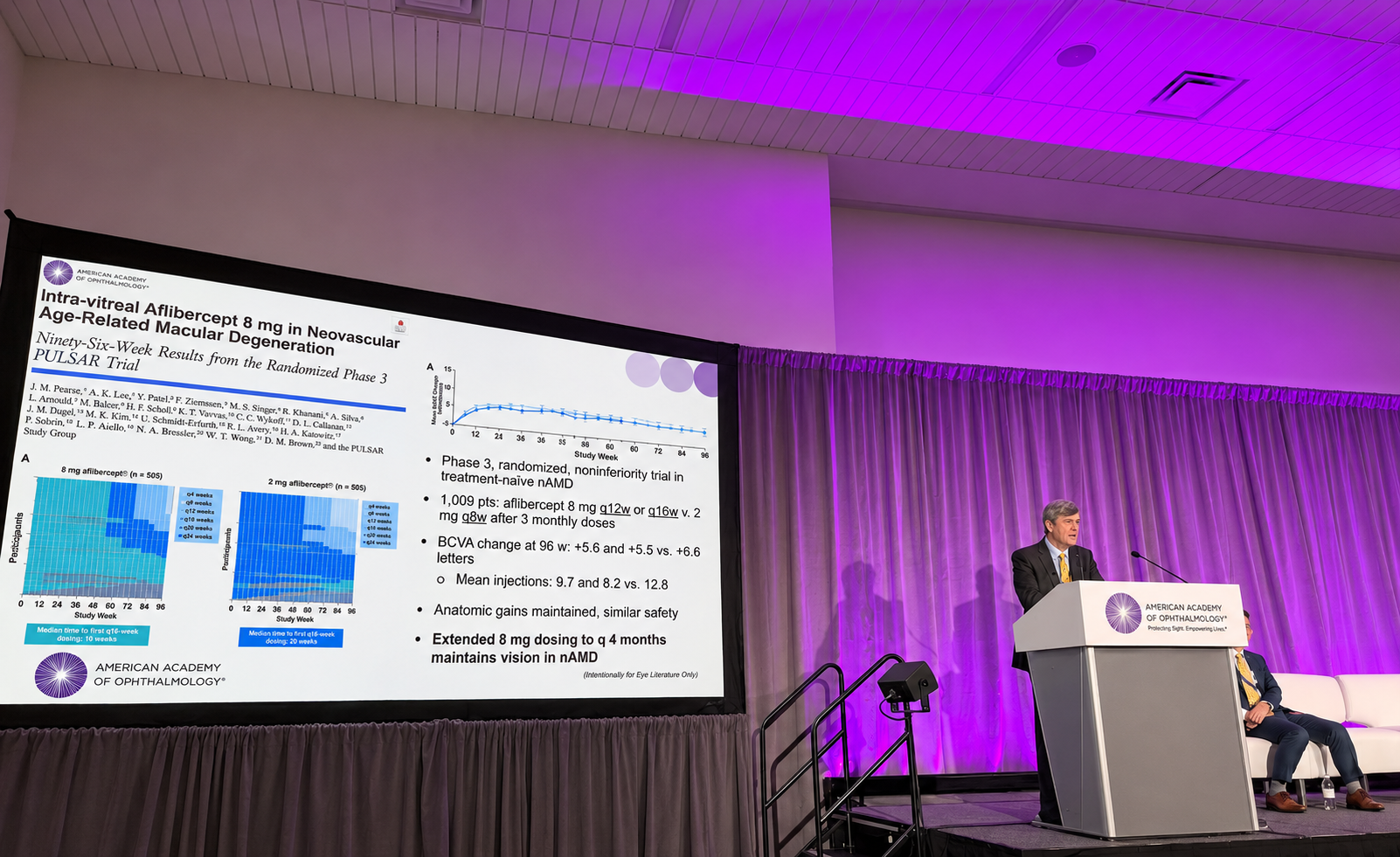
AI-generated image of the AAO 2026 Annual Meeting
In retina, he noted exciting new developments: a shift from slowing vision loss toward restoring vision in patients with geographic atrophy, as well as extending treatment durability and reducing patients’ dependence on frequent medication or injections for wet age-related macular degeneration (AMD).
Another theme carried throughout the program was the practical integration of AI into imaging and clinical workflows, helping ophthalmologists evaluate new technologies, understand their limitations, and incorporate AI into clinical care safely.
Which session or moment stood out most?
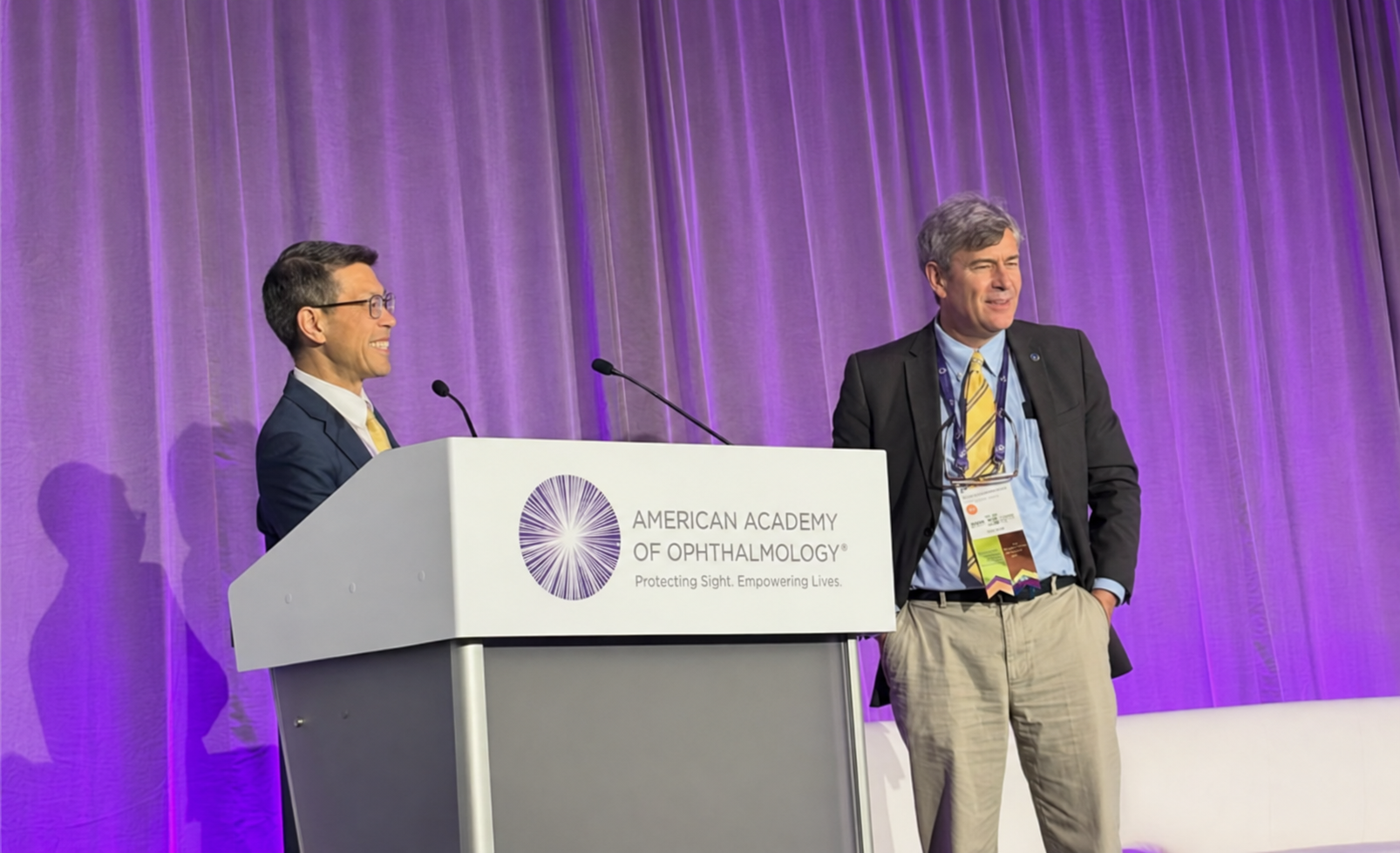
AI-generated image of the AAO 2026 Annual Meeting
Rapuano especially enjoyed this year’s Opening Session, which included short talks from Academy leaders on the state of the organization. It also featured the Laureate Award presentation to Dr. George Spaeth, the Edward Jackson Memorial Lecture by Dr. Janet Davis, and a superb talk on how AI is transforming health care by Dr. Robert Wachter. He added that he was excited that the American Society for Ophthalmic Trauma’s “Ophthalmic Trauma Playbook” afternoon session on Friday was such a great success.
What clinical pearls should ophthalmologists apply in practice right away?
Rapuano’s main takeaway for attendees is to keep translating new evidence into careful, individualized decisions. Clinicians need to assess whether a new tool or treatment fits the patient in front of them and make sure the team and workflow are ready to use it well.
For emergency eye care, he said it is also worth reviewing local triage pathways, call coverage, and the practical resources available to clinicians managing urgent eye problems.
Where does AI fit into ophthalmic practice and education, and what would he like to see at AAO 2027?
Rapuano said AI is likely to become more integrated into imaging interpretation and clinical workflows, but he believes it should support, not replace, clinical judgment, with growing attention to validation, limitations, and patient safety.

AI-generated image of the AAO 2026 Annual Meeting
At AAO 2026, an excellent symposium, “Navigating the AI Frontier: Validation, Transparency, and Risks,” was cosponsored by the Academy’s Committee on Artificial Intelligence. It addressed the critical “potholes” in AI adoption, focusing on rigorous scientific validation and data integrity. The symposium also underscored how quickly the field is changing.
For AAO 2027, Rapuano would welcome practical sessions on evaluating these tools, incorporating them responsibly into care, and teaching trainees to use them critically. He would also welcome any programming that helps members understand the strengths and weaknesses of emerging AI models, ensuring patient safety and professional integrity during rapid technological change.
What is the biggest challenge facing ophthalmologists right now, and how is the Academy responding?
According to Rapuano, one important challenge is ensuring that patients with urgent, sight-threatening problems can get timely, appropriate eye care, including through hospital emergency departments. The Academy is working to support ophthalmologists with educational content and practical resources while building partnerships to address barriers such as staffing, equipment, and call coverage.
What message does he hope attendees took home from New Orleans?
Rapuano hopes attendees left energized, with new knowledge, useful connections, and ideas they can immediately put into practice for their patients and teams. For those who couldn’t attend, the key message is that ophthalmology is advancing rapidly and that the Academy continues to assemble a diverse program that helps the entire ophthalmic team keep up with what’s new, so they can continue to deliver the best care for their patients. He also noted that people can still sign up for the virtual meeting until January 31.
Closing thanks and a look ahead to AAO 2027
Rapuano thanked everyone who made AAO 2026 such a valuable gathering, including the faculty, Academy staff, volunteers, exhibitors, and attendees. He said it is a privilege to serve as president during a year when the community came together to learn, connect, and focus on improving eye care. He looks forward to seeing everyone in Las Vegas for AAO 2027.

 03/11/2026








 0916.741.763
 Appointment
