

 vi
vi 18-Jun-2026
 37,525
 How Do Contact Lenses Work?
Contact lenses are thin, flexible, or water-containing refractive lenses that are placed directly on the tear film covering the surface of the cornea.

Should You Replace Contact Lenses with EVO ICL?
Contact lenses work by altering the path of light rays entering the eye, allowing them to focus precisely on the retina rather than in front of it (as in myopia) or behind it (as in hyperopia).
Because they move together with the eye, contact lenses provide a wider, more natural field of vision with less image distortion than eyeglasses.
Common Types of Contact Lenses
- Soft Contact Lenses: Made from hydrogel or silicone hydrogel materials that retain water, offering excellent comfort and remaining the most widely used type of contact lens today.
- Rigid Gas Permeable (RGP) Contact Lenses: Manufactured from durable rigid materials that allow oxygen to pass through. They are commonly prescribed for individuals with high astigmatism or keratoconus.
- Orthokeratology (Ortho-K) Lenses: Specialized rigid lenses worn overnight to temporarily reshape the corneal surface, allowing users to enjoy clear daytime vision without glasses or contact lenses.
Limitations of Long-Term Contact Lens Wear
Although contact lenses offer convenience, they remain a foreign object within the eye’s natural physiological environment. Over years of wear, a variety of biological responses and ocular surface complications may develop.
Chronic Contact Lens–Related Dry Eye
Studies indicate that between 50% and 75% of regular contact lens wearers report symptoms of dry eye disease.
A contact lens functions much like a thin water-absorbing sponge, dividing the tear film into two layers: a pre-lens tear film and a post-lens tear film. This disrupts tear film stability, accelerates tear evaporation, and can lead to mechanical damage of the corneal epithelial cells.
Corneal Oxygen Deprivation
Continuous contact lens wear creates a physical barrier that restricts oxygen transmission to the cornea. According to reports from the American Academy of Ophthalmology (AAO), chronic corneal hypoxia may lead to corneal neovascularization (the growth of small blood vessels into the normally avascular cornea to compensate for oxygen deficiency), corneal edema, and impaired endothelial cell function.
Conjunctivitis and Serious Eye Infections
Daily handling of contact lenses, combined with the warm and moist environment beneath the lens, creates ideal conditions for microorganisms to thrive.
- Bacterial Keratitis: Most commonly caused by Pseudomonas aeruginosa, a highly aggressive bacterium capable of rapidly destroying corneal tissue.
- Acanthamoeba Keratitis: A rare but potentially devastating parasitic infection often associated with rinsing lenses with tap water or wearing contact lenses while swimming.
According to data from the National Eye Institute (NEI), the risk of infection among overnight contact lens wearers is approximately 10 to 15 times higher than among individuals who wear lenses only during the day.
Contact Lens Intolerance
This is one of the most common reasons why individuals who have worn contact lenses for 5–10 years eventually discontinue their use. Contact lens intolerance occurs when the tiny glands along the eyelid margin become blocked or atrophied due to chronic mechanical irritation and prolonged exposure to lens care solutions. As a result, the eye can no longer produce sufficient oils to maintain a healthy tear film, causing immediate burning, irritation, and foreign-body sensation whenever contact lenses are inserted. Many patients eventually seek a more permanent alternative.
What Is EVO ICL Surgery?
EVO ICL surgery is a refractive procedure that involves implanting an additional intraocular lens (Phakic ICL) to correct myopia, hyperopia, and astigmatism without removing corneal tissue or altering the natural structure of the cornea.
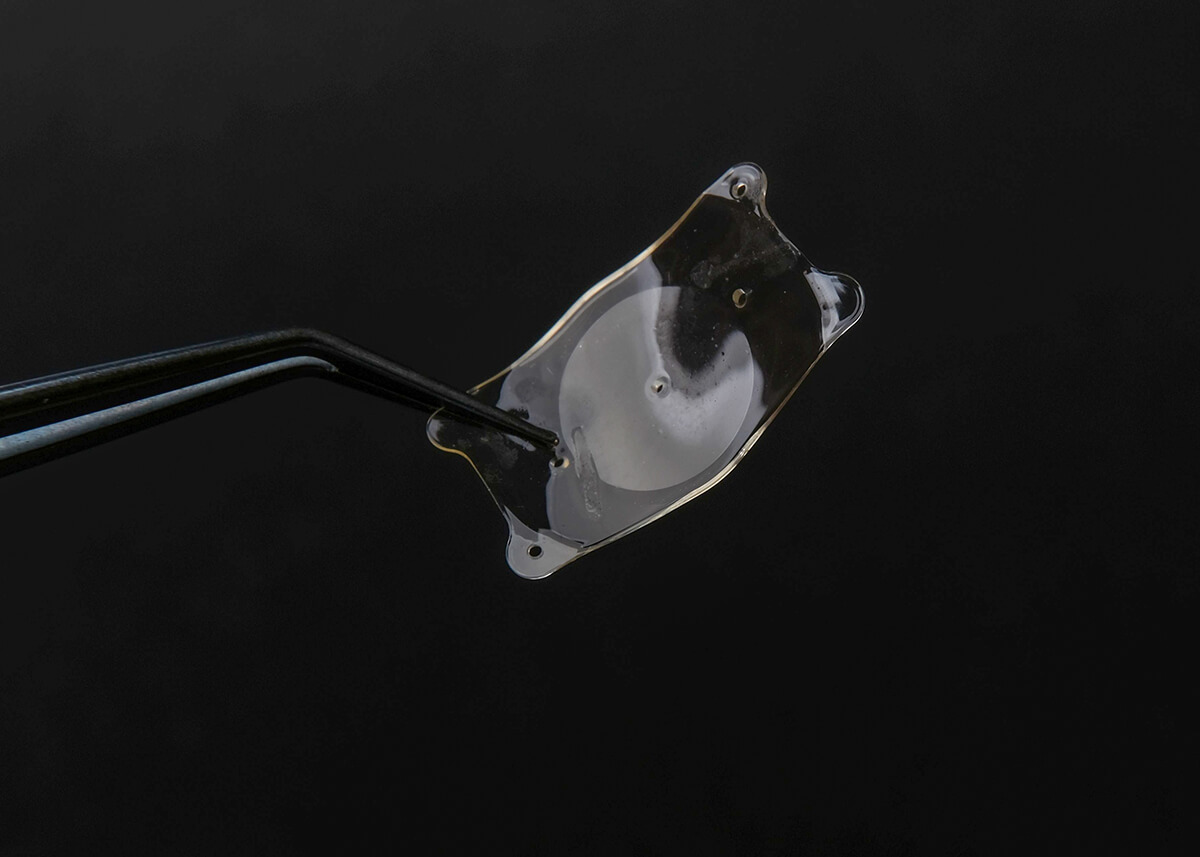
The EVO ICL Lens Is Designed to Be Exceptionally Thin and Flexible.
Position and Mechanism of Action
The EVO ICL lens is exceptionally thin, soft, and flexible. During the procedure, the surgeon creates a micro-incision of approximately 2.8 mm at the edge of the cornea and gently inserts the lens into the eye. The lens is positioned in the posterior chamber, behind the iris and directly in front of the natural crystalline lens.
EVO ICL works in harmony with the eye’s natural optical system to focus light accurately onto the retina, providing sharp, high-quality vision without altering the cornea’s shape or thickness.
Table 1. Key Biological Advantages of EVO ICL
| Feature | Clinical Significance |
|---|---|
| Proprietary Collamer® Material | Combines purified collagen with PolyHEMA, offering exceptional biocompatibility. The lens is well tolerated by the eye and designed for long-term implantation. |
| UV Protection | Incorporates a UV filter to help protect the crystalline lens and retina from harmful ultraviolet radiation. |
| EVO Central Port Technology | A central port measuring approximately 360 microns allows natural aqueous humor circulation, helping maintain stable intraocular pressure and eliminating the need for preoperative laser iridotomy. |
| Wide Treatment Range | Corrects myopia from -3.00D to -20.00D and astigmatism from 1.00D to 4.00D, making it suitable for many patients with high myopia and significant astigmatism. |
| Corneal Tissue Preservation | Unlike LASIK or SMILE, EVO ICL does not remove or thin corneal tissue, preserving the eye’s natural anatomical structure. |
| Removable and Replaceable | The lens can be removed or exchanged by a surgeon if necessary, providing long-term flexibility for patients. |
According to official data published by STAAR Surgical, more than 3 million ICL lenses have been distributed and implanted worldwide. Patient satisfaction following EVO ICL surgery has been reported at an impressive 99.4%.
Similarities and Differences Between EVO ICL and Contact Lenses
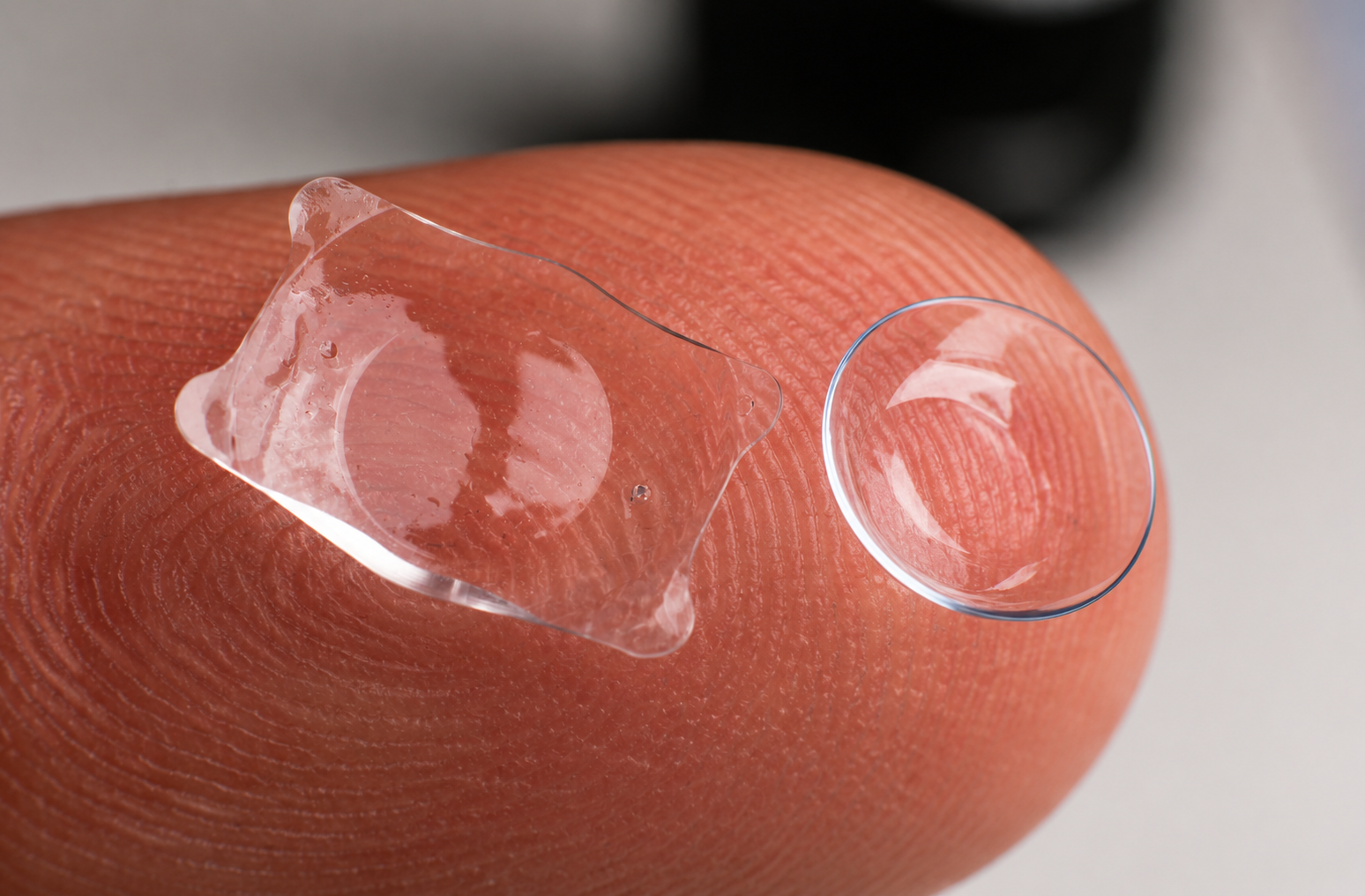
Similarities and Differences Between EVO ICL and Contact Lenses
Similarities
EVO ICL and contact lenses share several similarities in their optical principles. Both use optical lenses to correct refractive errors, helping light focus accurately on the retina and providing natural image quality while minimizing the image minification often experienced with high-powered eyeglasses.
Unlike laser procedures, both EVO ICL and contact lenses do not alter the structure or thickness of the cornea.
In addition, both are reversible solutions, allowing discontinuation or removal when necessary.
Differences
Although they share the same optical nature, their mechanism of use and real-world application are fundamentally different.
Table 2. Detailed Comparison Between EVO ICL and Contact Lenses
| Criteria | Contact Lenses | EVO ICL |
|---|---|---|
| Anatomical Position | Placed on the surface of the cornea, outside the eye. | Placed in the posterior chamber, behind the iris, inside the eye. |
| Daily Handling | Requires daily insertion, removal, cleaning, and soaking. | Requires no daily handling and remains fixed inside the eye long term. |
| Duration of Use | Has a limited lifespan such as daily or monthly replacement. Regular replacement is required. | Can remain long term inside the eye with proper follow-up. |
| Effect on Tear Film | May destabilize the tear film and lead to dry eye. | Does not contact the corneal surface, with minimal impact on the tear film. |
| Experience During Physical Activity | Limited during swimming, beach activities, or water sports. | Convenient for sports and daily activities. |
| External Appearance | The lens edge may be visible at close range. | Completely inside the eye and not visible to the naked eye. |
| Treatment Range | Effective for many refractive errors but may have limitations in very high myopia. | Corrects myopia up to -20.00D and astigmatism up to 4.00D. |
| Cost Investment | Lower initial cost, but ongoing expenses may accumulate over time. | Higher initial cost, with long-term use after a single surgery. |
Why Do Contact Lens Wearers Want to Switch to EVO ICL?
Contact lens intolerance is the biggest barrier that drives users to seek a new solution. When the ocular surface suffers chronic mechanical damage from contact lenses, continuing to wear them may lead to serious epithelial defects.
Many people in this group are also unsuitable for laser procedures such as LASIK or SMILE for two main reasons:
- Very high myopia requires the removal of too much corneal stromal tissue, exceeding the safe treatment threshold.
- Pre-existing contact lens–related dry eye may worsen significantly after laser surgery, as the laser can disrupt corneal sensory nerve fibers and reduce natural tear secretion.
After EVO ICL surgery, the patient’s eyes have time to restore the natural tear film that may have been depleted after years of contact lens wear. This helps patients achieve the goal of glasses-free vision without enduring dryness, burning, irritation, or redness.
Who Should Consider Replacing Contact Lenses with EVO ICL?
If you recognize yourself in any of the cases listed below, scheduling a comprehensive eye examination to evaluate your eligibility for EVO ICL may be a medically reasonable decision.
- People who wear contact lenses for more than 8–10 hours per day and want to reduce dependence on daily insertion, removal, and lens cleaning.
- People who frequently experience dry eyes, grittiness, or discomfort when wearing contact lenses.
- People with recurrent redness, irritation, or conjunctivitis related to long-term contact lens wear.
- People diagnosed with contact lens intolerance.
- People with high myopia, from -6.00D or above, or severe to extremely severe myopia who still want high-quality vision.
- People with thin corneas or those who are not suitable candidates for laser procedures such as LASIK or ReLEx SMILE.
- People who frequently play sports, swim, travel, or participate in outdoor activities that require visual freedom.
- People who want to eliminate recurring annual costs for contact lenses, cleaning solutions, and lens care accessories.
- People who work extensively with computers or digital screens and experience eye strain or dryness while wearing contact lenses.
- People who want a long-term refractive correction solution that can still be removed or replaced if necessary in the future.
Before making a decision, patients should undergo a comprehensive eye examination to assess refractive error, anterior chamber depth, and corneal endothelial cell density to determine whether they are suitable candidates for EVO ICL. Take proactive steps to protect your vision with scientific, sustainable, and safe solutions.

 14/10/2026











 0916.741.763
 Appointment