

 vi
 26-Oct-2026
 760
What Is Astigmatism, and Can It Be Corrected with Surgery?
Astigmatism is a refractive error. Instead of being evenly round like a ball, the cornea (the clear layer at the front of the eye) is slightly “flattened,” more like an oval ball. As a result, light entering the eye does not focus on a single point on the retina but is scattered across several points, making images blurry and distorted, especially when looking at distance or at night. Astigmatism can occur on its own or together with nearsightedness or farsightedness.

Can astigmatism be corrected with surgery?
Because the problem lies in the curvature of the cornea, laser surgery can “fix” exactly this issue. The laser is used to reshape the curvature so that light focuses precisely on the retina.
Requirements for Astigmatism Surgery
Whichever method you choose, you need a thorough examination before surgery. The conditions doctors usually consider include:
- Age: Usually between 18 and 40. Under 18, the eyes are still developing, so the astigmatism can easily change. Over 40, the eyes begin to develop presbyopia. Laser can still treat astigmatism but cannot eliminate presbyopia, so you should get detailed advice before deciding.
- Stable prescription: The prescription should not have changed significantly for at least 12 months. If surgery is done while the prescription is still changing, the results may not last.
- Degree of astigmatism: Laser is usually suitable for moderate astigmatism (roughly under 5-6 diopters, depending on the method and equipment). Higher degrees may require other solutions.
- Sufficient corneal thickness: Laser thins the cornea to reshape it, so the remaining cornea after surgery must be strong enough. A cornea that is too thin increases the risk of deformation and reduced vision.
- Healthy eyes: No inflammation, no severe dry eye, and no corneal or retinal disease.
- Good general health: No conditions that slow wound healing, such as autoimmune disease, poorly controlled diabetes, or immunodeficiency.
- Not pregnant or breastfeeding: Hormonal changes can make the prescription fluctuate, making surgical results hard to predict.
When You Should Not Have Astigmatism Surgery
Some conditions make laser surgery less safe or lead to poorer results, and doctors will usually advise you to postpone or choose another approach:
- Keratoconus or a cornea that is too thin: Laser can weaken the cornea further and cause serious complications.
- Corneal infection or ulcers: Applying laser to a damaged cornea can make the condition worse. People who have had corneal inflammation caused by the herpes virus need special consideration because laser can reactivate the virus.
- Conditions that affect wound healing: Rheumatoid arthritis, lupus, AIDS, or a tendency to form keloid scars are more likely to lead to corneal haze or less than optimal vision after surgery.
- Severe dry eye: Dry eye is a fairly common side effect after laser surgery, so people who already have severe dry eye are more likely to get worse.
- Taking certain medications: For example, isotretinoin (for acne) or amiodarone (for heart rhythm) can affect corneal wound healing. Be sure to tell your doctor about all the medications you take.
- Being under the required age or having an unstable prescription.
If you do not qualify for laser surgery, do not be discouraged. In some cases there are still other options, such as implanting an implantable lens (ICL) designed to correct astigmatism, which does not require reshaping the cornea. The doctor will advise you based on your specific measurements.
Common Astigmatism Surgery Methods
Each method takes a different approach. There is no “best method for everyone,” only the method that best suits your eyes.
1. Phakic ICL (Implantable Lens Surgery)
Phakic ICL is a method in which a thin, soft, biocompatible collamer lens is placed inside the eye, between the iris and the natural lens. For people with astigmatism, the doctor uses a toric ICL, which is specially designed to correct astigmatism and often corrects accompanying nearsightedness at the same time.
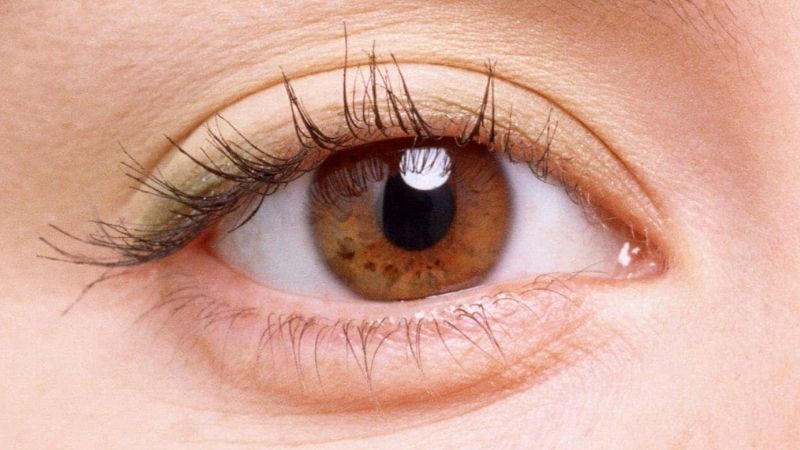
Phakic ICL surgery for treating astigmatism
The biggest difference from laser is that it does not cut or thin the cornea. The lens is inserted through a very small incision (about 3 mm), and the procedure usually takes only about 10-15 minutes per eye. The lens then adjusts the light before it reaches the retina, giving a sharper image.
Key advantages:
- Suitable for people with thin corneas or high astigmatism or nearsightedness that laser cannot safely treat.
- It preserves the cornea’s structure, so it has less impact on dry eye than laser.
- Excellent visual quality with sharp images, and vision usually recovers quickly.
- The lens can be removed or replaced if needed, so it is more reversible than reshaping the cornea.
2. LASIK
The surgeon creates a very thin corneal flap, folds it aside, and uses a laser to reshape the underlying cornea, then places the flap back in position so it can heal on its own. The procedure is almost painless and takes about 10-30 minutes per eye. Vision usually recovers quickly, and most patients achieve good vision, with some reaching 20/20 or close to it.
3. PRK
Instead of creating a flap, the surgeon removes the outermost layer of the cornea (the epithelium) and applies the laser directly to the surface. The epithelium regenerates naturally within a few days. Because there is no flap, PRK is suitable for people with thinner corneas or those prone to impact, but the initial recovery is usually longer and less comfortable than LASIK.
4. LASEK
LASEK is a “hybrid” of the two methods above. The surgeon uses a special solution to loosen the epithelium, gently moves it aside, uses a laser to adjust the corneal curvature, and then places the epithelium back. This method also does not create a thick corneal flap like LASIK.
5. SMILE
SMILE uses a femtosecond laser to create a small lens-shaped piece of tissue inside the cornea, then removes this piece through a very small incision. Because the incision is small, the cornea is less disturbed, and some studies show that the risk of dry eye after surgery tends to be lower. In return, vision may take a little longer to reach its best clarity.
Note: All of the methods above are popular and give good results when properly indicated. What determines success is not only the technique but also careful pre-operative measurement, an experienced surgeon, and a reputable medical facility.
How Will You Feel After Astigmatism Surgery?
- First few hours: Your eyes may itch, feel gritty or burning, water, or look blurry. These are normal reactions and usually fade quickly. The doctor may give you eye drops, pain relievers, and an eye shield to wear while sleeping.
- First few days: You can see right away, but images are not yet truly sharp. Vision usually improves noticeably within a few days.
- 2-3 months: The eyes heal completely and vision stabilizes. The degree of improvement also depends on the condition of your eyes before surgery.
- Follow-ups: Usually 1-2 days after surgery, then according to your doctor’s schedule, continuing over roughly the first 6 months to catch complications early.
Eye Care Instructions After Surgery
A good recovery depends a great deal on caring for your eyes properly. You should:
Keep your eyes clean and avoid infection
- Do not let shower water, shampoo, soap, hairspray, or shaving cream get into your eyes during the first few days.
- Avoid swimming pools, hot tubs, saunas, and lakes for at least 3 weeks.
- Do not wear eye makeup for at least 1 week, and do not reuse partly used cosmetics.
- Avoid dyeing or perming your hair for about the first 10 days.
- Stay away from dusty places for at least the first 7 days.
Protect the healing cornea
- Absolutely do not rub your eyes for at least 1 month.
- Wear protective goggles or an eye shield when sleeping, especially during the first week.
- Wear sunglasses outdoors to reduce glare and protect your eyes. Keep up this habit over the long term, because direct sunlight can affect the corneal healing process.
Daily activities and exercise
- Use all prescribed eye drops, including artificial tears, correctly and fully as directed by your doctor.
- Do not drive until your eyes feel comfortable and your doctor approves.
- Rest from exercise for about 2 days. When you resume, wear protective eyewear for at least 1 month, especially for contact sports.
Conclusion
Astigmatism can absolutely be treated with surgery if you meet the requirements for age, prescription stability, corneal thickness, and general health. Each method, such as LASIK, PRK, LASEK, or SMILE, has its own advantages, and the final decision should be based on a detailed examination. Visit a reputable eye care facility for corneal measurements, a comprehensive check-up, and advice on the safest option for your eyes.
This article is for reference only and does not replace diagnosis and advice from a specialist doctor.
 27/10/2026













 0916.741.763
 Appointment
