

 vi
vi 10-Jul-2026
 19,855
 Dry eye is a common condition in modern society, especially among office workers, people who spend long hours using digital devices, or those who work and live in air-conditioned environments. It occurs when the eyes do not produce enough tears or when the tear film is of poor quality and evaporates too quickly. As a result, people may experience burning, irritation, redness, blurred vision, or the sensation of having sand in their eyes.

7 Daily Habits to Help Reduce Dry Eyes
The good news is that you can improve your symptoms and proactively protect your eyes with just a few simple lifestyle changes. Save this guide and start practicing these 7 daily habits to help reduce dry eyes for healthier, more comfortable, and refreshed vision.
Apply a Warm Compress and Massage Your Eyelids
According to medical information from WebMD, placing a warm compress over your eyes for 5–10 minutes is an effective way to stimulate the meibomian glands along the eyelid margins. These glands produce the oily layer of the tear film, which helps prevent tears from evaporating too quickly.
- How to do it: Soak a clean towel in warm water (comfortably warm, not hot enough to burn), wring it out, and place it gently over your closed eyes.
- Helpful tip: After the warm compress, gently massage your eyelid margins to help unclog blocked oil glands and promote a healthier tear film.
Stay Hydrated to Maintain a Healthy Tear Film
Dehydration is one of the indirect causes of reduced tear production. Drinking enough water each day not only supports your overall health but also helps your body maintain adequate moisture on the surface of your eyes.
Depending on your age, body weight, and activity level, aim to drink approximately 1.5–2 liters of water daily. Rather than waiting until you feel thirsty, drink water consistently throughout the day to keep your eyes well lubricated and reduce irritation.
Blink Frequently and Follow the 20-20-20 Rule
Medical studies cited by Health show that when we focus on computer screens, smartphones, or televisions, our blink rate drops to nearly half of its normal frequency. This causes the tear film to break up more quickly, leading to digital eye strain and dry eyes.
- Protect your eyes by: Making a conscious effort to blink slowly, completely, and regularly throughout the day.
- Follow the 20-20-20 rule: Every 20 minutes of screen time, look at an object about 20 feet (6 meters) away for at least 20 seconds. This simple habit helps relax the eye muscles and encourages natural tear production.
Clean Your Eyelids Every Day
Dust, excess oil, and makeup residue can accumulate along the eyelid margins. If not cleaned regularly, they may cause blepharitis and block the oil glands responsible for maintaining a healthy tear film. Daily eyelid hygiene is especially important for people who frequently experience recurrent dry eyes.
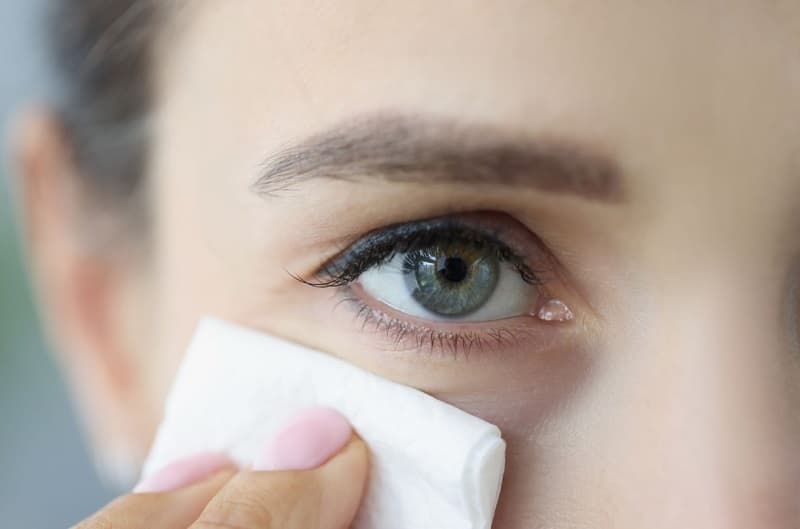
Daily eyelid hygiene helps reduce dry eye symptoms
You can gently clean the area around your eyes with sterile gauze soaked in warm water or use specialized eyelid cleansers or foams as recommended by your eye care professional for optimal results.
Increase Humidity in Your Home and Workplace
Dry air from air conditioning or cold winter weather is one of the biggest enemies of healthy eyes. According to Healthline, dry environments accelerate tear evaporation.
To reduce this effect, consider using a humidifier or placing a bowl of water in your bedroom or office. Also, avoid directing airflow from fans or air conditioners straight toward your face.
Eat More Omega-3-Rich Foods
Supporting eye health from within is just as important as protecting your eyes from external factors. According to Verywell Health, Omega-3 fatty acids can improve the quality of the oily layer of the tear film, reduce tear evaporation, and help decrease eyelid inflammation.
- Foods to include: Fatty fish (such as salmon, sardines, and mackerel), walnuts, chia seeds, flaxseeds, and other Omega-3-rich foods.
- Note: If you plan to take high-dose Omega-3 supplements, consult your healthcare provider to determine the most appropriate dosage for your needs.
Wear Protective Eyewear Outdoors
Strong sunlight, wind, and airborne dust can quickly dry out your eyes when you’re outdoors. Wearing wraparound sunglasses or protective eyewear not only shields your eyes from wind and dust, reducing tear evaporation, but also helps protect your retina from harmful ultraviolet (UV) rays.
Important Advice from Eye Care Specialists
These lifestyle habits are highly effective for managing mild or temporary dry eye symptoms. However, if your dry eyes persist, are accompanied by severe pain, significant redness, blurred vision, or fail to improve despite proper self-care, you should schedule an examination with an eye care specialist as soon as possible. Chronic dry eye may be a sign of an underlying eye condition that requires timely diagnosis and treatment.

 14/10/2026










 0916.741.763
 Appointment