

 vi
vi 11-May-2026
 59,945
 Overview

What does forehead pain after looking at screens mean?
In the era of Industry 4.0, the average person spends approximately 7–10 hours per day looking at digital screens such as computers, smartphones, and tablets. As a result, vision-related problems have increased dramatically.
One of the most common complaints seen in ophthalmology clinics is the sensation of gritty eyes accompanied by persistent forehead pain after long working hours.
This is not simply temporary fatigue but rather a “cry for help” from the eyes when they are overloaded. This article will help you better understand the nature, causes, and ways to protect your “windows to the soul” from the pressure of blue light exposure.
What Are Gritty Eyes and Forehead Pain?
Gritty eyes refer to an uncomfortable sensation as if sand, dust, or a foreign object is trapped inside the eye, even though no actual object is present. This feeling is often accompanied by redness, mild burning, or watery eyes.
- 7.5 hours: The average amount of time an adult spends looking at screens each day (2023 data).
- 450nm: The wavelength of blue light emitted from screens, capable of penetrating deep into the retina and damaging light-sensitive cells.
- 1/3: The proportion of the global population experiencing dry eye and gritty eye symptoms due to digital working environments.
When gritty eyes occur together with forehead pain, it is usually the result of excessive strain on the visual system and facial muscles. According to ophthalmology studies, this is a typical sign of imbalance between the eyes’ focusing ability and the intensity of mental work.
Typical Symptoms

When gritty eyes occur together with forehead pain, it is the result of excessive strain.
This condition rarely occurs alone and is often accompanied by a range of uncomfortable symptoms:
- A “sandy” sensation in the eyes, which is the hallmark symptom of gritty eyes, usually becoming worse at the end of the day or after staring at screens continuously for more than two hours.
- Pain and fatigue around the forehead and eye sockets, typically starting between the eyebrows and spreading toward the temples.
- Blurred vision or double vision (Diplopia), where screen images become unclear and you need to squint to read text.
- Light sensitivity and discomfort even under normal office lighting.
- Dry, irritated eyes accompanied by redness and a mild burning sensation.
Closely Related Eye Conditions
Computer Vision Syndrome (CVS)
This is considered a “modern-day disease.” According to statistics from the American Optometric Association, up to 70%–90% of computer users experience symptoms of CVS. While looking at screens, the eyes constantly shift focus and move back and forth thousands of times, causing prolonged contraction of the ciliary muscles and leading to forehead headaches.
Dry Eye Syndrome
Normally, humans blink about 15–20 times per minute. However, studies show that when focusing on screens, blink frequency decreases by 66%. Reduced blinking disrupts the tear film, dries out the cornea, and causes severe gritty eye sensations.
Uncorrected Refractive Errors
If you have nearsightedness, farsightedness, or astigmatism but do not wear glasses—or wear an incorrect prescription—your eyes are forced to overwork to focus clearly. This strain not only worsens refractive errors but also places pressure on the nerves controlling the eye muscles, leading to chronic forehead pain and eye fatigue.
Ciliary Muscle Spasm
When focusing on nearby objects for prolonged periods, the ciliary muscles inside the eyes may remain locked in a contracted state and fail to relax when looking elsewhere. This can cause deep pain behind the eye sockets that radiates to the forehead.
Fast and Effective Relief Methods
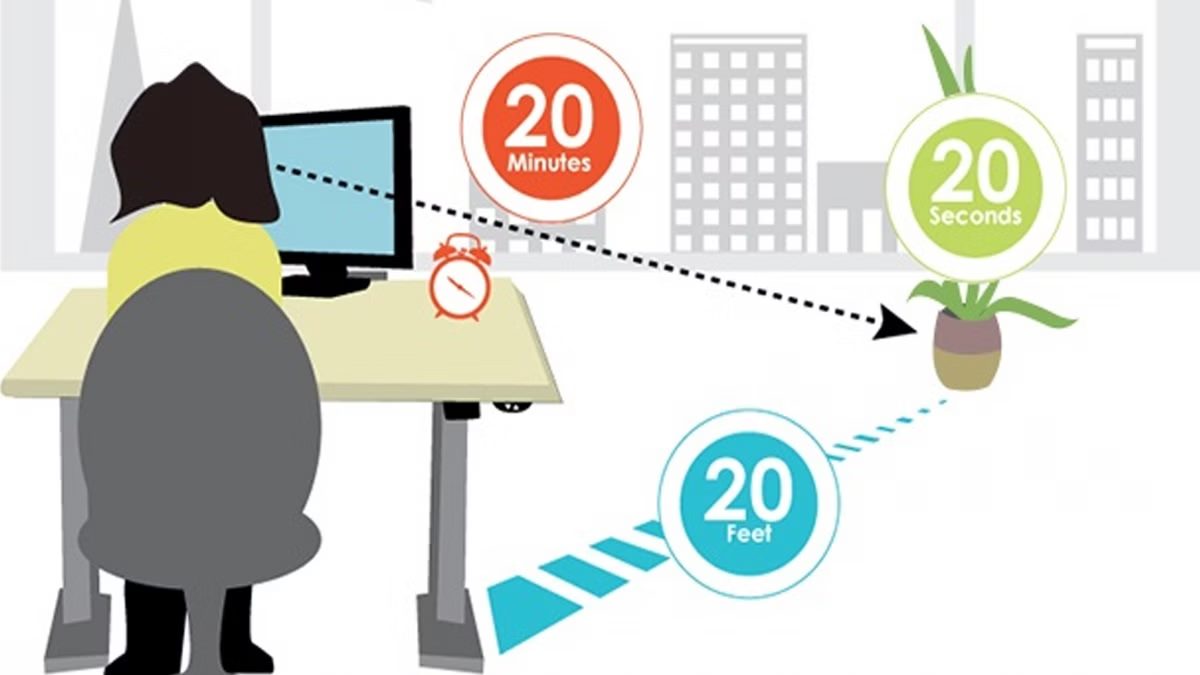
Apply the 20-20-20 rule to reduce eye strain from screen use.
To quickly relieve gritty eyes and forehead pain, you can apply the following methods:
- The 20-20-20 Rule: Every 20 minutes, look at an object 20 feet away (about 6 meters) for at least 20 seconds. This acts as a “reset button” for your eyes.
- Use artificial tears: Choose preservative-free artificial tears (often packaged in small single-use vials) to immediately soothe gritty eye discomfort.
- Blink consciously: Develop the habit of blinking slowly and regularly when reading long texts.
- Gentle massage: Use your index fingers to gently massage the temples and the area between the eyebrows for 1–2 minutes to relieve tension in the forehead muscles.
Long-Term Prevention Tips
Adjust your ergonomics:
- Keep your computer screen 50–70 cm away from your eyes.
- The center of the screen should be positioned 10–20 degrees below eye level. This helps lower the upper eyelid, reducing the exposed surface area of the eyeball and minimizing dry eyes.
Control lighting conditions:
- Avoid direct glare from lights or windows reflecting onto the screen.
- Use blue-light filtering software or wear protective glasses when working at night.
Eye-friendly nutrition:
- Consume foods rich in Omega-3 fatty acids, such as salmon and walnuts, to improve tear film quality.
- Increase intake of Lutein and Zeaxanthin found in dark leafy greens like kale and broccoli to protect the macula from blue light damage.
Never rub your eyes when experiencing gritty eyes. Rubbing can scratch the cornea if tiny particles are present and create conditions for bacteria to enter, leading to infection or corneal ulcers.
If forehead pain and gritty eyes are accompanied by the following symptoms, seek immediate medical attention:
- Nausea or vomiting.
- Seeing colorful halos around lights.
- Severe pain inside the eyeball.
- Sudden vision loss. This may be a sign of Glaucoma, an acute increase in intraocular pressure that can cause permanent blindness if not treated during the “golden hours.”
We hope this article has provided all the information you need. Wishing you healthy and bright eyes every day!

 14/10/2026











 0916.741.763
 Appointment