

 vi
vi 29-May-2026
 51,205
 What Is Refractive Surgery?

Required screenings before refractive surgery
To understand why screening is necessary, we first need to understand the nature of refractive surgery.
Refractive surgery is a medical term that refers to surgical procedures (typically using laser technology or implantable intraocular lenses) designed to alter the focusing power of the eye’s optical system (including the cornea and crystalline lens). The ultimate goal is to ensure that images from the outside world are focused precisely on the retina, thereby eliminating or significantly reducing dependence on corrective eyewear.
Refractive Conditions That May Require Surgery
Refractive errors occur when the shape of the eye prevents light from focusing properly. Common types include:
- Myopia (Nearsightedness): The eyeball is too long or the cornea is excessively curved. Symptoms include blurred distance vision, squinting, and headaches. According to the World Health Organization (WHO), nearly 50% of the global population is expected to be myopic by 2050.
- Hyperopia (Farsightedness): The eyeball is too short or the cornea is too flat. Symptoms include blurred near vision and eye strain during reading.
- Astigmatism: The cornea has an irregular shape (similar to an oval-shaped ball rather than a round ball), causing blurred or distorted vision at all distances.
To correct refractive errors, patients may choose eyeglasses or contact lenses (including Ortho-K overnight lenses). However, refractive surgery (such as Phakic ICL, LASIK, Femto-LASIK, or ReLEx SMILE) provides the most definitive correction and the greatest visual freedom.
Mandatory Screening Process Before Refractive Surgery

Mandatory Screening Process Before Refractive Surgery
Not everyone who wishes to undergo myopia, hyperopia, or astigmatism surgery is a suitable candidate. According to ophthalmic statistics, approximately 10–15% of patients are deemed ineligible after comprehensive examinations to ensure safety. Below are the five mandatory screening steps you must undergo:
Step 1: Refractive and Visual Function Assessment
This foundational step establishes the current visual profile of your eyes.
- Objective and Subjective Refraction Testing: Determines the exact degree of myopia, hyperopia, or astigmatism. The doctor compares your current prescription with the true refractive error measured after cycloplegic eye drops are administered.
- Visual Acuity and Contrast Sensitivity Testing: Evaluates your ability to distinguish details under different lighting conditions, such as nighttime or glare situations.
- Intraocular Pressure Measurement: Assesses the pressure inside the eye.
Measuring intraocular pressure is critically important for early glaucoma screening, as glaucoma can cause irreversible optic nerve damage. If elevated eye pressure is detected, it must be controlled before considering refractive surgery.
Step 2: Corneal Structure Assessment (The Decisive Factor)
For laser-based procedures (LASIK, SMILE), the cornea is the primary tissue being treated.
- Corneal Topography: Specialized imaging equipment scans and reconstructs a three-dimensional map of the cornea. This examination evaluates corneal curvature and detects abnormalities, especially keratoconus, which is an absolute contraindication for laser refractive surgery.
- Corneal Thickness Measurement: Laser surgery removes a portion of corneal tissue to correct refractive errors. Therefore, the cornea must be thick enough so that the remaining stromal bed maintains adequate biomechanical stability (typically at least ). If the cornea is excessively thin, laser surgery may lead to the serious complication of corneal ectasia.
Step 3: Comprehensive Retinal and Anterior Segment Examination
Clear vision requires not only a healthy cornea but also a healthy retinal and visual nerve system.
- Optical Coherence Tomography (OCT): Examines the retinal layers and macula in microscopic detail to rule out retinal detachment, macular holes, and other retinal diseases.
- Dilated Fundus Examination: Eye drops are used to dilate the pupils. The ophthalmologist then carefully examines the peripheral retina. Highly myopic patients often have elongated eyeballs, which can stretch and thin the retina, increasing the risk of retinal tears or degeneration. If retinal tears are found, prophylactic laser photocoagulation is typically recommended at least 1–2 weeks before refractive surgery.
- Axial Length Measurement: Measures the overall size of the eye, helping predict refractive progression and calculate lens power for Phakic ICL procedures.
Step 4: Ocular Surface Evaluation & Dry Eye Assessment
Dry eye tests (Schirmer test or TBUT) are performed to assess tear function and identify severe dry eye cases.
Note: Laser refractive surgery may temporarily disrupt certain corneal sensory nerves, reducing natural tear production and worsening dry eye symptoms after surgery (typically for 3–6 months). Therefore, if you already have significant dry eye disease, your ocular surface must be stabilized before surgery can be performed.
Step 5: General Medical Evaluation and Laboratory Testing
The doctor will carefully review your medical history, including conditions such as diabetes, autoimmune diseases (e.g., lupus), pregnancy, or breastfeeding, as these may make refractive surgery unsuitable.
For Phakic ICL procedures specifically, additional blood tests (to rule out active infections) and corneal endothelial cell counts are mandatory to ensure that the anterior chamber has sufficient space and safety for long-term lens implantation.
Screening for Asymptomatic Meibomian Gland Dysfunction (MGD)
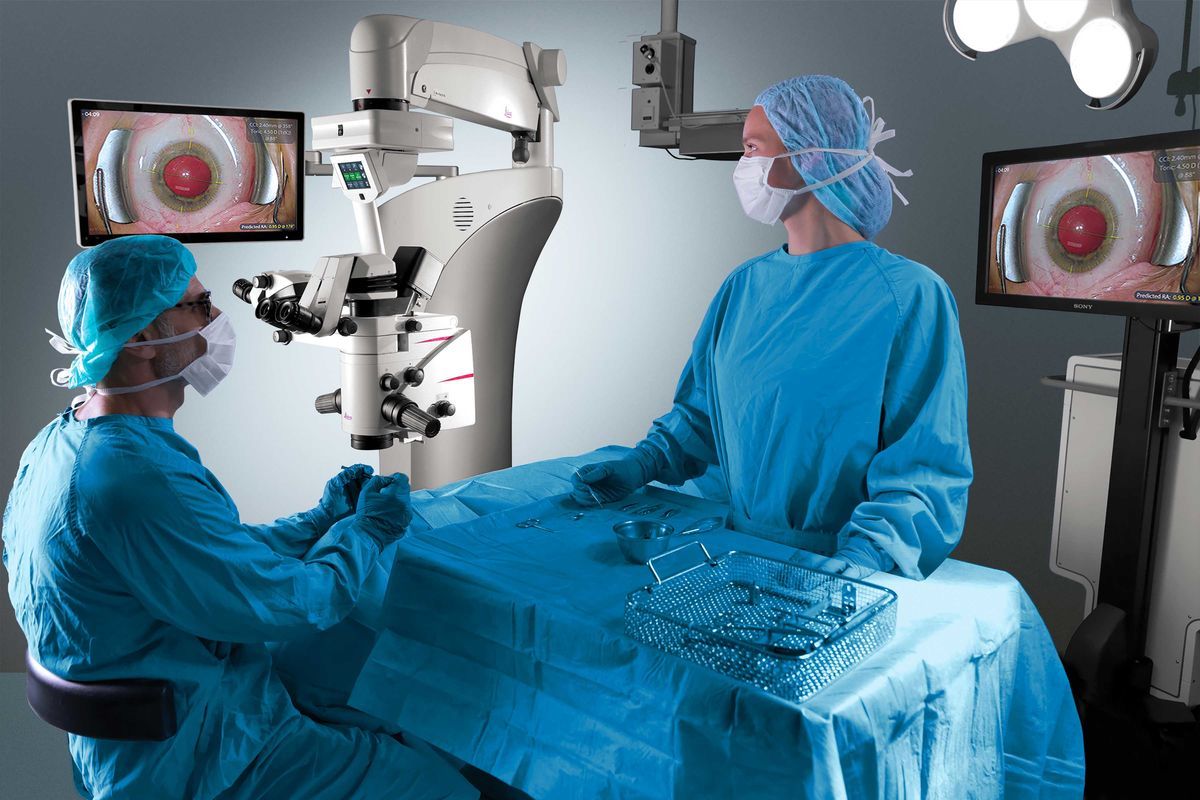
Refractive surgery is a revolution that helps free your eyes
One of the ophthalmic topics receiving increased attention recently is the importance of screening for asymptomatic Meibomian Gland Dysfunction (MGD) before refractive surgery.
The Meibomian glands are located along the eyelid margins and are responsible for producing the lipid layer of the tear film, which prevents tears from evaporating too quickly.
Clinical studies have shown that patients with severe MGD tend to be older and have higher degrees of myopia. Many individuals with early-stage MGD experience no noticeable symptoms of irritation or grittiness (known as asymptomatic MGD). However, the condition directly affects the accuracy of preoperative corneal measurements and functional vision assessments.
If MGD is not treated beforehand, an unstable tear film can lead to inaccurate refractive measurements, resulting in overcorrection or undercorrection during laser treatment. In addition, postoperative dry eye symptoms may worsen significantly, severely affecting visual quality.
Important Notes for Patients
To ensure a smooth screening appointment and refractive surgery experience, you should follow these important guidelines:
Stop Wearing Contact Lenses Before Examination: Soft contact lenses should be discontinued for at least 7 days, while rigid contact lenses (Ortho-K) should be discontinued for at least 2–4 weeks before your screening appointment. Contact lenses temporarily alter the shape of the cornea, which can significantly distort corneal topography results.
Do Not Drive Yourself to the Appointment: During the examination, pupil-dilating drops will be used. These drops can cause blurred near vision and increased light sensitivity for 4–6 hours. Arrange for transportation or have someone accompany you.
Prevent Myopia Recurrence Through Healthy Habits: Refractive surgery corrects your current prescription but does not change the fundamental structure of your eyeball. After surgery, if you continue working on computers for 12 hours per day in poor lighting and fail to follow the 20-20-20 rule (looking 20 feet away for 20 seconds every 20 minutes), you remain at risk of myopia recurrence.
Refractive surgery is a revolutionary solution that can free you from dependence on glasses, but your safety must always come first. Do not rush to choose a procedure based solely on cost or popular trends. Instead, undergo a thorough and comprehensive screening process at a reputable ophthalmology center. This is the strongest safeguard you can provide for the windows to your soul.

 01/10/2026










 0916.741.763
 Appointment