

 vi
vi 10-Sep-2026
 14,725
 Astigmatism can be surgically corrected in many cases, but having astigmatism does not automatically mean that surgery can be performed right away. Before selecting the most appropriate treatment, the ophthalmologist needs to determine the type of astigmatism, refractive stability, corneal shape and thickness, ocular surface condition, and the overall health of the eyes.

Can astigmatism be corrected with surgery?
What Is Astigmatism?
Astigmatism is a refractive error that occurs when the cornea or crystalline lens has an irregular curvature instead of the evenly curved shape of a sphere. As a result, incoming light does not focus precisely at a single point on the retina. This can cause blurred or distorted vision at any distance, along with symptoms such as headaches, eye strain, and difficulty seeing at night. Astigmatism may occur on its own or together with myopia or hyperopia.
Can Astigmatism Be Corrected With Surgery?
Yes. Many cases of astigmatism can be corrected with refractive surgery. Depending on the structure of the eye and the patient’s refractive condition, the ophthalmologist may consider laser procedures that reshape the cornea or intraocular lens-based procedures.

Many cases of astigmatism can be corrected with refractive surgery
One important point to understand is that astigmatism does not usually resolve on its own and may remain stable or gradually change over time. In general, patients have three main options for improving vision: eyeglasses, contact lenses, or refractive surgery. Among these, surgery is the only option that can directly modify the eye’s optical system—for example, by reshaping the cornea—rather than simply compensating for the refractive error with corrective lenses.
Common Surgical Options for Astigmatism
Surgical correction of astigmatism primarily involves laser technology to reshape the cornea or lens-based procedures designed to improve the way light focuses on the retina. Commonly used options include:
1. Toric Phakic ICL (Implantable Collamer Lens)
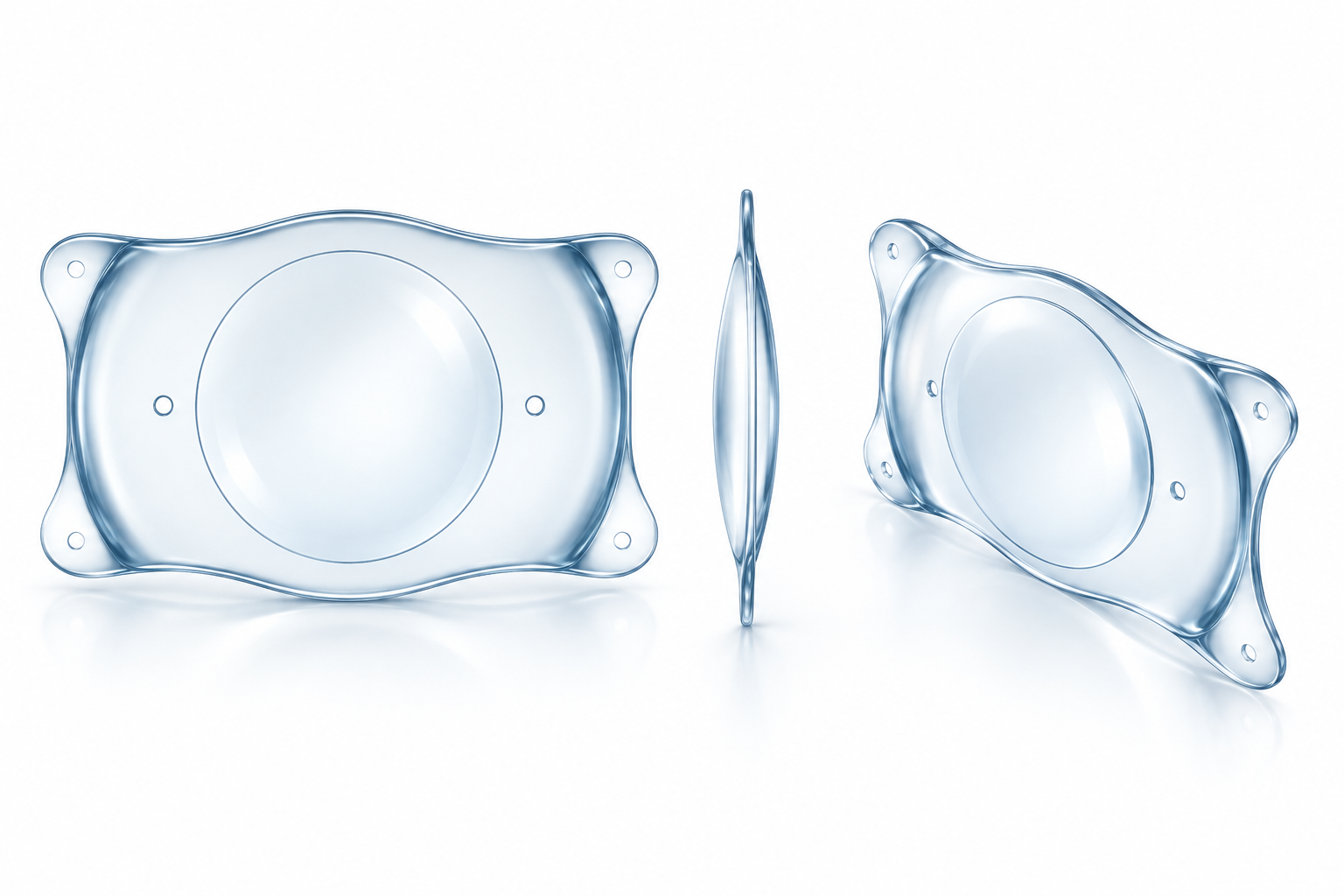
This procedure does not reshape the cornea. Instead, an ultra-thin, highly flexible biocompatible lens made from Collamer is implanted inside the eye, positioned between the back of the iris and the front surface of the natural crystalline lens. The Toric lens is designed according to each patient’s individual refractive measurements and can correct astigmatism and high myopia simultaneously in a single procedure.
Because the corneal tissue is preserved, Toric Phakic ICL may be particularly suitable for patients with thin corneas, significant astigmatism, or high myopia who are not suitable candidates for corneal laser surgery. The lens can also be removed or replaced if clinically necessary. The procedure requires only a very small incision, typically less than 3 mm, and visual recovery is generally rapid, although the cost is usually higher than that of laser-based procedures.
2. LASIK (Laser-Assisted In Situ Keratomileusis)
During LASIK, the surgeon creates a thin flap on the surface of the cornea and then uses an excimer laser to reshape the underlying corneal tissue. The flap is subsequently repositioned. LASIK offers relatively rapid visual recovery and minimal postoperative discomfort, making it suitable for people who wish to return to work and daily activities quickly. It is one of the most widely performed refractive procedures and can correct myopia, hyperopia, and astigmatism.
3. PRK (Photorefractive Keratectomy)
PRK was developed before LASIK. Instead of creating a corneal flap, the surgeon removes the outermost epithelial layer and uses a laser to reshape the underlying corneal surface. Because no flap is created, PRK may be considered for patients with relatively thin corneas, those who participate in contact sports, or individuals at higher risk of eye trauma. Its main disadvantages are a longer recovery period and greater postoperative discomfort compared with LASIK.
4. SMILE (Small Incision Lenticule Extraction)
SMILE uses a femtosecond laser to create a small, lens-shaped piece of tissue called a lenticule within the cornea. The lenticule is then removed through a small incision, without the need to create a large corneal flap as in LASIK. This approach reduces the risk of flap-related complications, may cause less postoperative dry eye, and generally provides relatively rapid recovery. However, SMILE is primarily used to correct myopia and astigmatism and may be less suitable for certain cases involving high astigmatism or irregular corneal anatomy.
In addition to the procedures above, for patients over the age of 55 or those who also have cataracts, the ophthalmologist may consider implantation of a Toric intraocular lens (Toric IOL). Unlike Toric Phakic ICL, this procedure removes and replaces the natural crystalline lens, most commonly as part of cataract surgery.
Who Is a Suitable Candidate for Astigmatism Surgery?
Not everyone who wants refractive surgery is immediately eligible for the procedure. Some of the basic factors that ophthalmologists usually assess include:
Age: Patients are generally at least 18 years old and should have a stable refractive prescription, typically with no change greater than 0.5 diopters over the previous 6–12 months.
Degree of astigmatism: The refractive error needs to fall within the treatment range of the selected procedure. For laser surgery, the treatable range commonly depends on the specific technology and the individual characteristics of the cornea.
Corneal thickness and shape: The cornea needs to have sufficient thickness and should not show signs of keratoconus or other significant corneal abnormalities.
Overall eye health: The eyes should not have active infections, severe ocular surface disease, uncontrolled glaucoma, or other conditions that could compromise surgical safety or recovery.
General health: Surgery is generally postponed during pregnancy or breastfeeding because hormonal changes may temporarily affect refractive measurements. Certain autoimmune diseases or medical conditions that interfere with wound healing may also affect eligibility.
A specific surgical recommendation can only be made after a comprehensive preoperative examination, which may include corneal curvature measurements, corneal topography or tomography, pachymetry, retinal examination, and intraocular pressure assessment.
Is Astigmatism Surgery Safe, and What Are the Risks?
With advances in modern technology, refractive surgery is generally considered safe and effective for appropriately selected patients, with serious complications being uncommon. Many patients achieve good unaided vision after surgery and significantly reduce their dependence on glasses or contact lenses. However, as with any medical procedure, refractive surgery still carries potential risks. These may include temporary dry eye, increased light sensitivity, glare or halos at night, and, in some cases, the need for an enhancement procedure if the final refractive result does not fully meet expectations. Many postoperative symptoms improve during the recovery period and can be managed more effectively when patients follow their ophthalmologist’s aftercare instructions carefully.
When Should Astigmatism Surgery Be Avoided or Postponed?
Refractive surgery may not be recommended or may need to be postponed when the refractive prescription is unstable, the cornea is too thin or shows signs of keratoconus, the patient is pregnant or breastfeeding, an autoimmune condition or diabetes is poorly controlled, severe dry eye is present, or there is an active eye infection or inflammation. In these situations, eyeglasses or contact lenses may remain the safer and more appropriate option until the eye condition becomes suitable for reassessment.
This article is for informational purposes only and is not a substitute for diagnosis or treatment recommendations from a qualified ophthalmologist.
Frequently Asked Questions About Astigmatism Surgery
Can Astigmatism Go Away on Its Own?
Astigmatism caused by the optical structure of the eye generally does not disappear simply through rest or reduced use of digital devices. Depending on the individual case, eyeglasses, contact lenses, or refractive correction procedures may be used to improve vision.
Can Astigmatism Be Corrected With LASIK?
Yes, in suitable candidates whose type and degree of astigmatism fall within the treatment range and whose corneas meet the necessary safety criteria. The ophthalmologist will need to evaluate corneal topography, corneal thickness, and other relevant factors before determining whether LASIK is appropriate.
Can Myopia and Astigmatism Be Corrected at the Same Time?
In many cases, myopia and astigmatism can be corrected simultaneously. The most appropriate procedure depends on the degree of refractive error, corneal characteristics, overall eye health, and the findings of the preoperative examination.
Can Someone With a Thin Cornea and Astigmatism Have Surgery?
A thin cornea requires careful evaluation before treatment is selected. Patients who are not suitable candidates for certain corneal laser procedures may still be considered for other options, but eligibility cannot be determined based on corneal thickness alone.
Can Astigmatism Return After Surgery?
Refractive error can change after surgery in some patients. A preoperative examination helps assess current refractive stability, while regular eye examinations after treatment allow any subsequent changes to be monitored.

 01/10/2026











 0916.741.763
 Appointment