

 vi
vi 05-Sep-2026
 19,095
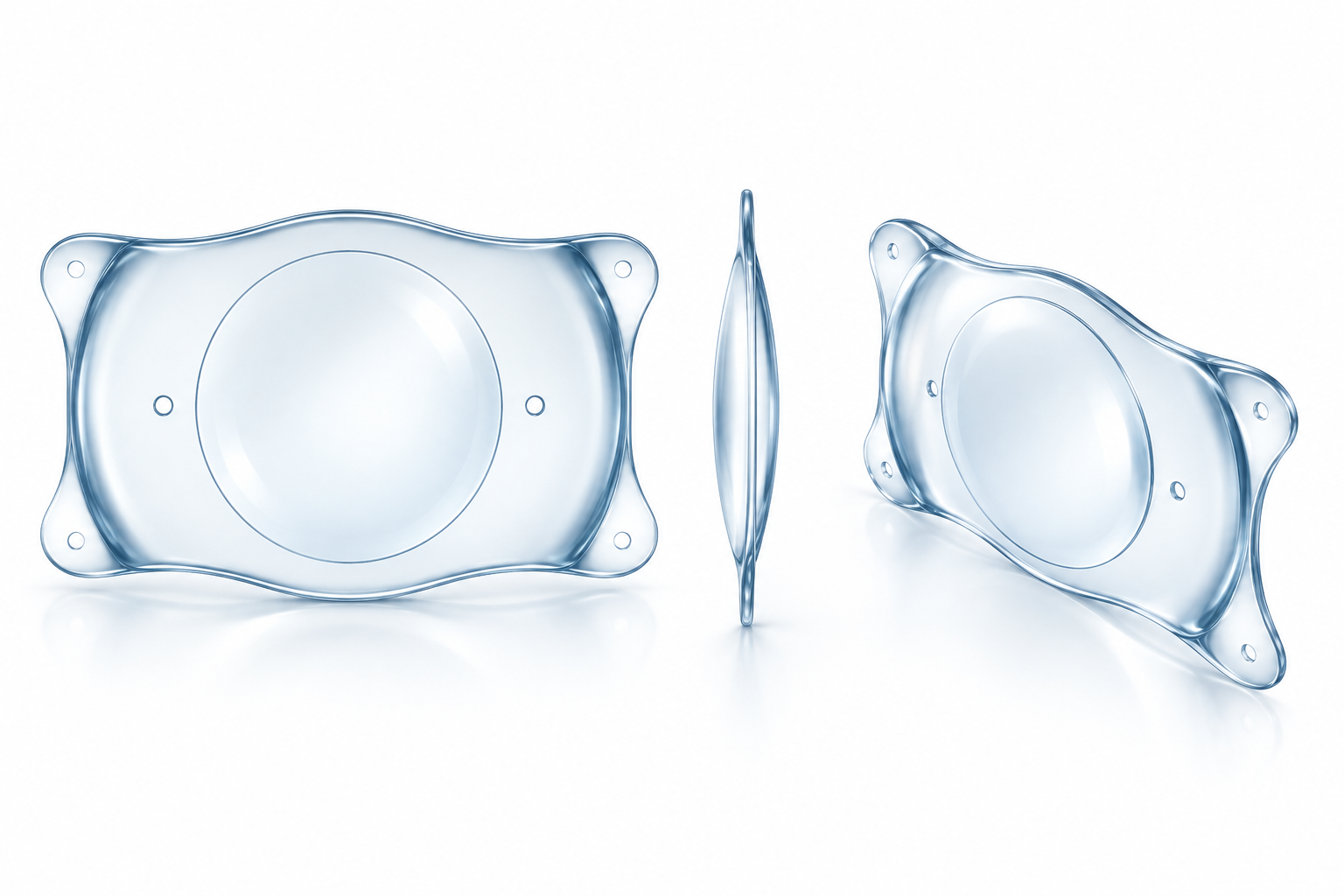
 Phakic ICL EVO is a refractive correction method that involves placing an additional intraocular lens inside the eye while preserving the natural crystalline lens.
What is Phakic ICL EVO? What You Need to Know Before Choosing It
How Does Phakic ICL EVO Work?
Phakic ICL EVO uses a lens that is placed inside the eye, behind the iris and in front of the natural crystalline lens. This lens provides the additional optical power needed to help light focus more accurately on the retina.
The term “phakic” means that the eye’s natural crystalline lens remains in place. Therefore, Phakic ICL differs from cataract surgery, in which the natural crystalline lens is removed and replaced with an artificial intraocular lens.
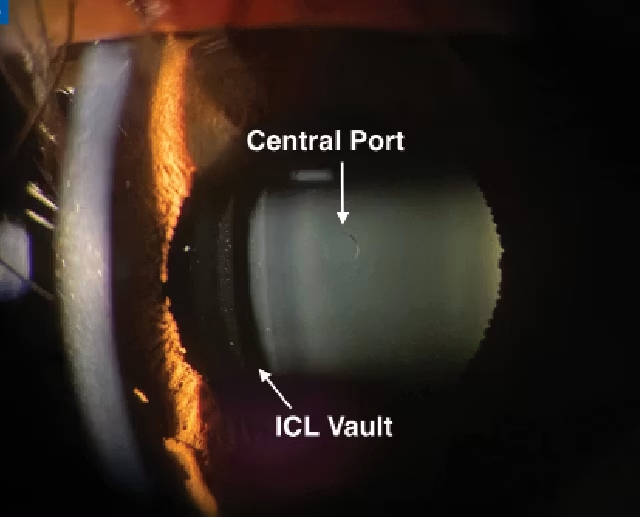
An important feature of the EVO ICL is its central-port design, which helps support the flow of aqueous humor. However, the specific lens design, size, and power required must be determined by a doctor based on measurements of each individual eye.
How Is Phakic ICL EVO Different from LASIK or SMILE?
The main difference lies in how refractive error is corrected. LASIK, PRK, and other corneal laser procedures correct myopia by changing the shape of the cornea. In contrast, Phakic ICL EVO adds a lens inside the eye without removing corneal tissue to create new refractive power. This makes ICL an option worth considering in certain cases, such as high myopia, a relatively thin cornea, or when a doctor determines that removing additional corneal tissue would not be an appropriate choice.
However, the fact that Phakic ICL EVO does not use a laser to reshape the cornea does not mean it is “better” for every patient. It is still an intraocular surgery and has its own set of risks. The appropriate method should be selected based on each person’s eye structure and visual goals.
Who May Be Considered for Phakic ICL EVO?
Phakic ICL EVO is often considered by doctors for adults with stable refractive errors who wish to reduce their dependence on glasses or contact lenses. Some cases that may be considered include:
- People with relatively high levels of myopia.
- People whose corneas are not suitable for removing the amount of tissue required for laser correction.
- People who prefer an option that does not involve creating a corneal flap.
- People who have undergone a comprehensive evaluation and have an anterior chamber structure suitable for lens implantation.
High myopia alone is not enough to determine whether someone is suitable for Phakic ICL EVO. A doctor also needs to assess the health of the cornea, corneal endothelium, crystalline lens, intraocular pressure, retina, and other anatomical parameters.
For people with high myopia, a retinal examination before surgery is particularly important because high myopia itself may be associated with a risk of retinal disease, regardless of whether ICL surgery is performed.
What Examinations Are Needed Before Phakic ICL EVO Implantation?
The preoperative evaluation for Phakic ICL EVO is usually more detailed than a routine vision prescription test. A doctor may need to assess refraction, corneal topography and thickness, anterior chamber depth, anatomical measurements related to lens sizing, endothelial cell density, intraocular pressure, the condition of the crystalline lens, and the retina.

What Examinations Are Needed Before Phakic ICL EVO Implantation?
The purpose of this process is not simply to determine “how many diopters of myopia” a person has, but to answer three questions: whether the eye is suitable for lens implantation, which lens is appropriate, and which parameters need to be monitored after surgery. This is also why patients should not choose Phakic ICL EVO based solely on a price list or general recommendations.
What Should Be Monitored After Phakic ICL EVO?
After surgery, the doctor will check visual acuity, intraocular pressure, the position of the lens, and the condition of the structures in the front of the eye. One important parameter is the distance between the ICL and the natural crystalline lens, commonly referred to as the vault.
A vault that is too low or too high may require further evaluation by a doctor. Therefore, surgical outcomes should not be assessed solely by asking “how clearly can I see,” but also by determining whether the lens is positioned appropriately within the eye. Patients should also attend follow-up appointments as scheduled, even if their vision is clear and they do not experience any unusual symptoms.
Can Phakic ICL EVO Be Removed?
One notable difference with Phakic ICL is that the lens is added inside the eye rather than corneal tissue being removed. In situations where there is a medical indication, a doctor may intervene to remove or replace the lens.
However, this does not mean that Phakic ICL EVO should be regarded as a procedure that is “completely reversible without risk.” Any intraocular intervention, including implanting, replacing, or removing the lens, must be considered by a doctor based on the specific benefits and risks involved.

 01/10/2026












 0916.741.763
 Appointment