

 vi
vi 11-Mar-2026
 950
950 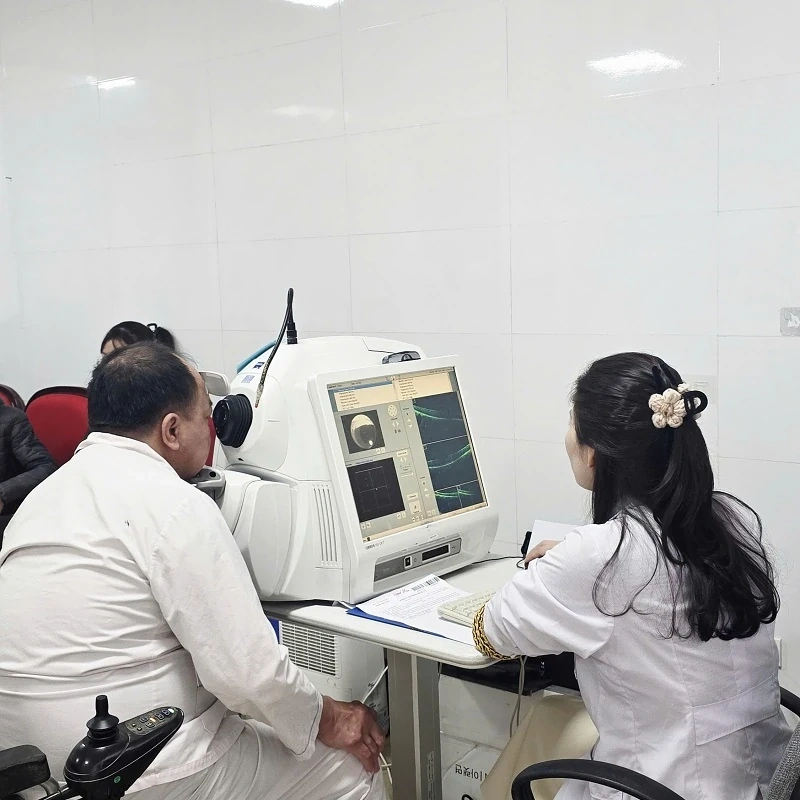
Doctors recommend regular eye exams to screen for Glaucoma.
The World Glaucoma Week 2026 takes place from March 8 to March 14 with the message: “Working together for a world without Glaucoma.” This is a global health campaign aimed at raising public awareness about Glaucoma – a disease often referred to as the “silent thief of sight” and one of the leading causes of irreversible blindness.
During World Glaucoma Week, ophthalmology centers around the world organize many communication campaigns, screening programs, and consultation activities to help people better understand this dangerous disease, encouraging them to have regular eye examinations and detect it early.
Alarming statistics about Glaucoma
According to statistics from international ophthalmology organizations, approximately 78 million people worldwide are currently living with Glaucoma. By 2040, this number is projected to increase to 111.8 million, reflecting the concerning growth rate of this vision-threatening disease.
Notably, more than 50% of Glaucoma patients are not diagnosed at an early stage, making treatment more difficult and increasing the risk of vision loss. In many developing countries, the situation is even more serious as up to 90% of people with the disease do not have adequate access to eye care services and Glaucoma screening.
Many cases are only detected when vision has already significantly deteriorated or the field of vision has noticeably narrowed. At that point, damage to the optic nerve has often occurred and the lost vision is almost impossible to restore.
Therefore, World Glaucoma Week is held every year to raise public awareness about this disease while encouraging people to proactively undergo regular eye examinations to detect and treat Glaucoma in time.
Glaucoma damages the optic nerve

Glaucoma damages the optic nerve
Glaucoma is a disease that damages the optic nerve, which plays a crucial role in transmitting visual signals from the eyes to the brain. When this nerve is damaged, the eye’s ability to receive and process images is affected, leading to a gradual decline in vision over time.
The disease often causes progressive vision loss and narrowing of the visual field, especially peripheral vision. As the disease progresses, the visible area becomes increasingly limited. The concerning aspect is that vision lost due to Glaucoma is almost impossible to recover because optic nerve damage is permanent.
One of the most dangerous aspects of Glaucoma is that it often progresses silently, especially in the early stages. Many patients do not notice any unusual symptoms until their vision becomes significantly impaired, at which point optic nerve damage is usually already severe.
Reality: many patients detect Glaucoma too late

Mr. L.K.T detected Glaucoma at a late stage
At many eye specialist facilities, doctors frequently receive Glaucoma patients when the disease has already progressed to an advanced stage. Most patients only seek medical attention when their field of vision begins to narrow, their eyes remain persistently blurred, or their vision has significantly deteriorated. In some cases, patients only go for examination when their ability to see has already declined markedly and started to affect their daily activities.
A typical case is Mr. L.K.T. (Thanh Hoa). Over the course of about a month, he noticed that his vision gradually became blurry and occasionally experienced mild eye pain. However, thinking that this was simply a normal sign of aging, he did not go for an eye examination. Only when his vision had almost completely deteriorated and daily activities became difficult did he visit the hospital for a check-up.
After examinations and necessary tests, doctors determined that he had late-stage Glaucoma. To control intraocular pressure and prevent the disease from worsening, doctors recommended surgery. After treatment, his vision improved to a certain extent, but it could not fully return to the way it was before.
This story reflects a reality that many ophthalmologists encounter in clinical practice. Many patients are only diagnosed when optic nerve damage has already occurred. This is a warning that late detection of Glaucoma can lead to permanent vision damage and increase the risk of blindness.
Current treatment methods for Glaucoma

Current treatment methods for Glaucoma
According to specialists at Thanh Hoa Eye Hospital, Glaucoma can currently be treated using several methods such as medication, laser therapy, and surgery. However, treatment outcomes and prognosis depend greatly on how early the disease is detected and how well patients adhere to the prescribed treatment plan.
The goal of Glaucoma treatment is to prevent further damage to the optic nerve, preserve existing vision, and alleviate symptoms. This is because vision loss caused by Glaucoma is permanent and cannot be reversed.
Who is at risk of Glaucoma?
During World Glaucoma Week, experts emphasize that anyone can develop the disease. However, some groups are at higher risk, including:
- People over 40 years old
- People with a family history of Glaucoma
- People with chronic conditions such as hypertension or diabetes
- People with high myopia
- People with eye diseases
- People who use corticosteroids for a long time
These groups should pay special attention to regular eye examinations.
Working together for a world without Glaucoma

Responding to World Glaucoma Week 2026, Thanh Hoa Eye Hospital strengthens community awareness and consultation activities.
In response to World Glaucoma Week 2026, Thanh Hoa Eye Hospital has intensified various communication and consultation activities to raise public awareness about this dangerous disease. Through these programs, people are provided with knowledge about the risks of Glaucoma, early warning signs, preventive measures, and the importance of early detection and timely treatment. All activities aim toward the shared message of this year’s World Glaucoma Week: “Working together for a world without Glaucoma.”
According to Dr. Le Xuan Dong, Deputy Head of the Glaucoma Department at Thanh Hoa Eye Hospital, people in high-risk groups should undergo Glaucoma screening every six months to detect the disease early. For those who are not in high-risk groups, a comprehensive eye examination at least once a year is still essential to monitor eye health and detect potential eye diseases.
He also emphasized that Glaucoma cannot be completely cured. However, if detected early and treated properly, the disease can be effectively controlled, helping patients maintain their vision and reduce the risk of blindness. In addition, people should not use medication without a doctor’s prescription, as the misuse of certain drugs may increase the risk of developing Glaucoma. When experiencing abnormal symptoms such as blurred vision, eye pain, or reduced vision, individuals should visit an eye specialist for timely examination and consultation.
Doctors also note that people with Glaucoma require long-term monitoring and treatment. Even when the disease is diagnosed and stabilized, patients still need regular follow-up examinations to monitor its progression. In reality, many patients feel their symptoms improve after treatment and become complacent about follow-up visits, allowing the disease to progress silently and gradually reduce their vision.
Local activities responding to World Glaucoma Week

Local activities responding to World Glaucoma Week. Photo: Ninh Binh Newspaper
Within the framework of World Glaucoma Week 2026, on March 11, Ninh Binh Eye Hospital organized a rally at Binh Minh Commune Health Station with the theme “Unity for a world without Glaucoma.” The program aimed to raise community awareness about the seriousness of Glaucoma and the importance of early detection in protecting vision.
Speaking at the event, leaders of Ninh Binh Eye Hospital emphasized that Glaucoma is a group of diseases that cause intraocular pressure to exceed the eye’s tolerance, leading to optic nerve damage and vision loss. It is currently one of the leading causes of irreversible blindness worldwide, with tens of millions of people living with the condition and the number continuing to increase, especially as populations age.
As part of the activities during World Glaucoma Week, doctors from Ninh Binh Eye Hospital conducted screening examinations, intraocular pressure measurements, and free consultations for more than 300 residents in Binh Minh Commune. In addition, people were guided on eye care practices, how to recognize early warning signs of vision problems, and ways to better protect their eye health.
These activities help spread the message of World Glaucoma Week: early detection to control intraocular pressure, preserve vision, and reduce the risk of blindness caused by Glaucoma.

 08/03/2026













 0916.741.763
 Appointment