

 vi
vi 21-Feb-2026
 1,520
1,520 Psychological Anxiety Before Eye Surgery

Psychological Anxiety Before Eye Surgery
Fear of squinting, fear of moving the eyes, fear of “accidentally ruining the surgery” are very common concerns before refractive procedures. From a physiological perspective, this is a normal response of the sympathetic nervous system when facing an unfamiliar situation. The body increases heart rate and cortisol levels, creating a sense of losing control.
However, modern refractive surgery is designed to control these factors and does not rely entirely on the patient’s willpower to stay perfectly still.
Many studies on preoperative psychology show that approximately 60–80% of patients experience mild to moderate anxiety before surgery. Yet with thorough counseling, this rate decreases significantly and does not affect surgical outcomes.
Is Eye Surgery Really Dangerous If You Blink?
With modern refractive techniques, including Phakic ICL, eye surgery does not unfold the way many people imagine.
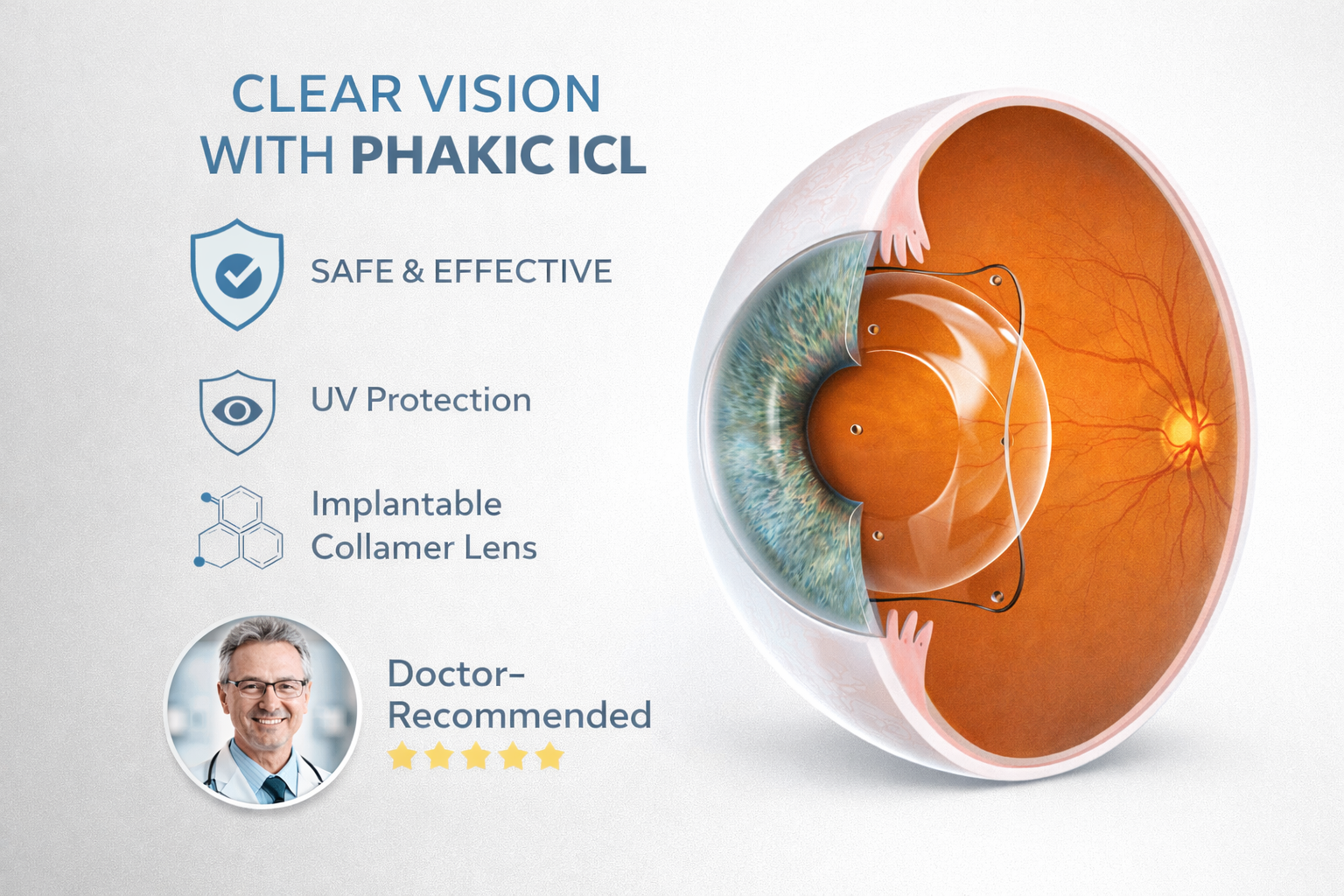
In the Phakic ICL procedure, the surgeon creates a very small incision at the edge of the cornea and inserts the lens behind the iris and in front of the natural crystalline lens. The entire process is performed under topical anesthesia using numbing eye drops. You remain awake but feel no pain.
More importantly, during surgery there are always:
- Eyelid speculums to keep the eye open
- High-magnification surgical microscopes
- A precise, step-by-step surgical protocol
- A very short actual operating time
This means that a natural blink or slight movement does not “ruin the surgery” as many people fear. The procedure is performed in a controlled environment, not in a fragile situation easily disrupted.
Why Does Phakic ICL Reduce Psychological Pressure?
Phakic ICL has several characteristics that help many patients feel more reassured:
First, it does not alter the corneal tissue like LASIK or SMILE. This helps patients avoid worrying about “cutting” or thinning the cornea.
Second, the procedure time is short. Typically, one eye takes only a few minutes.
Third, the lens can be removed if necessary. This reversibility provides a stronger sense of control and psychological safety.
Postoperative follow-up studies show very high satisfaction rates after Phakic ICL, often above 95%, especially among patients with high myopia and thin corneas. When patients clearly understand its effectiveness and safety, their preoperative anxiety tends to decrease significantly.
5 Ways to Stay Calm During Eye Surgery

5 Ways to Stay Calm During Eye Surgery
1. Understand the Surgical Process Clearly
The brain tends to exaggerate risks when information is lacking, a phenomenon known in psychology as catastrophic thinking. When you do not clearly understand what will happen, the sympathetic nervous system becomes more activated, increasing heart rate and even causing slight muscle tremors around the eyes.
Example:
A 27-year-old female patient with -10.00D myopia shared:
“I’m afraid I might accidentally move my eyes during surgery.”
After the doctor explained:
- There is an eyelid speculum
- There is a magnifying surgical microscope
- The surgeon controls the ICL alignment axis
- The procedure lasts only a few minutes
- Minor movements do not “displace the lens”
Her anxiety decreased noticeably during the consultation itself. Therefore, before undergoing surgery, ask your doctor to:
- Describe each step that will occur during the few minutes of surgery
- Explain what happens if you blink
- Tell you the actual duration of each step
When your brain has clear information, it gradually stops creating negative scenarios.
2. Practice Controlled Slow Breathing
When anxious, the body increases cortisol and adrenaline levels. This makes the heart beat faster, breathing become shallow, and creates a feeling of losing control. Inhale deeply for 4 seconds, hold for 4 seconds, and exhale for 6 seconds to activate the parasympathetic nervous system. Research on preoperative anxiety control shows that after just 3–5 minutes of slow breathing, heart rate can decrease by 5–10 beats per minute.
3. Focus on the Guided Fixation Point

Tips to Stay Calm During Refractive Eye Surgery
During surgery, the doctor will usually ask you to look at a fixed point. In reality, your brain cannot simultaneously analyze fear and perform a focused visual task.
When you are instructed to look at a fixed light, the visual cortex becomes strongly activated. This intentional focus mechanism helps reduce anxiety.
4. Trust the Built-In Protective Mechanisms of the Procedure
In Phakic ICL surgery, a very small incision is made at the corneal edge, and the lens is placed behind the iris. The entire process is performed under a surgical microscope in a fully controlled environment.
This shows that the procedure is designed to adapt to natural human reflexes. Therefore, blinking or moving your eyes during surgery does not affect the surgical outcome.
5. Acknowledge Your Fear Instead of Avoiding It
Instead of trying to push anxious thoughts away, accept them. Clinical psychology shows that acknowledging emotions reduces anxiety intensity faster than resisting it.
In refractive practice, most patients say something similar before surgery: “I’m afraid I might move my eyes during the procedure.” However, after surgery, most express surprise at how gentle and quick the experience was. When stepping out of the operating room, many even find it hard to believe it is already finished. This reflects an important truth: fear is often greater than the actual experience.
Being Calm Does Not Mean Being Fearless
Staying calm does not mean you must eliminate all anxiety. It means understanding the process, trusting professional expertise, and knowing that your body is not the factor that determines surgical success.
Modern refractive surgery, especially Phakic ICL, is built on advanced technology, precise microsurgical techniques, and strict procedural control. Patients do not need to be “perfect” for the surgery to succeed.

 14/02/2026













 0916.741.763
 Appointment