

 vi
vi 20-Jan-2026
 2,755
2,755 Congratulations to M.Sc., M.D. Nguyen Phu Tung on achieving the milestone of more than 500 Phakic ICL EVO surgeries!
This milestone is not just a number, but a strong affirmation of the hospital’s ability to apply advanced technology in the mission of myopia correction within the field of ophthalmology. It is an impressive achievement that demonstrates the surgeon’s expertise as well as the trust patients place in both the doctor and the hospital in refractive error treatment.
1. Emotions and the Significance of the Milestone
Question? How do you feel about reaching the milestone of 500 Phakic EVO ICL surgeries?
Doctor: This is a very impressive milestone of 500 cases, even for us, considering the implementation period has not been very long (just over one year). It clearly reflects the trust that patients place in the hospital as well as the technical team, and it brings a great sense of excitement to the entire hospital.
Question: Looking back on the journey from the very first Phakic EVO ICL case to the 500th case, could you share how your professional practice has evolved?
Doctor: From the very first cases to the present, we have continuously worked on improving ourselves. Each patient is a unique individual, and we always carefully evaluate their specific parameters in order to select the most suitable and safest lens for them.
2. Expertise and Surgical Technique
Question: What differentiates Phakic EVO ICL surgery from previous laser-based methods (such as LASIK or SMILE), making it an optimal choice for many patients?
Doctor: Phakic EVO ICL differs from laser-based methods in that it preserves the integrity of the cornea. It does not thin the cornea or cause dry eyes. Another outstanding advantage is that if the lens is found to be unsuitable, it can be removed relatively easily. Phakic EVO ICL preserves the cornea intact, whereas laser procedures permanently remove corneal tissue, and such epithelial loss is irreversible.
Question: With experience from over 500 cases, in your opinion, what is the “golden key” to ensuring absolute success in a Phakic ICL surgery?
Doctor: A successful surgery depends on many factors, but there are three most critical stages. First is the preoperative examination and evaluation, which must be extremely accurate and detailed, supported by the advanced equipment and technology we have invested in. Second is the surgical process itself, where the surgeon must be professionally trained and highly skilled to perform the procedure meticulously, precisely, and safely for the patient.
The third stage is postoperative follow-up. After surgery, patients must strictly adhere to the scheduled follow-up visits and medication instructions provided.
Question: Many patients worry about having a lens implanted inside the eye. Could you explain the safety and biocompatibility of the Phakic EVO ICL lens?
Doctor: Currently, our hospital primarily uses the EVO ICL lens, which has been widely used worldwide for more than 20 years and, most importantly, has been approved by the FDA. This serves as strong evidence of its quality and global recognition. I believe the biocompatibility of this lens is exceptional due to its collamer material. ICL (Implantable Collamer Lens) is a surgical method involving the implantation of a very small, soft, and flexible intraocular lens made from a unique biological material containing collagen. It corrects refractive errors (myopia, hyperopia, and astigmatism) without corneal ablation, making it safe for patients with thin corneas or high myopia, preserving ocular structure and allowing reversibility if necessary. This proprietary technology has helped patients feel confident, as EVO ICL has been used for over 20 years. In terms of biological interaction, among more than 500 cases, we have not recorded a single instance of adverse reaction to EVO ICL.
Question: Among the 500 cases, have you encountered particularly “challenging” cases, such as extremely high myopia, thin corneas, or unusual ocular anatomy?
Doctor: Among the 500 cases, we encountered two very special cases with myopia of around -18 diopters and astigmatism as high as -5 diopters. We selected the most appropriate solution for these patients by choosing lenses with optimal length and diameter tailored to their unique eye structure. Postoperatively, both patients were very satisfied with the outcomes.
3. Patient Experience
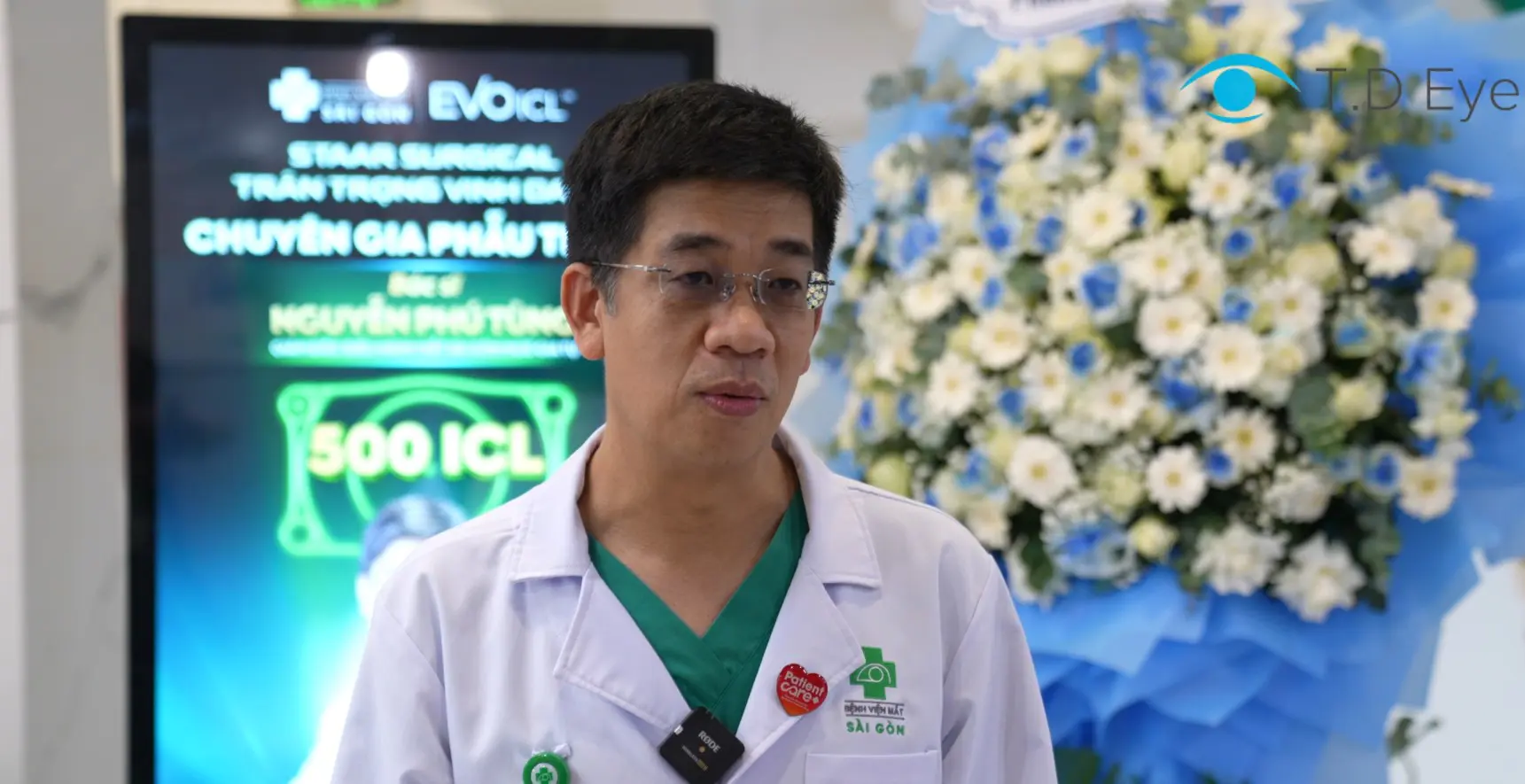
Interview article with M.Sc., M.D. Nguyễn Phú Tùng – Director of Saigon Eye Hospital – Ngo Gia Tu, celebrating the milestone of over 500 Phakic ICL surgeries
Question: How does patients’ vision typically change immediately after leaving the operating table following Phakic ICL surgery?
Doctor: For patients undergoing Phakic ICL surgery, vision typically recovers within 1 to 2 hours after the procedure. Once the eye patch is removed, patients can already see quite clearly, with visual acuity quickly reaching around 8–9/10.
Question: How do you assess the quality of vision (sharpness, night vision) in ICL patients compared to other refractive surgery methods?
Doctor: Compared to laser-based refractive surgeries, Phakic ICL surgery preserves the cornea, resulting in excellent postoperative vision quality, often described as full HD. In the first few weeks after surgery, patients may experience mild glare at night, but this typically resolves quickly as the eyes adapt.
Question: What is the most important advice you always give to your 500 patients after surgery?
Doctor: Phakic ICL surgery is primarily indicated for patients with high myopia. Therefore, I always explain to patients that the ICL lens essentially replaces their glasses—instead of being worn externally, it is placed inside the eye. High myopia itself remains a lifelong condition, so patients must attend regular follow-up examinations as scheduled and monitor for potential complications associated with high myopia, such as retinal diseases.
4. Vision and the Future
Question: What does the milestone of 500 cases mean for the development of your department or hospital?
Doctor: The hospital is very pleased to have achieved more than 500 cases in such a short implementation period. In the near future, we will continue to invest heavily in Phakic surgery, including the most advanced equipment available worldwide, to meet the growing demand of patients. The hospital will also invest in UBM IA systems integrated with Guru software to accurately determine Phakic lens sizing. This represents the gold standard in Phakic surgery.
Question: Do you have any message for young people with high myopia who are still hesitant about undergoing surgery?
Doctor: For young people with high myopia who are not suitable candidates for laser surgery due to thin corneas or extremely high refractive errors, Phakic EVO ICL is truly a lifesaving option. When laser methods are not viable, you can confidently seek out reputable hospitals with experienced, highly skilled surgeons to undergo Phakic EVO ICL surgery.

 17/01/2026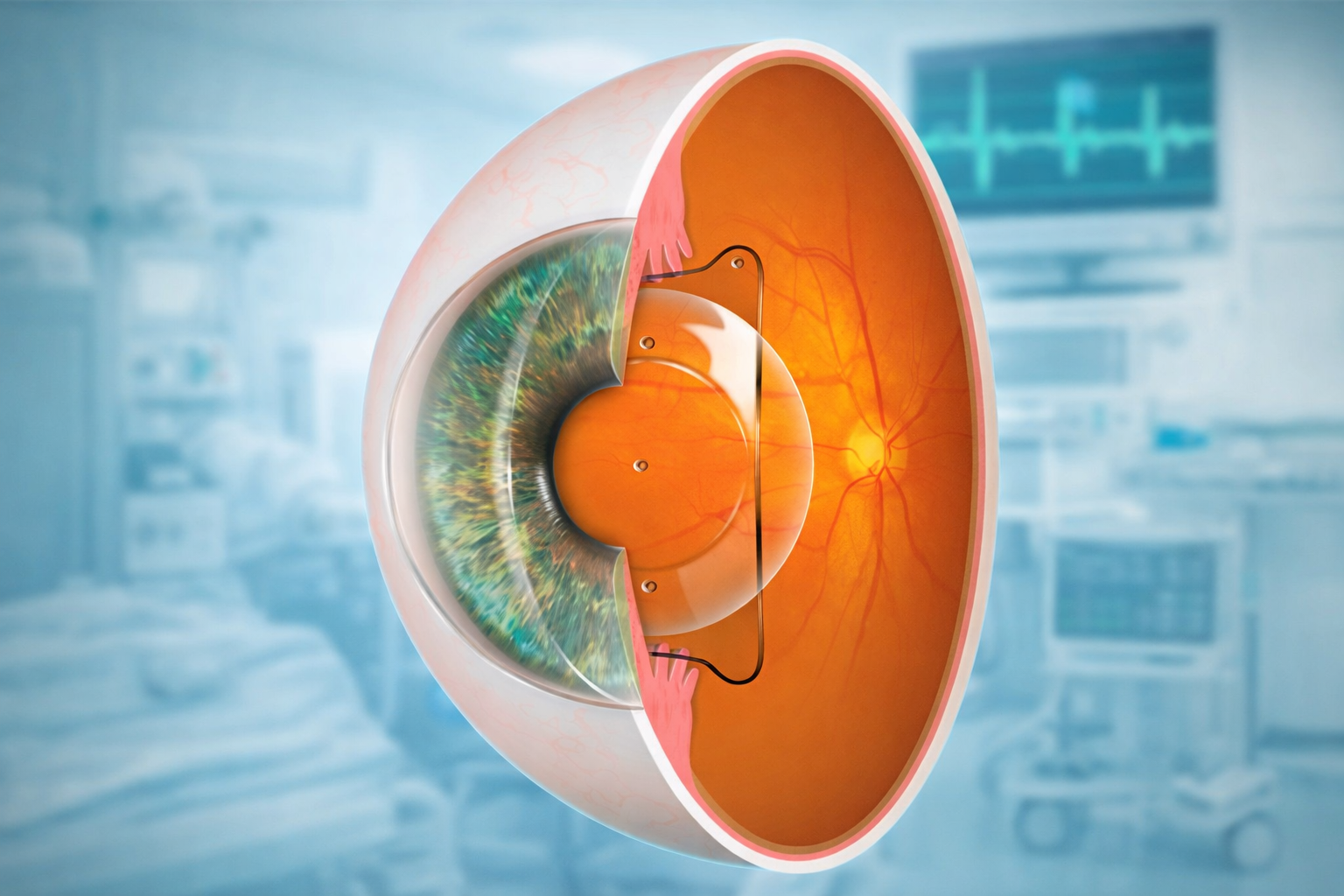











 0916.741.763
 Appointment