
 vi
vi 28-Jan-2026
 9,595
9,595 Many people feel reluctant to wear glasses, using them only when absolutely necessary, or even intentionally going without glasses in daily life. Few realize that inconsistent glasses wear is one of the factors that can cause myopia to progress more rapidly, leading to long-term consequences for eye health.
What Are Myopia Glasses and Their Role in Vision Correction
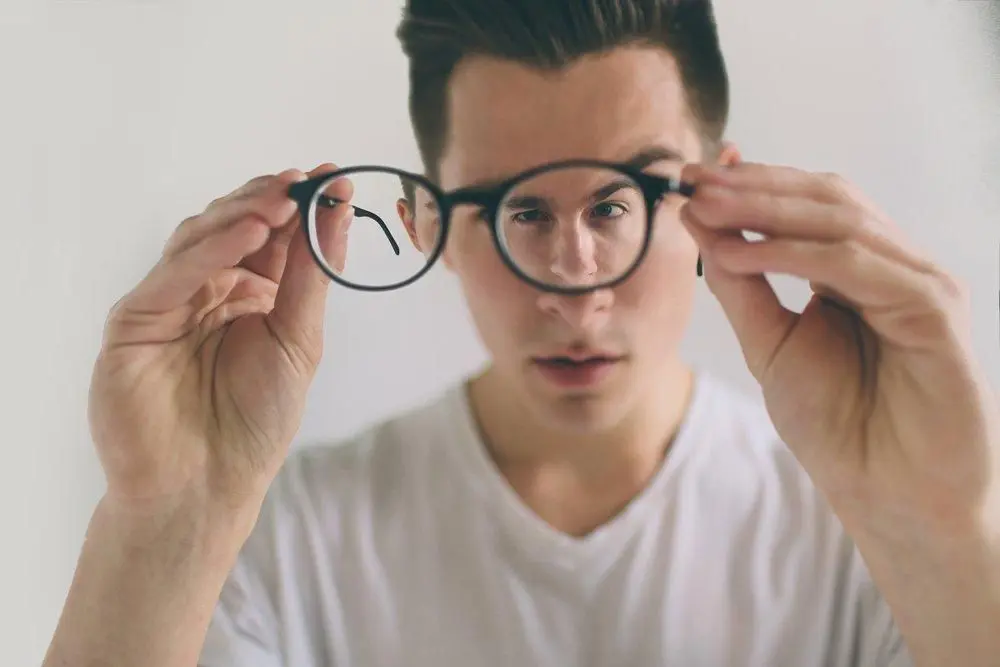
What Are Myopia Glasses and Their Role in Vision Correction
Myopia occurs when the axial length of the eyeball is longer than normal or when the refractive power of the cornea and crystalline lens is too strong, causing incoming light rays to focus in front of the retina instead of directly on it. As a result, distant objects appear blurred.
Myopia glasses are diverging lenses that help adjust the path of light so images are focused correctly on the retina. Thanks to this correction, the eyes can see more clearly without excessive accommodation. It can be said that glasses not only improve visual clarity but also help protect the eyes from prolonged visual strain.
At What Degree of Myopia Should You Start Wearing Glasses?
A common belief is that “mild myopia does not require glasses,” or that correction is only necessary when myopia becomes severe. In reality, whether glasses are needed depends not only on the numerical degree of myopia, but also on visual demands, the nature of one’s work, and the frequency of distance viewing.
- Myopia of 0.25 diopters: This is usually a very mild level and has little impact on daily activities. People at this level may not need to wear glasses regularly.
- Myopia of 0.50 diopters: This may begin to cause slight blur when viewing distant objects. Some individuals can still adapt, but those who frequently need to look at boards, drive, or work at a distance should consider wearing glasses.
- Myopia of 0.75 diopters: This is the level at which doctors often recommend starting to use glasses to prevent eye strain and rapid progression.
- Myopia of 1.00 diopter or higher: Wearing glasses becomes necessary, especially when driving, studying, or performing tasks that require clear distance vision.
- Myopia of 2.00 diopters or higher: Glasses are mandatory in daily activities and work to protect visual function.
Why Does Inconsistent Glasses Wear Cause Myopia to Progress Faster?

Why Does Wearing Glasses Inconsistently Cause Myopia to Progress Faster?
When the eyes are myopic but glasses are not worn, distant images remain blurred. To compensate for this blur, the eyes must constantly accommodate in an attempt to see more clearly. Prolonged accommodation causes the ciliary muscles to contract more than usual, leading to eye fatigue, dryness, and headaches.
More importantly, when inconsistent glasses use persists over time, the eyes may adapt in an abnormal way, causing the axial length of the eyeball to continue increasing. This is the mechanism behind faster myopia progression, particularly in young people and children during developmental stages.
In cases of moderate to high myopia where glasses are still worn inconsistently, the eyes are forced to function continuously without adequate optical support. This not only accelerates myopia progression but also increases the risk of retinal degeneration, retinal thinning, and even long-term visual impairment.
Should People with Mild Myopia Wear Glasses All the Time?
For individuals with mild myopia (under 1 diopter), near vision is often still relatively good. In situations where distance vision is not required or high visual concentration is unnecessary, glasses may not need to be worn throughout the entire day.
However, it is important not to intentionally go without glasses when distance vision is required, such as when driving, reading boards, viewing large screens, or moving outdoors. Wearing and removing glasses appropriately allows the eyes time to rest while still preventing excessive accommodation.
When Should Glasses Be Worn Regularly?
According to recommendations from eye care specialists:
- People with myopia of 1–2 diopters: Glasses should be worn for distance viewing, but not necessarily during close-up work.
- People with myopia of 2 diopters or higher: Glasses should be worn regularly to ensure clear vision and reduce accommodative strain.
- People with myopia of 3 diopters or higher: Wearing glasses is mandatory. Not wearing glasses in these cases can lead to rapid myopia progression and a higher risk of serious complications.
The Harm of Inconsistent or Incorrect Glasses Use
The Harm of Inconsistent or Incorrect Glasses Use
Not only avoiding glasses, but also wearing glasses with an incorrect prescription can cause eye fatigue and faster myopia progression. Wearing lenses stronger than the actual refractive error forces the eyes to accommodate in the opposite direction, leading to headaches and dizziness. Wearing lenses weaker than the true prescription causes the eyes to continue accommodating constantly, similar to not wearing glasses at all.
In addition, poor-quality lenses, improperly centered frames, or overly tight frames can cause eye discomfort, visual distortion, and even diplopia if prolonged.
How to Care for Myopic Eyes
Regular eye examinations are the most important factor. People with myopia should have their eyes checked every 3–6 months to monitor refractive changes and adjust prescriptions promptly. This helps prevent wearing incorrect glasses that may accelerate myopia progression.
In addition, it is essential to choose reputable eye care facilities with qualified specialists and accurate refractive measurement equipment. Lenses should have the correct prescription and provide UV protection, blue light reduction, and glare control to better protect the eyes in daily life.
Furthermore, develop healthy visual habits: after every 30 minutes of near work, allow the eyes to rest for 1–2 minutes by looking into the distance or closing the eyes to relax and reduce accommodative strain.
If you are uncertain about your degree of myopia or unsure when to wear glasses, consider scheduling an eye examination early to receive appropriate professional advice.

 01/02/2026










 0916.741.763
 Appointment