

 vi
vi 25-Feb-2026
 950
950 What Is a Pre-Refractive Surgery Examination?

Why shouldn’t you drive yourself after a pre-refractive surgery examination?
A pre-refractive surgery examination, also known as a comprehensive pre-operative refractive assessment, is an extremely important step before undergoing any refractive error treatment such as laser surgery or implantable contact lens placement.
This examination helps the doctor to:
- Accurately evaluate the refractive error condition: the degree of myopia, hyperopia, or astigmatism.
- Analyze corneal structure, corneal thickness, and corneal topography.
- Measure intraocular pressure and examine the retina and fundus.
- Consider surgical indications and contraindications.
- Predict the safety and effectiveness of the procedure.
In other words, if the surgery is considered an important journey, then the comprehensive examination is the “roadmap.” Without this step, the doctor cannot recommend the most suitable and safest treatment option for each individual eye.
According to the patient information booklet for EVO Visian ICL by STAAR Surgical Company, before considering surgery, patients must undergo a complete eye examination and thoroughly discuss the benefits, risks, and recovery time. This demonstrates that a comprehensive examination is not merely procedural, but a mandatory condition to ensure safety.
Comprehensive Pre-Surgery Examination Process
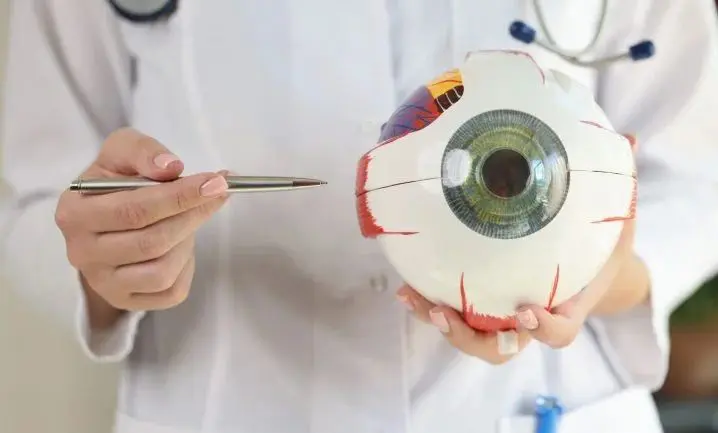
Comprehensive pre-refractive surgery examination process
At Sai Gon Eye Hospital, the comprehensive examination is conducted according to standardized procedures with multiple consecutive testing steps. One of the most important steps is pupil dilation using cycloplegic eye drops.
The purpose is to dilate the pupil so the doctor can clearly observe the fundus and retina, while temporarily relaxing the eye’s focusing muscles to measure the true refractive error accurately. This helps eliminate accommodative spasm, which can otherwise cause inaccurate prescription results.
It is precisely this dilation step that is the direct reason you should not drive yourself home after the examination.
What Happens to Your Eyes After Pupil Dilation?
When the drops begin to take effect, you may clearly notice:
- Significantly blurred near vision.
- Increased light sensitivity and glare outdoors.
- Difficulty focusing at a distance in bright environments.
- Mild dizziness due to sudden visual changes.
These symptoms are completely normal and temporary. Typically, blurred vision and light sensitivity last about 4–6 hours, after which your vision gradually returns to normal.
It is important to emphasize that cycloplegic eye drops do not harm your eyes and do not cause permanent vision loss. This is a routine ophthalmic technique to ensure the most accurate measurement results.
However, even though the effects are temporary, during this period your visual clarity and reflexes may be significantly affected.
Why Is It Dangerous to Drive After the Examination?

Why is it dangerous to drive after a pre-refractive surgery examination?
Driving requires:
- Clear vision at both near and far distances.
- The ability to quickly recognize traffic signs and signals.
- Timely reflexes in unexpected situations.
- Adaptation to changes in lighting (for example, from a tunnel to bright sunlight).
After pupil dilation, the enlarged pupils allow more light to enter the eyes than usual. This makes you extremely sensitive to bright light. When exposed to strong sunlight, oncoming headlights, or reflections from the road surface, you may experience temporary glare lasting several seconds. Just a few seconds of blurred vision or distraction while riding a motorcycle or driving a car can significantly increase the risk of an accident.
Additionally, blurred near vision makes it difficult to check the dashboard, navigation phone, or speedometer—critical elements when participating in traffic.
Many people think, “My vision is only slightly blurry, I can just drive slowly.” However, traffic is an environment you cannot fully control. Unexpected situations such as sudden braking by the vehicle ahead, pedestrians crossing the road, or another vehicle cutting in require quick reflexes and stable vision. When your eyes have not fully recovered, it becomes much harder to respond accurately.
Therefore, the recommendation not to drive yourself after a pre-refractive surgery examination is not a formality, but a medical safety principle.
A Safer Solution for You
To ensure safety after your examination, you should go with a family member who can drive you home, or use a taxi or ride-hailing service. If necessary, you can ask the hospital to assist with arranging transportation. At Sai Gon Eye Hospital, staff are always ready to support patients with post-examination transportation if you have not prepared a suitable option.
A typical pre-refractive surgery examination only lasts a few hours, but your safety is long-term. Proactively arranging transportation not only gives you peace of mind but also reflects serious preparation before beginning your refractive treatment journey.
A pre-refractive surgery examination is a comprehensive and mandatory evaluation before refractive surgery. During this process, pupil dilation helps the doctor accurately assess your eye condition and recommend the safest and most effective treatment method.
However, the temporary effects of the drops may cause blurred vision and glare for 4–6 hours. For this reason, you should not drive yourself after the examination. Safety is always the top priority in ophthalmology. If you are planning a pre-refractive surgery examination, remember to arrange appropriate transportation. A small decision today can help ensure your journey toward clearer vision is safe and complete.
 23/02/2026











 0916.741.763
 Appointment