

 vi
vi 23-Oct-2025
 55,385
 Introduction

Childhood myopia can lead to glaucoma, vision loss, retinal detachment, and cataracts – Israeli study
A large-scale study conducted in Israel found that adolescents with myopia had a higher incidence of musculoskeletal issues such as hernias, scoliosis, and flat feet compared with those without nearsightedness. This discovery opens up a new perspective: myopia may not only be a refractive condition of the eye but could also reflect a systemic weakness in the body’s connective tissue structure.
Large-Scale Study
The study, published in Clinical & Experimental Ophthalmology, was conducted by Dr. Itay Nitzan and colleagues at the Hadassah Medical Organization in Israel. Based on medical data from 920,806 adolescents (average age 17.4; 58.6% male), the researchers analyzed the relationship between myopia and signs of connective tissue hyperlaxity — conditions where body tissues are overly flexible or lack stability—were more common among young people with nearsightedness.
This was the first study in the world to assess the relationship between non-syndromic myopia and musculoskeletal abnormalities associated with connective tissue. Previously, such associations had only been documented in rare genetic disorders like Marfan or Ehlers-Danlos syndrome, both of which weaken connective tissue integrity.
“Given the rising global prevalence of nearsightedness worldwide, and its emerging recognition as a systemic marker in certain conditions, we aimed to investigate whether habitual markers of tissue hyperlaxity are more prevalent among adolescents with myopia,” said Dr. Itay Nitzan, MD, MPH, Department of Ophthalmology, Hadassah Medical Organization (Israel).
Results
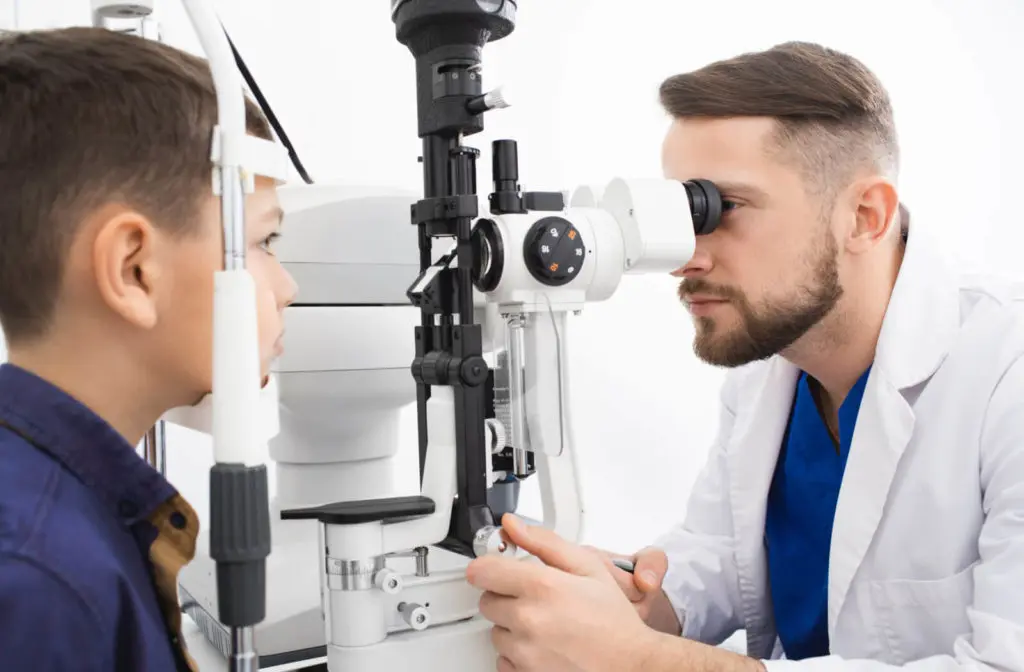
The link between myopia and connective tissue-related conditions (illustration)
According to the analysis, 31.6% of participants were myopic (nearly 291,000 individuals). Among this group, the prevalence of connective tissue–related conditions was significantly higher than in those without myopia:
- Hernias: 2.76% vs. 2.60%
- Flat feet: 14.92% vs. 13.51%
- Scoliosis: 9.14% vs. 7.69%
Although these differences may appear small, with nearly one million participants, the variations were statistically significant. Notably, rates of joint injuries (ankle, knee, shoulder) were nearly identical between groups, suggesting that the difference was not due to physical activity but may instead reflect deeper biological factors within connective tissue structure.
Myopia – More Than a Refractive Issue
Dr. Nitzan believes these findings support the hypothesis that the eye can serve as a “window” into the body’s systemic connective tissue condition. In other words, individuals with weaker connective tissues—including the skin, tendons, ligaments, and supporting tissues of the eye—may be more prone to structural elongation of the eyeball, leading to myopia.
This insight is especially meaningful given that myopia has become a global health concern. According to the World Health Organization (WHO), more than 2.6 billion people worldwide are myopic, and this number may exceed 5 billion by 2050. Understanding the underlying causes not only aids in managing myopia but also sheds light on potential systemic health implications.
Connective Tissue Imbalance

Illustration: Connective tissue imbalance can cause musculoskeletal misalignment and systemic effects (Foot Levelers)
Connective tissue forms the structural network that connects, supports, and maintains the shape of the entire body — from the skin, tendons, and ligaments to the cornea and sclera of the eye. Its elasticity and resilience act as a “stabilizing framework” that allows organs to maintain proper structure and function.
When connective tissue becomes imbalanced — too soft, overly elastic, or weakened — its ability to support and stabilize the body declines. This imbalance can lead to various manifestations such as scoliosis, flat feet, hernias, or chronic joint pain.
Clinical Implications
The Hadassah team’s study introduces a new perspective in the assessment and treatment of myopia: beyond correcting refractive error, clinicians should also evaluate the overall health of connective tissues in myopic patients.
Dr. Nitzan recommends: “Clinicians might consider assessing for musculoskeletal abnormalities in patients with myopia, especially when other symptoms or risk factors are present.”
This suggests that eye specialists and orthopedic physicians could work together to identify early signs of connective tissue weakness—such as scoliosis, flat feet, or hernias—in patients with myopia. Conversely, for individuals already diagnosed with connective tissue disorders, early eye examinations may help prevent rapid myopia progression.
Future Directions
If confirmed by future genetic and histological studies, the link between myopia and connective tissue traits could help experts develop predictive models for myopia progression and identify therapies aimed at improving connective tissue elasticity to slow refractive changes.
Moreover, this connection opens opportunities for more systemic approaches to eye care rather than focusing solely on the cornea or retina. For instance, optimizing nutrition, enhancing natural collagen production, or exploring biological therapies could potentially improve both ocular structure and musculoskeletal health.
The Israeli study provides clear evidence that myopia reflects more than just what the eyes can see. Beyond being a refractive condition, it may also signal a body-wide connective tissue weakness that affects multiple organ systems.

 09/02/2026












 0916.741.763
 Appointment