

 vi
vi 02-Jan-2026
 22,800
 What Is Phakic ICL Surgery?
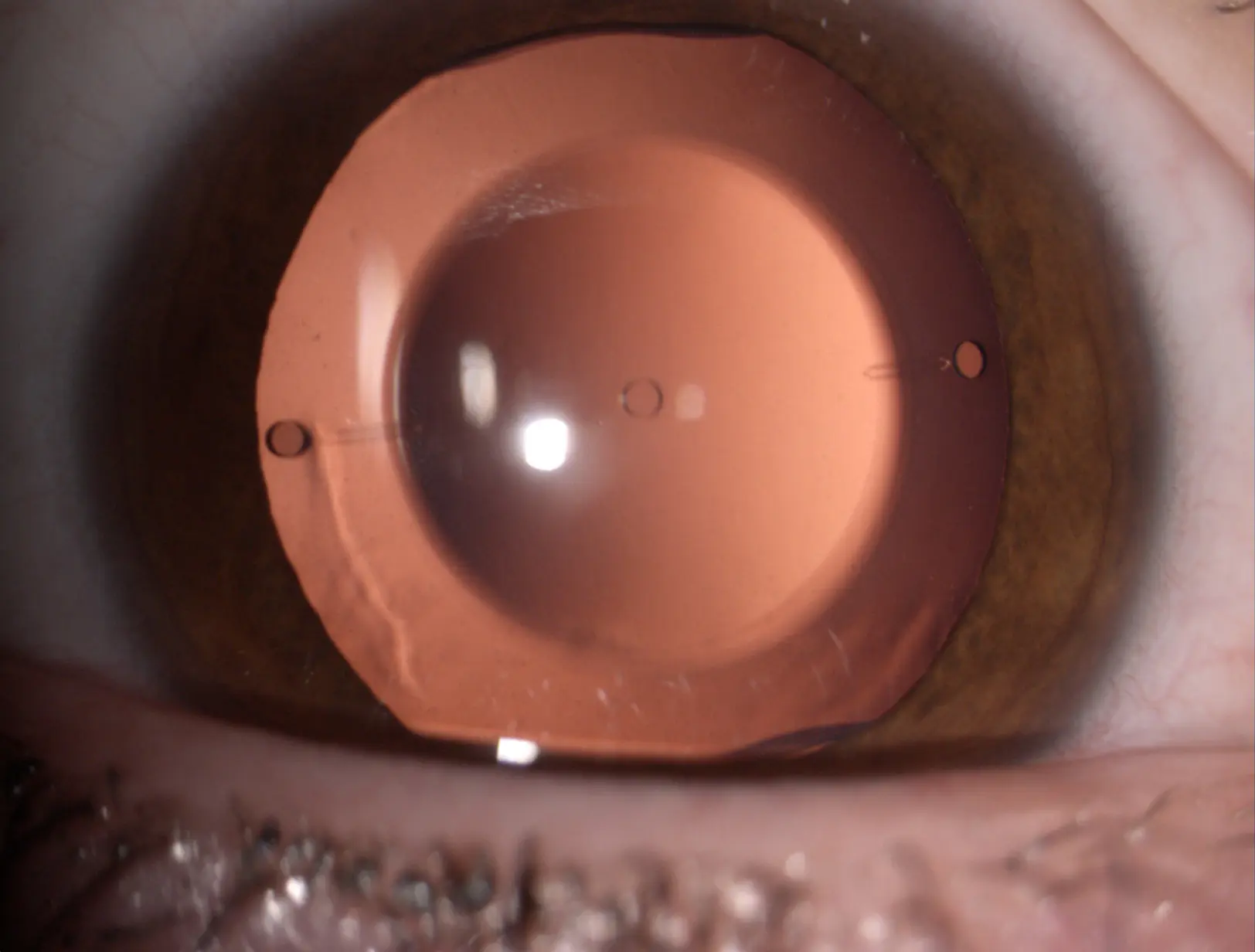
What is Phakic ICL surgery?
Phakic ICL surgery is becoming an increasingly popular solution for treating high myopia, astigmatism, and hyperopia thanks to its ability to preserve the cornea, enable rapid visual recovery, and deliver long-lasting sharp vision. However, to achieve optimal visual outcomes and minimize potential complications, proper eye care after Phakic surgery is just as important as the procedure itself.
Unlike laser procedures performed on the cornea, Phakic surgery involves implanting an ultra-thin, biocompatible intraocular lens inside the eye. As a result, the eyes need time to adapt and stabilize. Understanding the recovery roadmap at each stage helps patients take proactive care of their eyes and feel more reassured throughout the healing process.
Immediately After Phakic Surgery (First 24–72 Hours)

Eye care immediately after Phakic surgery (24–72 hours)
After Phakic surgery, most patients notice a relatively rapid improvement in vision, sometimes within just a few hours. However, during this early stage, the eyes remain very sensitive. Patients may experience mild blurred vision, a foreign body sensation, dryness, or eye fatigue. These are normal reactions following intraocular intervention and usually subside over the following days.
During the first 1–3 days, the most important priority is absolute eye protection. Patients should wear protective glasses or follow their doctor’s instructions to shield the eyes from dust, wind, and external irritants. Touching or rubbing the eyes must be strictly avoided, as it may increase the risk of infection or affect the position of the Phakic lens inside the eye.
In daily activities, care should be taken to prevent water, shower gel, or shampoo from entering the eyes. Adequate rest and limiting activities such as reading or prolonged use of phones and computers during the first few days will help promote faster recovery.
One Week After Phakic Surgery

One week after Phakic surgery
After approximately one week, vision is usually more stable, and sensations of discomfort or eye strain have significantly decreased. This is a critical stage in post-Phakic surgery eye care, as the doctor needs to assess how well the eye is adapting to the intraocular lens. Attending follow-up appointments as scheduled is mandatory. During these visits, the doctor will evaluate intraocular pressure, the position of the Phakic lens, and detect any early signs of abnormalities.
During this period, patients must use prescribed eye drops or oral medications exactly as instructed. These medications help reduce inflammation, prevent infection, and support internal healing. Patients should never discontinue or adjust medication dosages on their own.
Heavy physical work and high-intensity sports should be avoided. When going outdoors, wearing sunglasses helps protect the eyes from strong sunlight and dust. Screen time should be carefully managed, avoiding prolonged continuous viewing to reduce eye strain.
One Month After Phakic Surgery
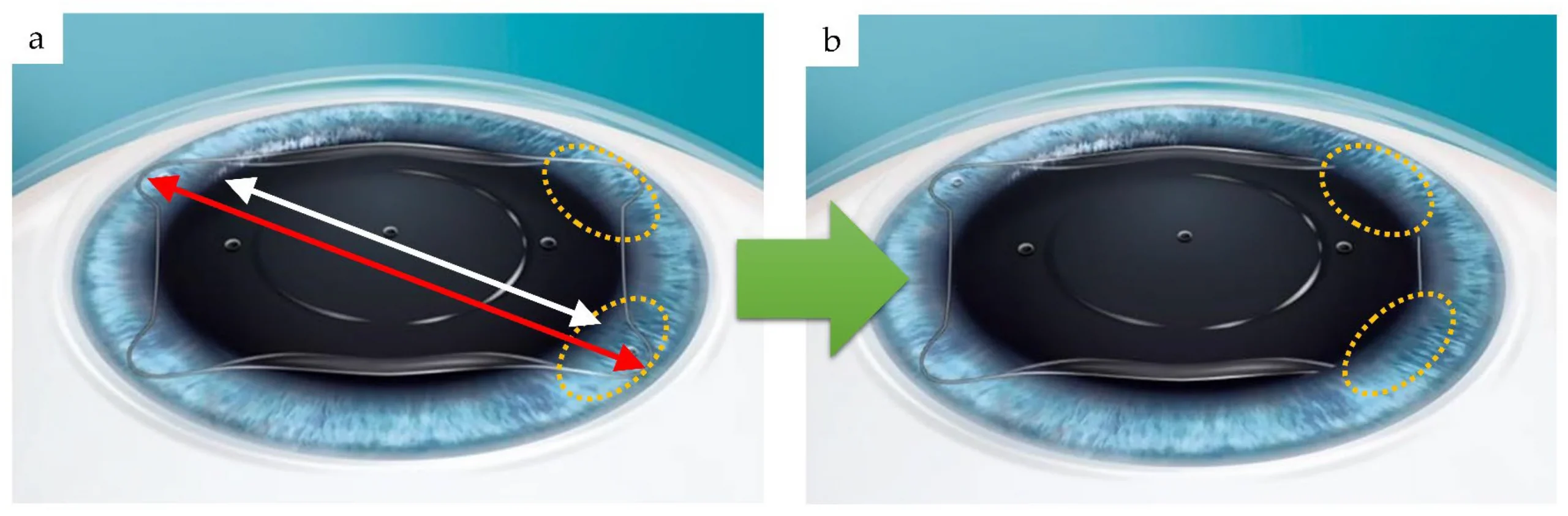
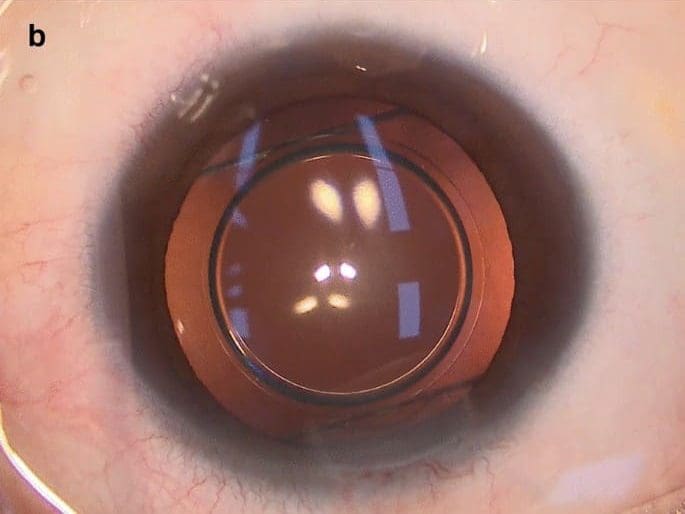
Image of the ICL positioned in front of the iris without corneal invasion
After about one month, most Phakic surgery patients experience relatively stable vision and can return to near-normal daily activities. However, this does not mean that eye care can be taken lightly.
Attending scheduled follow-up visits remains essential to ensure that the Phakic lens is correctly positioned and that the eye is healing as expected. At this stage, patients may participate in light physical activities such as walking or yoga, but should continue to avoid sports that pose a high risk of eye impact.
Exposure to water should still be controlled. Swimming, steam baths, or allowing contaminated water to enter the eyes should be avoided. When showering, care must be taken to prevent soap or shampoo from flowing into the eyes, reducing the risk of infection.
In addition, eye makeup and cosmetic products around the eyes should be postponed during this period. These products may contain bacteria or irritating chemicals that could interfere with recovery after Phakic surgery.
From 3 to 6 Months After Phakic Surgery
From 3 to 6 months after Phakic surgery, the eyes have fully adapted to the intraocular lens, and visual acuity reaches a high level of stability. Nevertheless, proper eye care during this phase is essential to maintain long-term visual results and prevent future issues.
If you work frequently with computers, follow eye protection guidelines such as maintaining a viewing distance of 50–65 cm, positioning the screen slightly below eye level, and working in a well-lit environment. After every 30–40 minutes of work, allow your eyes to rest to reduce dryness and fatigue.
You may resume more vigorous sports activities, but care should still be taken to avoid direct eye trauma. Using lubricating eye drops as prescribed by your doctor can help alleviate dryness and eye strain, especially for office workers.
Things You Should and Should Not Do After Phakic Surgery
For a smooth recovery, Phakic surgery patients should maintain a healthy lifestyle. Adequate sleep, balanced nutrition, and a relaxed mindset all contribute to better eye healing. Eye-friendly nutrients such as vitamins A, C, E, and omega-3 fatty acids should also be included appropriately.
On the other hand, prolonged exposure to blue light from electronic devices, dust, and environmental pollutants should be avoided, along with stimulants that may affect eye health. Rubbing the eyes is a habit that must be strictly avoided after Phakic surgery, as it can cause injury and compromise surgical outcomes.
If vision has not yet fully stabilized or remains blurred, patients should avoid driving until they receive clearance from their doctor to ensure safety.
 23/02/2026













 0916.741.763
 Appointment