

 vi
vi 01-Mar-2026
 3,040
3,040 Phakic ICL Vision Correction

Phakic ICL Vision Correction at Anh Sang Eye Hospital
Over the years, laser refractive surgeries such as LASIK and SMILE have helped millions of people eliminate their dependence on glasses. However, not everyone is eligible for these procedures. Individuals with very high myopia, thin corneas, chronic dry eyes, or unsuitable corneal structures may face the risk of corneal weakening if they undergo laser surgery.
For this reason, Phakic ICL vision correction has emerged as a significant advancement in refractive treatment. Instead of reshaping the cornea to correct vision, this method uses a specially designed intraocular lens implanted inside the eye, allowing light to focus accurately on the retina while preserving the natural corneal structure.
At Anh Sang Eye Hospital, this technique is performed using modern equipment and a specialized clinical protocol, delivering sharp and long-term stable vision for patients with moderate to high myopia.
What Is Phakic ICL and How Does It Work?
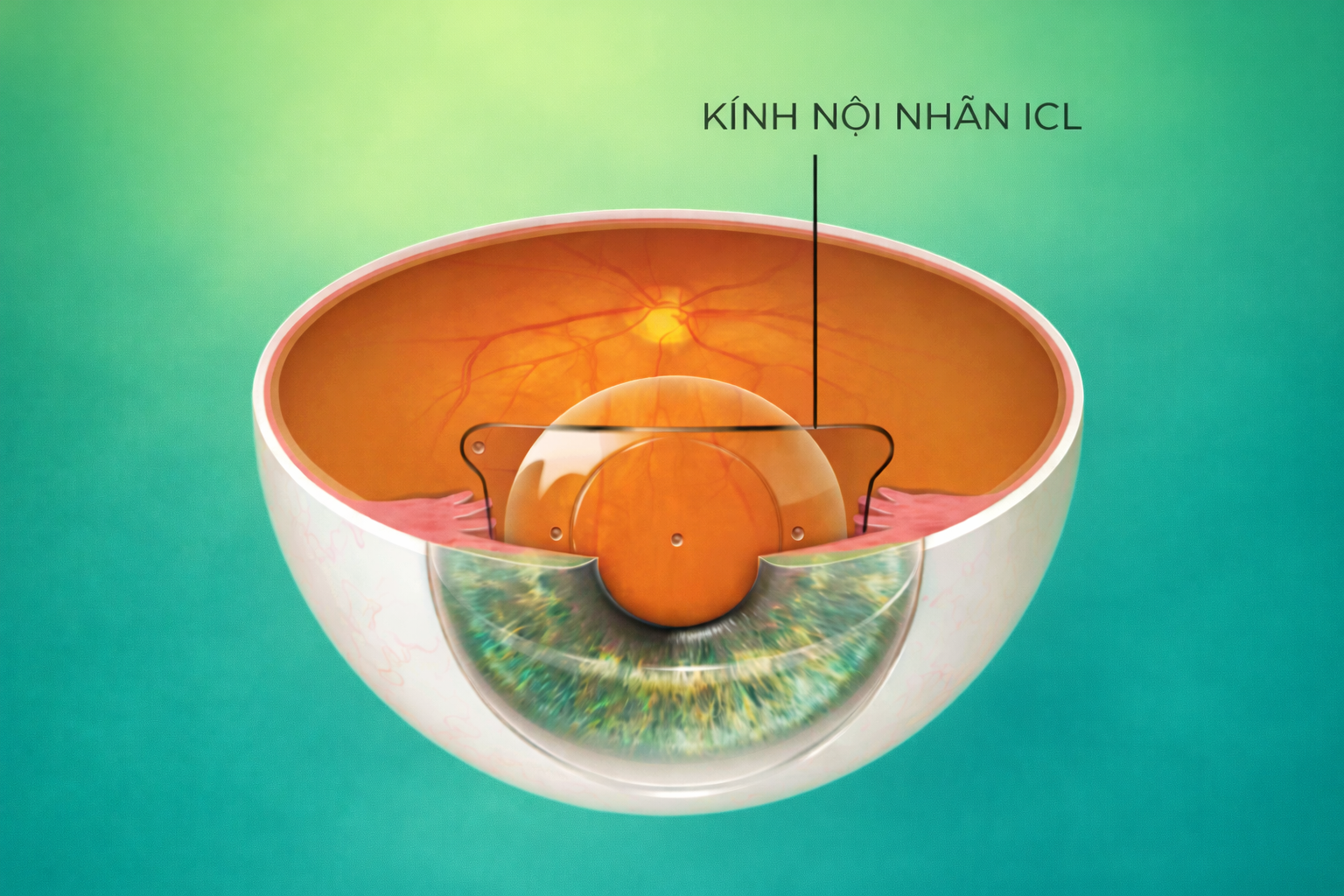
What Is Phakic ICL and How Does It Work?
Phakic ICL (Implantable Collamer Lens) is an intraocular lens made from biocompatible Collamer material, designed to integrate safely with the eye. The lens is positioned behind the iris and in front of the natural crystalline lens.
Unlike laser procedures, Phakic ICL does not cut or thin the cornea. The lens functions like a permanent contact lens inside the eye, precisely redirecting light to focus on the retina. As a result, patients achieve clear, sharp vision without the need for glasses or contact lenses.
According to professional data from STAAR Surgical, EVO ICL can correct myopia from -3.0D to -20.0D and astigmatism from 1.0D to 4.0D. This wide treatment range makes it particularly suitable for patients with high refractive errors who may not qualify for laser surgery.
Who Is a Suitable Candidate for Phakic ICL?
This procedure is typically recommended for:
- Individuals between 21 and 45 years old.
- Patients with stable prescriptions for at least one year.
- Moderate to very high myopia (up to -20.0D).
- Thin corneas or those ineligible for laser surgery.
- No serious eye conditions such as advanced glaucoma, intraocular inflammation, or progressive cataracts.
A key advantage of Phakic ICL is that the lens can be removed or replaced if necessary, offering flexibility that laser procedures cannot provide.
The Phakic ICL Procedure at Anh Sang Eye Hospital
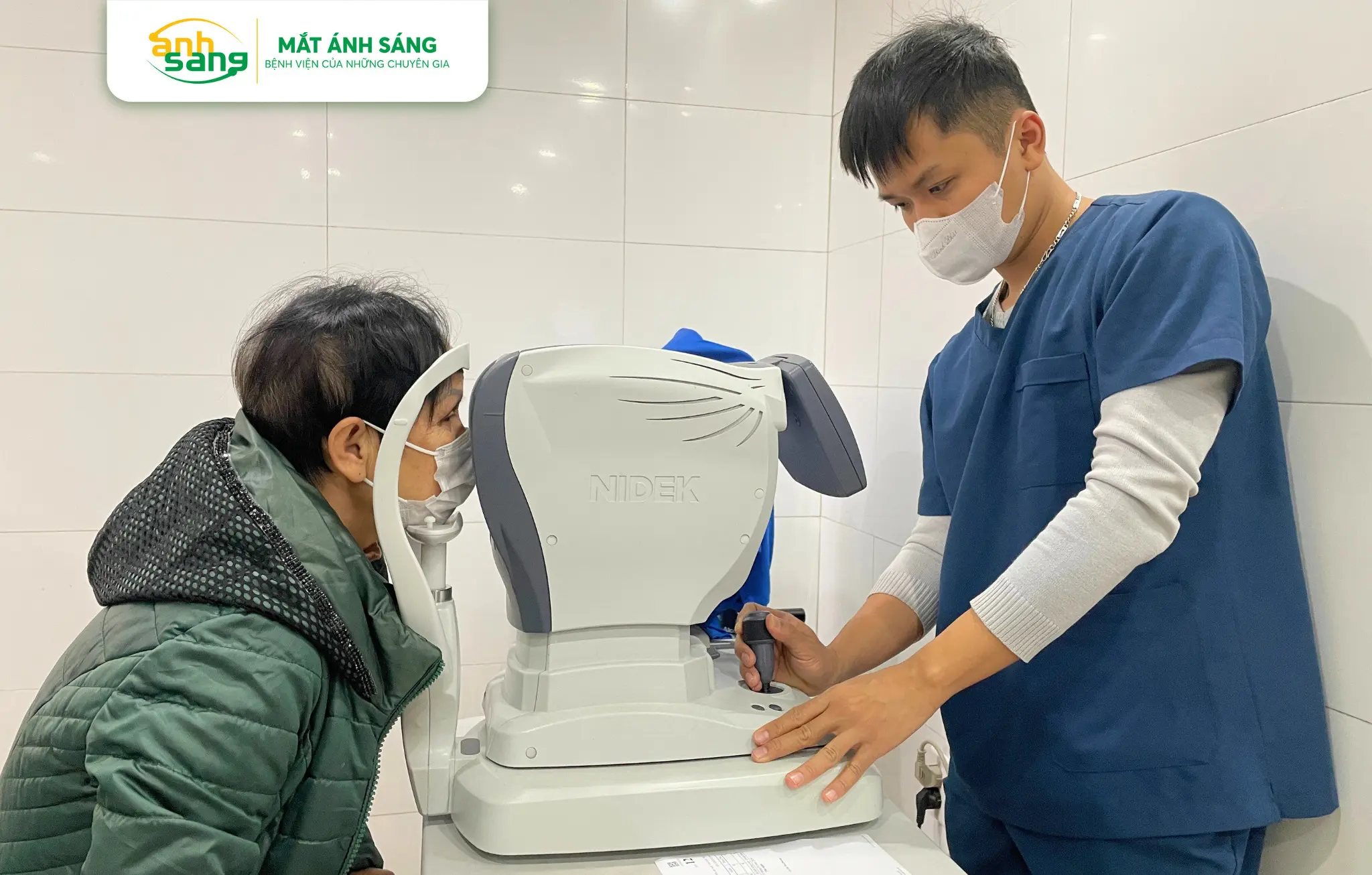
The Phakic ICL Procedure at Anh Sang Eye Hospital
To ensure maximum safety, the procedure at Anh Sang Eye Hospital follows international standards, from comprehensive preoperative evaluation to long-term postoperative follow-up.
1. Comprehensive Preoperative Examination
The ophthalmologist will:
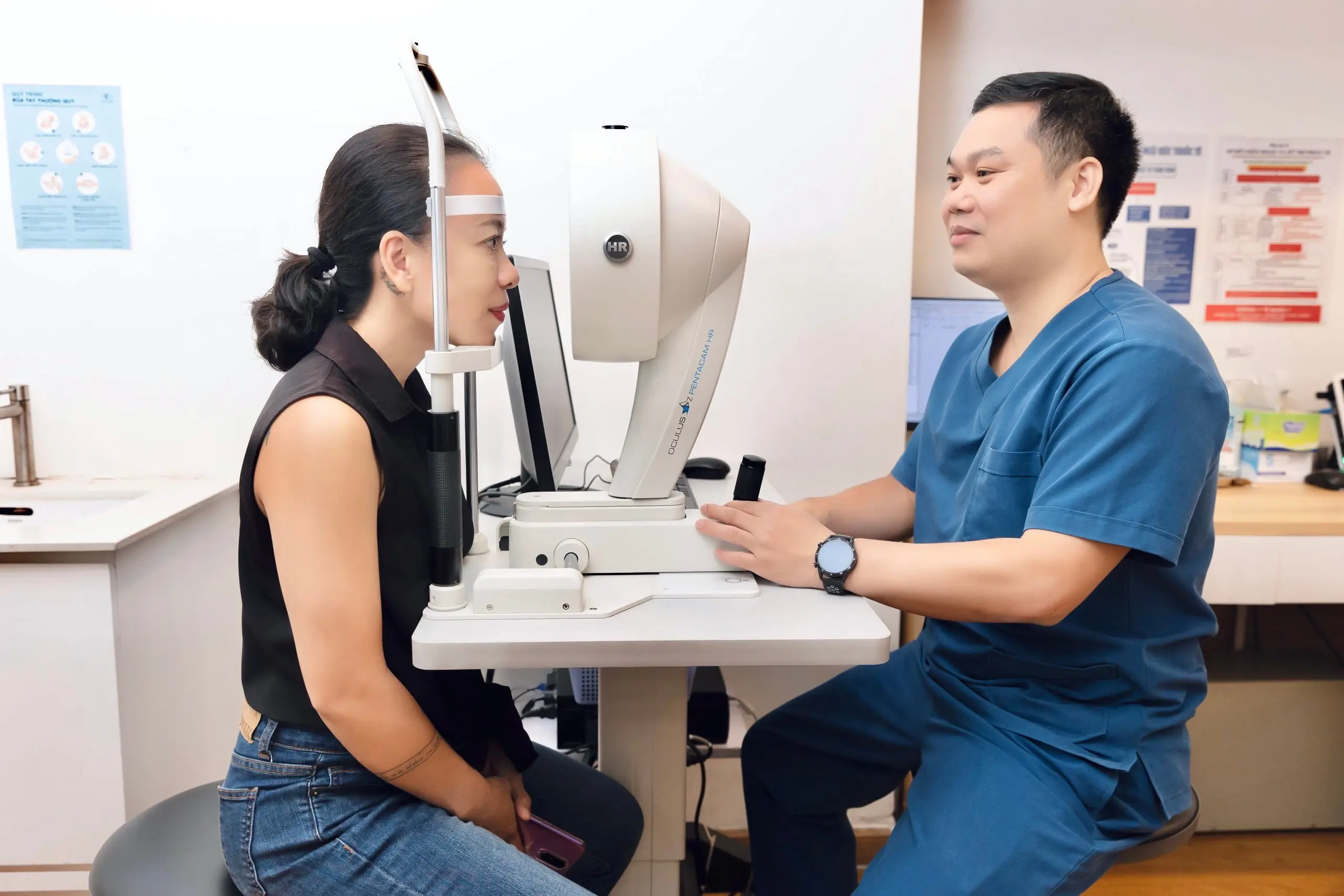
- Measure anterior chamber depth to ensure adequate space for lens placement.
- Assess corneal endothelial cell density.
- Perform 3D corneal mapping and precise refraction tests.
- Conduct a full eye health evaluation.
This stage is critical, as the lens size and power must be fully customized for each individual eye.
2. Surgery
The procedure takes approximately 15–20 minutes for both eyes. Patients receive anesthetic eye drops and remain fully awake throughout the surgery.
The surgeon creates a very small incision (about 2–3 mm) at the corneal edge, inserts the folded lens into the eye, and positions it correctly behind the iris. Once implanted, the lens stabilizes naturally and is invisible to others.
3. Postoperative Follow-Up
After surgery, patients attend scheduled follow-up visits to monitor recovery. The evaluation includes checking lens position, intraocular pressure, endothelial cell density, and refractive stability. Regular monitoring helps detect rare complications such as increased eye pressure, endothelial cell loss, or cataract formation at an early stage.
How Soon Can You See Clearly After Surgery?
One of the key advantages of Phakic ICL vision correction is its rapid visual recovery.
- Within the first 24–48 hours, most patients achieve 80–90% of their expected vision.
- After one week, vision typically becomes stable and clear.
- After one month, maximum visual acuity is achieved, with sharp clarity both day and night.
Because the corneal tissue is not altered, the risk of dry eye is lower compared to laser procedures. This is especially beneficial for individuals who previously experienced dry eye symptoms or spend extended hours in front of screens.
Can Myopia Return After Phakic ICL?
If the prescription has been stable before surgery, the likelihood of regression is extremely low. Since the lens works independently of the cornea, it is not affected by corneal healing processes as in laser surgery.
If vision changes due to aging, the lens can be replaced or removed, providing flexibility unmatched by irreversible laser techniques.
Safety and Potential Risks
Like any surgical procedure, Phakic ICL carries a small risk of complications. Rare cases may include inflammation, increased intraocular pressure, endothelial cell loss, or cataract formation.
However, when performed with proper screening, precise indications, and regular follow-up care, the procedure is considered highly safe and effective for treating high myopia.
Why Choose Phakic ICL at Anh Sang Eye Hospital?
The difference lies not only in technology but also in expertise and clinical protocols.
At Anh Sang Eye Hospital:
- Refractive specialists are extensively trained in ICL procedures.
- Sterile surgical standards are strictly maintained.
- Lenses are fully customized for each patient.
- Long-term follow-up ensures optimal and stable outcomes.
Many patients report naturally sharp vision after surgery, with minimal glare and no significant dry eye discomfort compared to their previous concerns.
Phakic ICL vision correction is an advanced solution for individuals with high myopia, thin corneas, or those unsuitable for laser surgery. By preserving corneal structure, offering fast recovery, and allowing reversibility, this method delivers long-term visual stability and quality.
At Anh Sang Eye Hospital, the procedure is implemented with specialized expertise and modern equipment, ensuring patient confidence at every step of treatment.
If you are seeking a safe, flexible, and sustainable vision correction solution, Phakic ICL may be the right choice to begin your journey toward clear and lasting vision.

.svg) Hotline
Hotline Appointment
 https://matanhsang.com/
 Alley 208, Tran Cung Street, Nghia Tan Ward, Bac Tu Liem District, Hanoi
 Opening Hours
 03/03/2026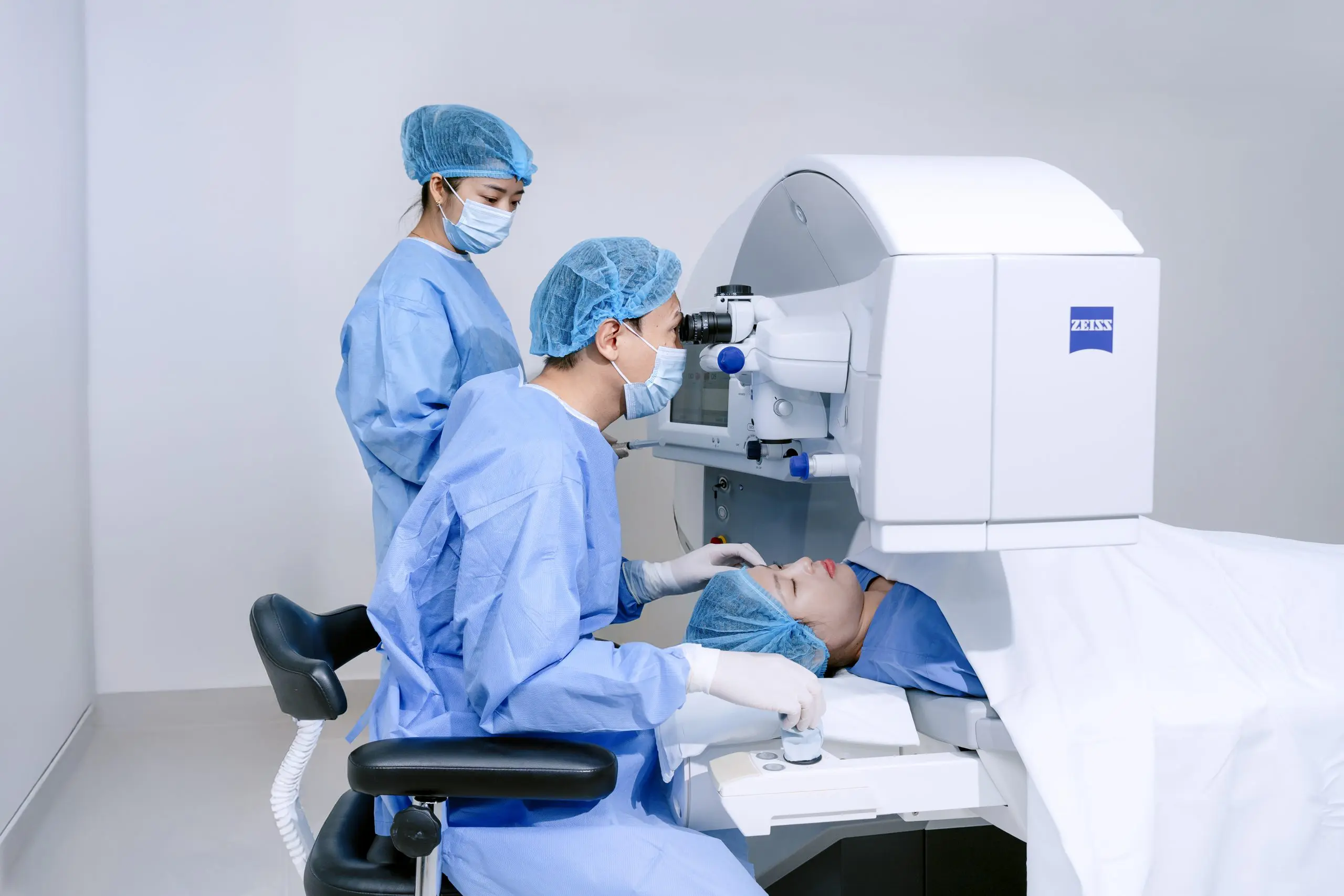






 0916.741.763