

 vi
vi 04-Sep-2025
 223,535
 Introduction
Does Astigmatism Change the Way We See Colors?

Image seen by a person with astigmatism
In people with normal vision, light from different colors focuses evenly, making colors appear clear and distinct. In contrast, an irregularly curved cornea in people with astigmatism causes each wavelength of light to fall on different positions. As a result, colors appear duller, less vibrant, and sometimes smeared, making them harder to distinguish.
When High Astigmatism Causes Color Confusion
1) The “stretching” of images on the retina
This condition causes images to “stretch” along a certain axis on the retina. When the boundary signal between two colors is no longer clear, the brain receives lower-contrast information. This becomes especially noticeable with small details, thin text, or colored symbols that have similar shades.
2) Severity and color confusion
For people with mild astigmatism, the main issue is clarity—they usually only see blurred images. From moderate levels upwards, color confusion becomes more noticeable. Those with stronger prescriptions may find it difficult to distinguish similar colors, such as light green versus blue, or dark red versus brown. This distortion is particularly obvious when viewing small colored print or signal lights.
3) Dull and low-contrast colors
Another notable characteristic is that colors in people with astigmatism often appear less vibrant. Images lack contrast, making the overall view look “flat” and lifeless. This condition worsens when using digital screens or viewing in environments with artificial lighting where light-dark ranges change continuously.
Astigmatism in Children and Its Impact on Learning

Astigmatism in children affects learning and daily activities.
For young children, astigmatism is not only a visual problem but also affects color recognition in the learning process. Subjects involving drawing, crafts, or recognizing traffic signals become more challenging. Without early detection and corrective lenses, children risk falling behind in developing visual-spatial skills.
Is There a Link With Inherited Color Vision Disorders?
It is important to distinguish: astigmatism does not directly cause color blindness. However, in individuals with congenital color vision disorders, it can further worsen color perception. When these two factors coexist, color vision quality decreases significantly, directly affecting daily life.
At night or in dark environments, the limitations become more evident. Pupil dilation increases halos and glare, making it harder to distinguish colors on traffic signs or signal lights.This is why many people with this refractive error feel unsafe driving after dark.
Can Corrective Lenses Restore Color Perception?
Corrective glasses or contact lenses adjusted for astigmatic axis help light focus more accurately, thereby restoring color discrimination almost to normal. In cases of very high astigmatism or corneal abnormalities, the improvement may be limited and require more advanced solutions.
Modern Technology to Improve Astigmatism and Color Vision
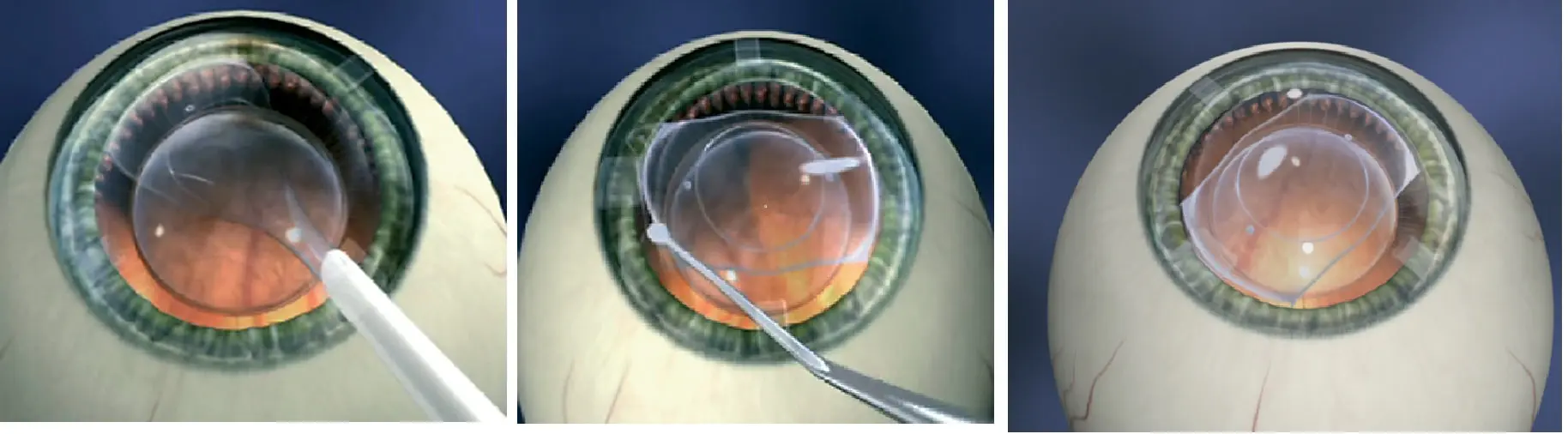
Phakic ICL lens safely corrects astigmatism and myopia.
Today, advanced methods offer the opportunity to improve not only sharpness but also color accuracy.
- Toric Intraocular Lens (TICL) is an effective option for patients with both myopia and astigmatism, helping light focus more accurately so that images are sharper and colors are more accurate.
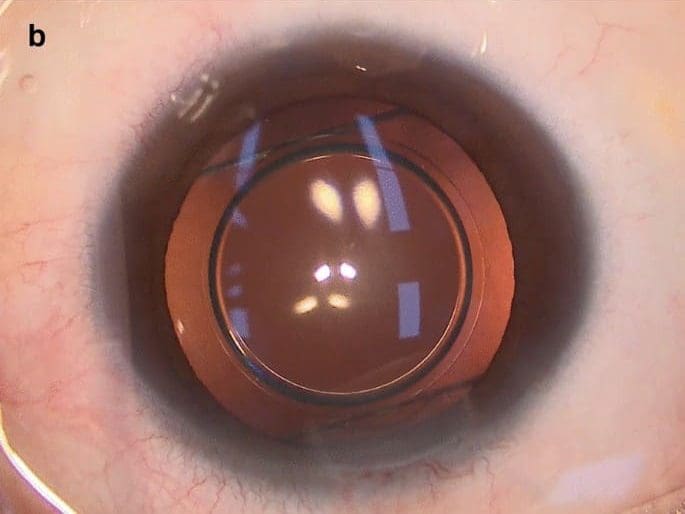
- Phakic ICL – a modern treatment technology at TD Eye – offers outstanding advantages. The lens is placed behind the iris and in front of the natural lens, correcting both myopia and astigmatism without damaging the cornea. As a result, patients not only achieve sharp vision day and night but also see clearer, more accurate colors with less glare and halos. More than 99% of Phakic ICL patients reported satisfaction and would choose the procedure again.
Note: Before any intervention, a comprehensive refraction and corneal exam is required, evaluating the degree and axis of astigmatism, tear film condition, pupil size at night, and any associated eye diseases.
Color Vision Comparison
| Criteria | Normal | Uncorrected Astigmatism | After Treatment (Phakic ICL/Toric) |
|---|---|---|---|
| Sharpness | Clear | Blurred, distorted | Sharp, stable |
| Color perception | Accurate | Dull, easily confused | Almost normal |
| Saturation | Vivid | Reduced | Significantly improved |
| Night vision | Normal | Halos, glare | Clearer, fewer halos |
Conclusion
Astigmatism is not just about “blurry eyes” but also deeply affects color vision and overall quality of life. Children may struggle in school; adults may confuse colors at night. Modern solutions such as Toric ICL and especially Phakic ICL at TD Eye open the door to restoring comprehensive vision: clear images, vibrant colors, high contrast, and improved nighttime experience. Early diagnosis and timely treatment will bring optimal results.
 23/02/2026











 0916.741.763
 Appointment