

 vi
vi 29-Sep-2025
 46,645
 Introduction
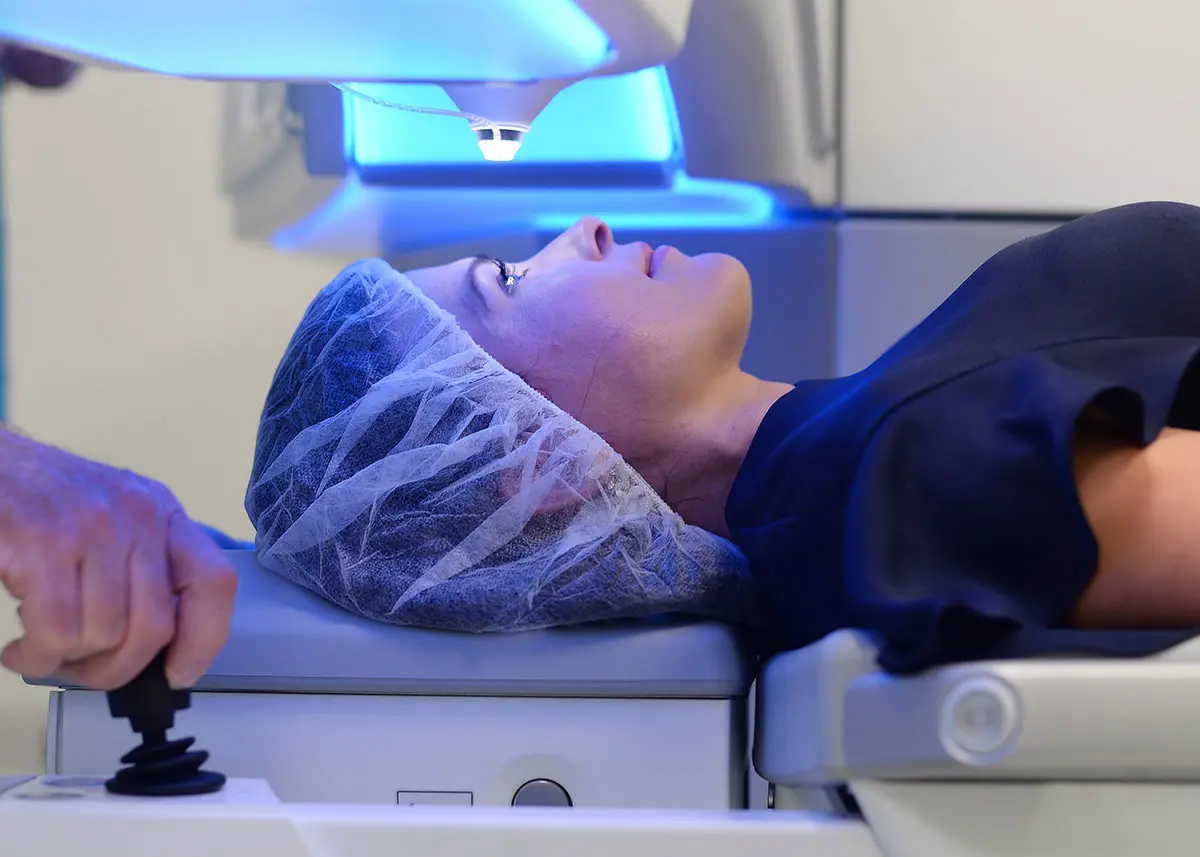
Safe refractive surgery without corneal scarring
Refractive surgery has long been considered a modern solution for millions of people who wish to free themselves from glasses or contact lenses. With the rapid development of medical technology, many patients are curious about safety and particularly worry about whether surgery could leave behind corneal scars. This is an important concern, as the cornea is the transparent front layer of the eye responsible for clear, sharp vision.
This article will explain in detail whether refractive surgery can cause corneal scarring, in which cases scars may appear, and which vision correction solutions offer the lowest risk.
Refractive Surgery and the Possibility of Scarring
The most common refractive procedures today include LASIK, ReLEx SMILE, PRK, and Phakic ICL (Phakic ICL).
With advanced laser technology, the vast majority of refractive surgeries do not result in visible corneal scars. This is because the cornea has excellent natural healing capacity through epithelial regeneration. After the corneal tissue is reshaped, the surface usually recovers with full clarity, leaving no marks that compromise vision.
LASIK and SMILE: Fast Recovery Without Scarring
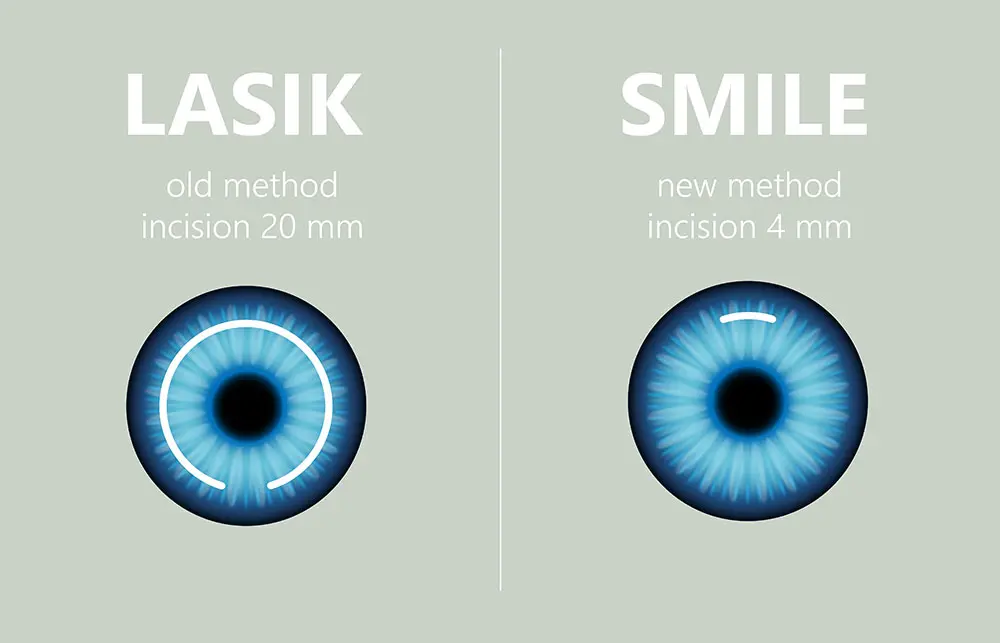
Comparison of LASIK (20mm incision) and SMILE (4mm incision)
- LASIK: This procedure involves creating a corneal flap and using an excimer laser to reshape the tissue. Thanks to excimer and femtosecond technology, the process is highly precise, requires no stitches, and the cornea heals transparently. FDA studies report more than 95% success rates, with scarring being extremely rare.
- ReLEx SMILE: This next-generation procedure uses a micro-incision of just 2mm to extract a thin corneal lenticule. Because the incision is ten times smaller than LASIK, SMILE virtually eliminates the risk of visible scarring, while also allowing for quicker and more stable healing.
PRK: Possible Scarring if Healing Is Poor
PRK (Photorefractive Keratectomy) is an older technique that removes the corneal epithelium before laser reshaping. During recovery, if patients do not follow proper care instructions, there is a small risk of corneal haze or scarring. However, with modern anti-inflammatory medications and careful monitoring, the likelihood today is very low compared to the early years of PRK.
When Are Corneal Scars More Likely to Occur?
- Pre-existing scars: Patients who previously had keratitis, corneal ulcers, or eye injuries may already have scarring. These can affect surgical outcomes and must be carefully evaluated before surgery.
- Complications after surgery: Postoperative infections, abnormal wound healing, or poor surgical technique could contribute to scar formation.
- High myopia or thin corneas: In cases where the cornea is abnormally thin or extremely high corrections are required, deeper tissue involvement can increase the risk of corneal scarring.
Phakic ICL (Phakic ICL) – The Scar-Free Solution
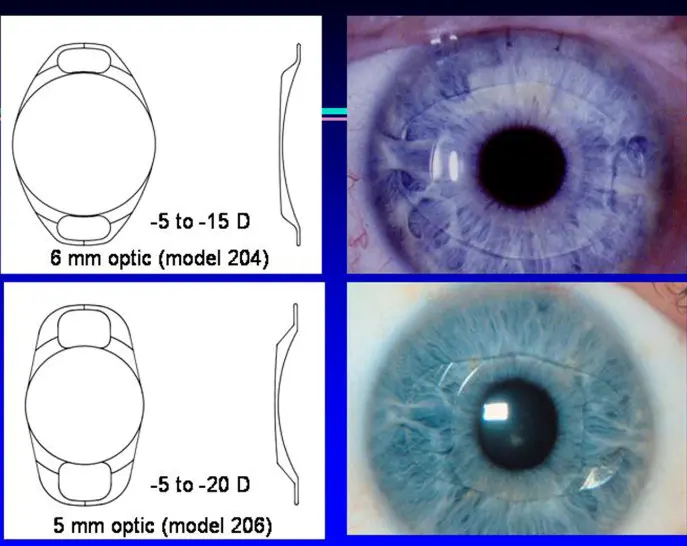
Phakic ICL lens for myopia and astigmatism without corneal scars
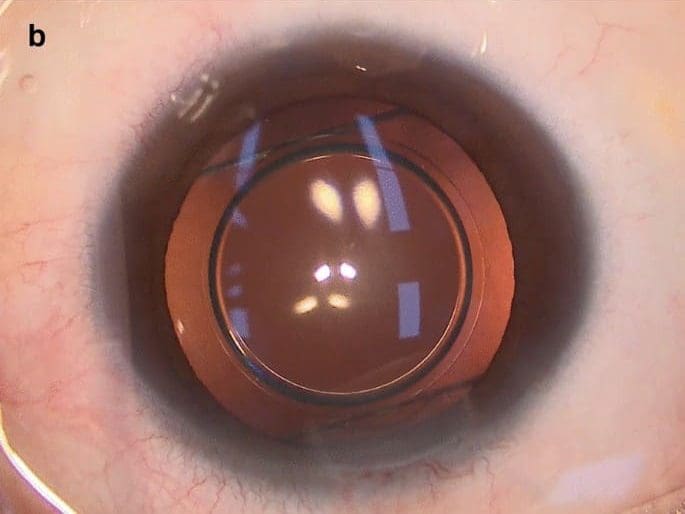
Unlike LASIK or SMILE, Phakic ICL does not require cutting or reshaping the cornea. Instead, a biocompatible Collamer® lens is placed behind the iris and in front of the natural lens to correct refractive errors without touching corneal tissue.
This means that ICL surgery does not produce corneal wounds and therefore does not cause scarring. It is an ideal option for patients with thin corneas, severe myopia/astigmatism, or those concerned about scar-related risks. International studies confirm that over 90% of patients achieve uncorrected vision equal to their best spectacle-corrected vision before surgery, and 99.4% of patients said they would undergo the procedure again.
How to Minimize the Risk of Scars After Eye Surgery
Although modern refractive surgery is safe, patients should still take steps to further reduce the risk of scarring:
- Undergo a thorough preoperative screening should include corneal topography, assessment of existing scars, and the exclusion of underlying eye diseases.
- Follow postoperative care properly by taking prescribed medications, avoiding eye rubbing, and keeping the eyes away from dirty water, dust, and smoke.
- Regular follow-up visits are important to detect early abnormalities during the recovery process.
If you are wondering, “Does refractive surgery cause corneal scars?”, the reassuring truth is that in nearly all cases, it does not. With the support of advanced technologies such as LASIK, SMILE, and especially Phakic ICL, the risk of developing corneal scars is virtually nonexistent or extremely rare. The cornea typically heals smoothly and transparently, allowing patients to enjoy long-lasting clear vision.
Modern refractive surgery is widely regarded as both safe and effective for those seeking freedom from glasses or contact lenses. Corneal scars are only seen in exceptional situations, most often linked to pre-existing conditions or complications during recovery. For patients with thin corneas or very high prescriptions, Phakic ICL is often considered the safest choice because it leaves the corneal structure completely intact.
Ultimately, choosing a reputable clinic, following medical advice carefully, and attending regular check-ups are the keys to ensuring your eyes remain healthy and scar-free after vision correction.
 23/02/2026














 0916.741.763
 Appointment