
 vi
vi 05-Oct-2025
 110,485
 Different Types of Common Myopia Glasses Today
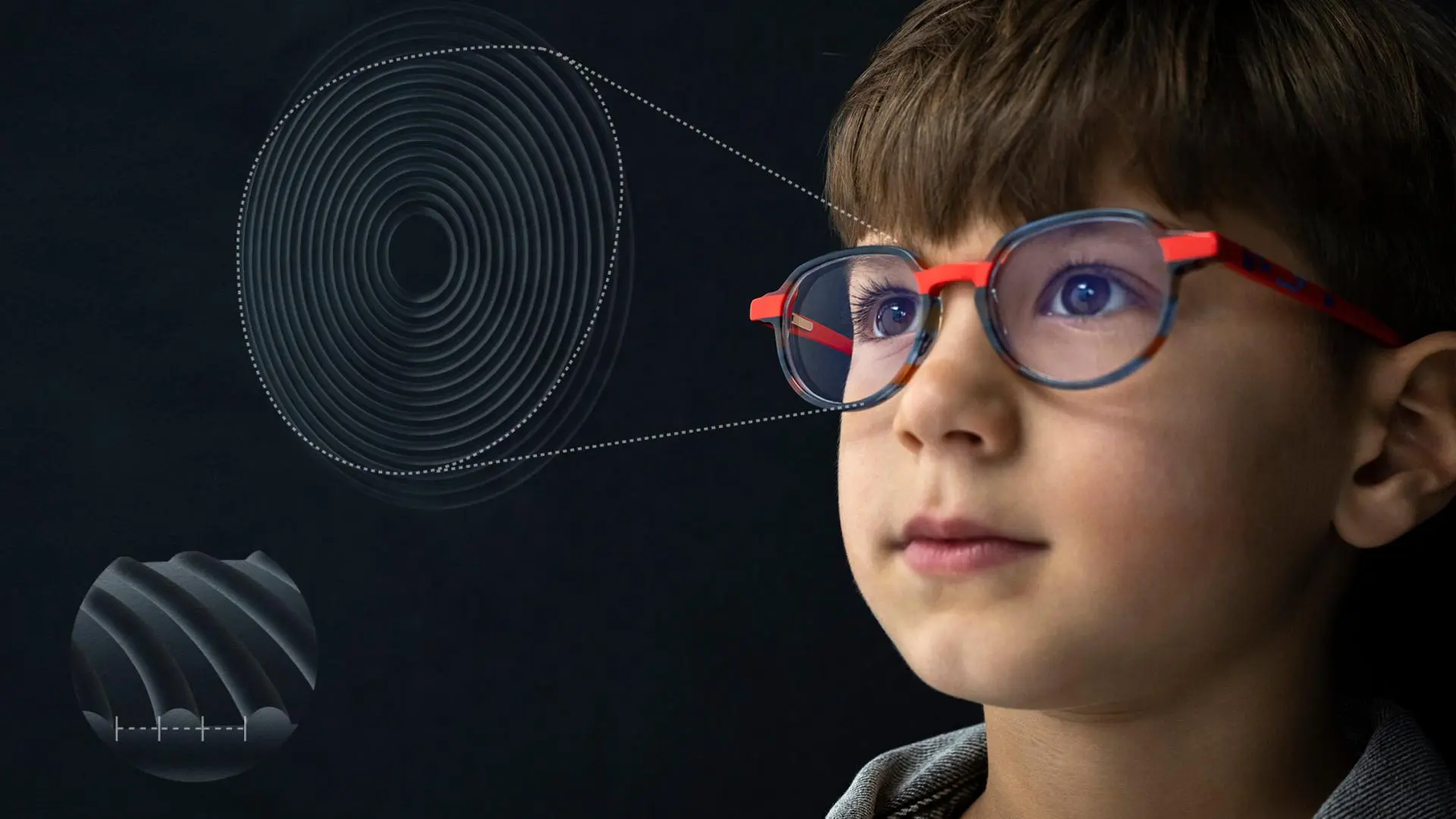
Specialized myopia control lenses help slow down the progression of myopia effectively.
Wearing myopia glasses is essential for those with refractive errors, especially in an era where we constantly study and work in front of digital screens. However, not everyone fully understands the different types of glasses available and how to choose the most suitable one. This article will help you distinguish between the most common types of myopia glasses, their pros and cons, and how to select the right pair for your needs.
Common Types of Myopia Glasses
Below are the most widely used types of myopia glasses today, each offering distinct advantages in design, functionality, and visual comfort.
1. Single-Vision Glasses
Single-vision lenses are the most common type, designed to correct vision at one distance — either near or far. They are ideal for people with mild myopia, beginners who just started wearing glasses, or those who don’t need to wear them constantly. With affordable prices, diverse styles, and ease of use, single-vision glasses are suitable for students, office workers, and anyone with light myopia.
2. Multifocal Glasses
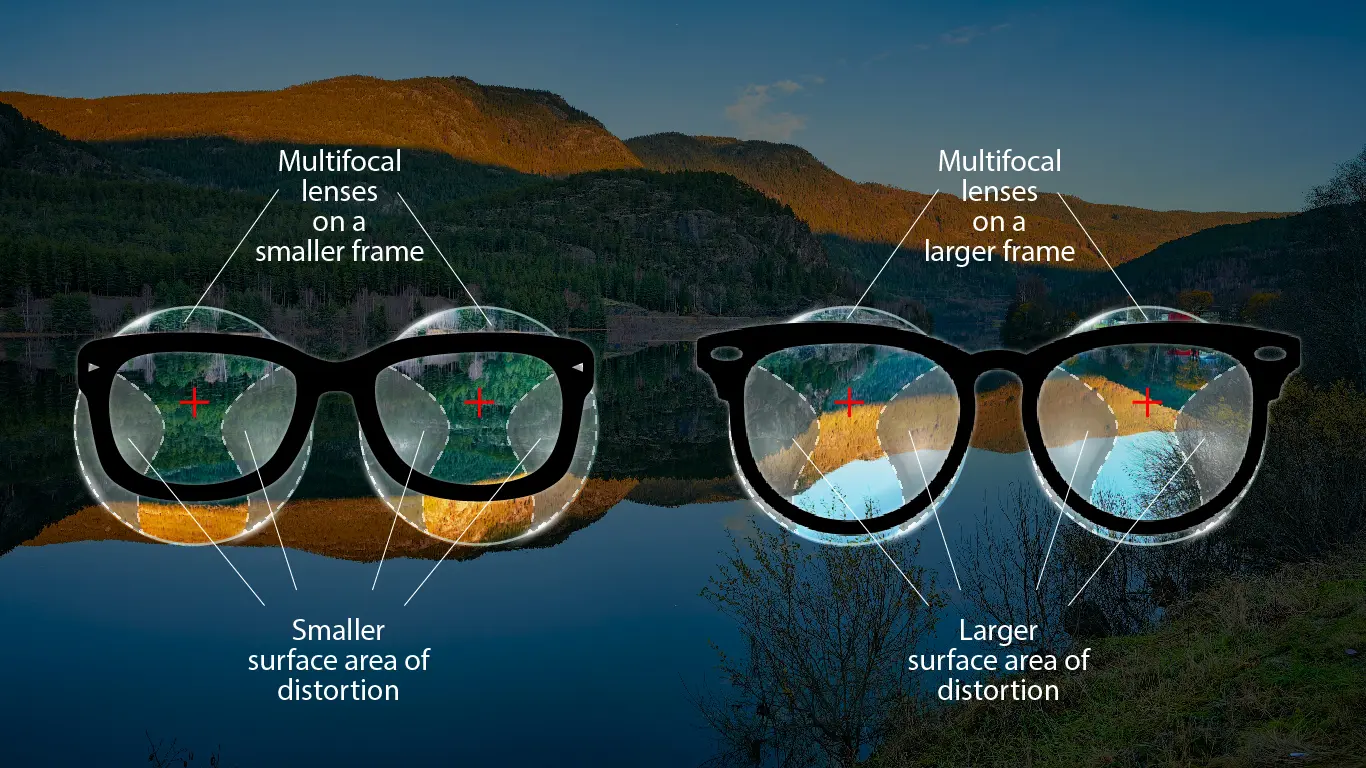
Multifocal lenses support vision at multiple distances – clear whether looking far or near.
Multifocal lenses help users see clearly at different distances, suitable for people with combined refractive errors such as myopia, hyperopia, or presbyopia. Each lens is divided into three functional zones:
- Top zone: distance vision (driving, outdoor activities)
- Middle zone: intermediate vision (computer work, communication)
- Bottom zone: near vision (reading, using smartphones)
This design eliminates the need to switch between different glasses, offering both convenience and aesthetic appeal.
3. Scratch-Resistant Glasses
This type features a protective coating that reduces scratches caused by impact or cleaning. It is a great option for students or individuals who move around frequently, keeping the lenses clear and durable over time.
4. Anti-Reflective (AR) Glasses
AR lenses are coated with a special layer that minimizes glare and reflections under bright light — particularly useful for driving at night or working under fluorescent lighting. They also make screen viewing more comfortable, reducing eye strain during long working hours.
5. UV-Protective Glasses
These lenses are designed to block harmful ultraviolet (UV) rays from sunlight. Long-term exposure to UV rays can lead to serious eye conditions such as cataracts or macular degeneration. Therefore, people who work outdoors or drive frequently should consider this type of lens for optimal eye protection.
6. Photochromic (Color-Changing) Glasses
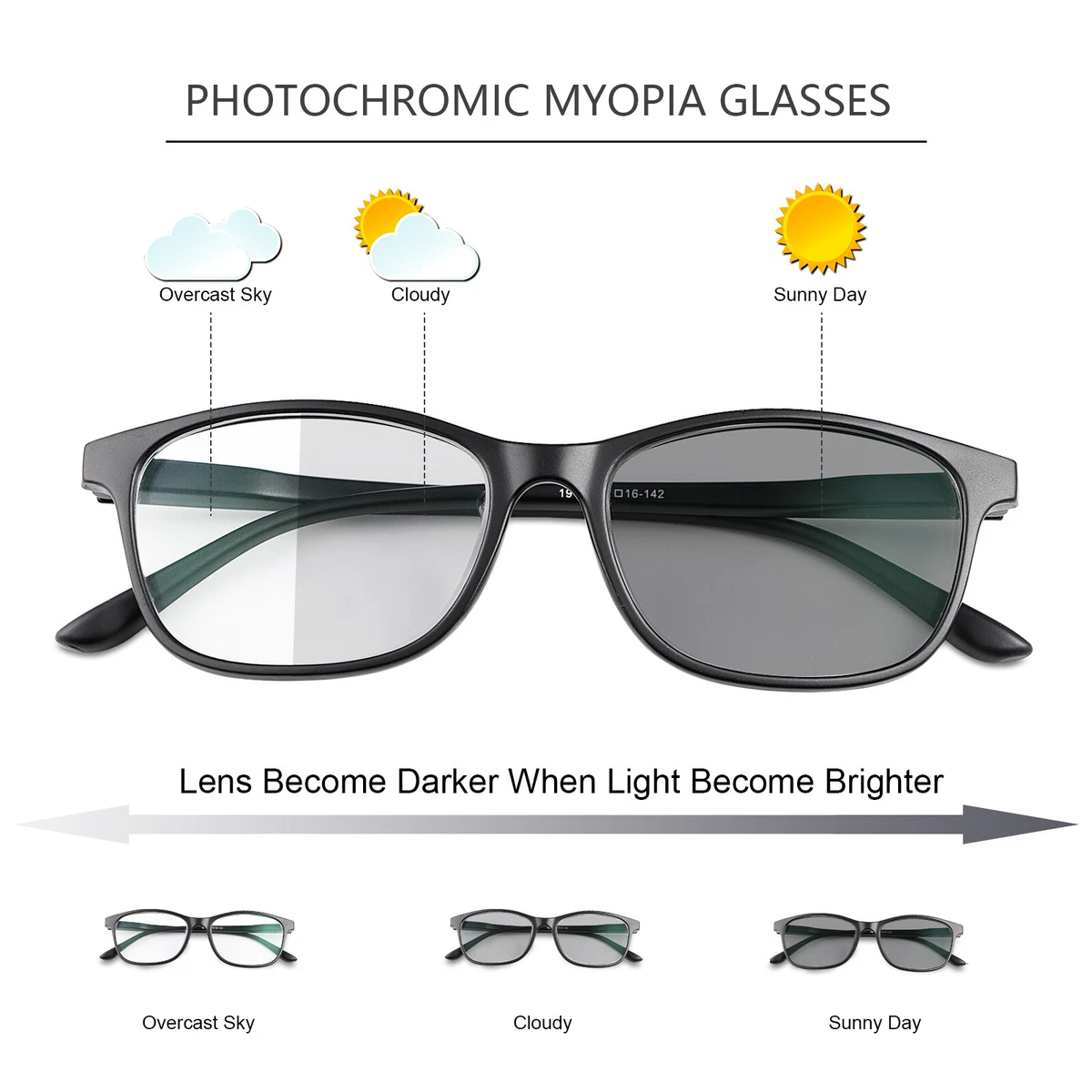
Photochromic lenses automatically adjust to light intensity, protecting eyes from sunlight.
Also known as “photochromic lenses,” these lenses automatically darken when exposed to sunlight and return to clear when indoors. Depending on your preference, they can change to shades of gray, brown, or blue-gray. Ideal for those who often move between indoor and outdoor environments, they provide both comfort and protection without the need for multiple pairs.
7. High-Index (Hi-Index) Glasses
For people with strong prescriptions (above -3.00D or -4.00D), high-index lenses are thinner, lighter, and more attractive. Popular options include Hi-Index 1.67 or 1.74 lenses. Premium versions also feature coatings that resist dust, water, and scratches, providing a clearer, more natural wearing experience.
8. Prescription Sunglasses
A stylish combination of sunglasses and corrective lenses, prescription sunglasses provide clear vision while protecting the eyes from sunlight. The tinted or gradient coating makes them ideal for active and fashion-conscious individuals who spend time outdoors.
2. Comparison Table of Common Myopia Glasses
| Type of Glasses | Main Features | Best For |
|---|---|---|
| Single-Vision Glasses | One focal point, easy to use, affordable | People with mild myopia, students, office workers |
| Multifocal Glasses | Three visual zones: far – intermediate – near | Middle-aged or presbyopic users |
| Scratch-Resistant Glasses | Protective coating, durable, easy maintenance | Active users, children |
| Anti-Reflective Glasses | Reduces glare and blue light reflection | Drivers, computer users |
| UV-Protective Glasses | Shields eyes from harmful UV rays | Outdoor workers, frequent travelers |
| Photochromic Glasses | Automatically darken under sunlight | People moving between indoor & outdoor areas |
| High-Index Glasses | Thinner, lighter, aesthetic, dust- and water-resistant | People with high myopia |
| Prescription Sunglasses | Combine vision correction and sun protection | Active, fashion-forward users |
How to Choose the Right Myopia Glasses
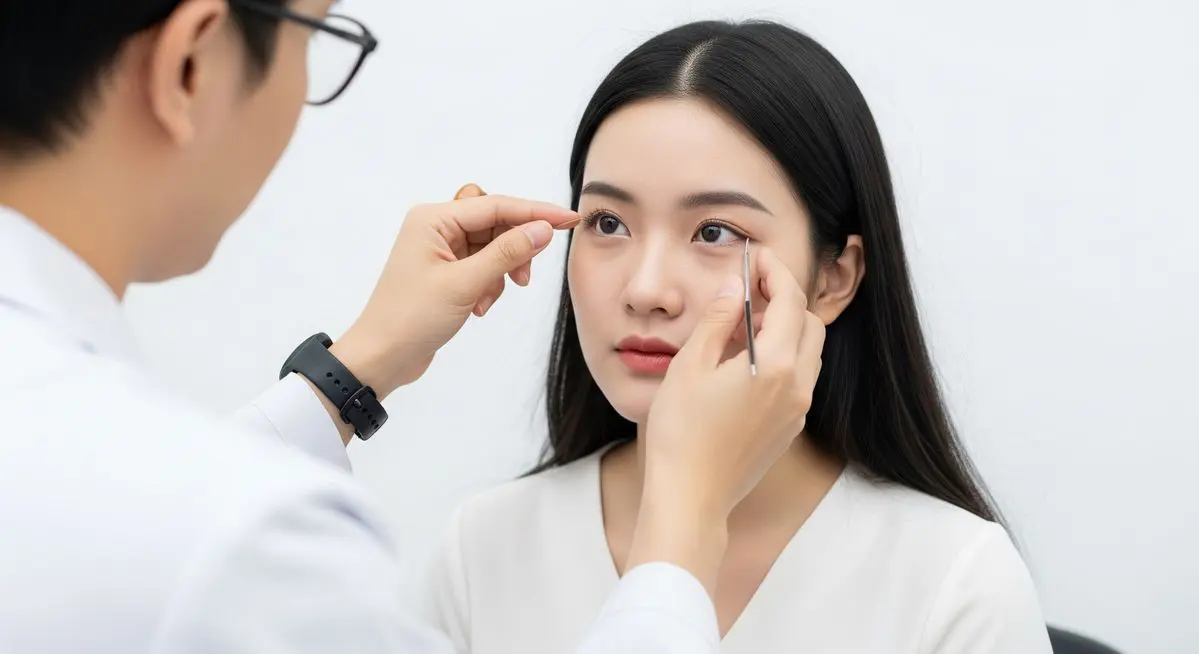
Before buying glasses, it’s crucial to have an accurate eye examination at a trusted ophthalmology clinic. Knowing your exact prescription helps prevent headaches, blurred vision, and eye fatigue caused by incorrect lenses.
The frame you choose also affects comfort and appearance. Lightweight and flexible materials like acetate, titanium, or TR90 are popular choices. Selecting a frame shape that suits your face can help enhance your overall look.
Those with higher prescriptions should opt for higher-index lenses (1.67 – 1.74) to reduce lens thickness and weight. It’s also recommended to choose lenses with anti-scratch, UV-blocking, and blue-light filtering coatings for full eye protection.
Finally, always purchase glasses from reputable clinics or optical stores with certified optometrists. Avoid unbranded or low-quality lenses, as they may cause visual strain and long-term damage to your eyesight.
When Should You Replace Your Glasses?
- When your vision changes and feels blurry even after a recent exam.
- When your lenses are scratched, warped, or discolored.
- When you experience headaches, eye strain, or unusual glare sensitivity.
Understanding the differences between myopia glasses helps you identify your visual needs and select the most effective solution. Each type of lens has its own advantages depending on lifestyle, work environment, and degree of myopia. For advanced refractive correction options such as Phakic ICL, visit TD Eye for professional consultation and personalized care.
 23/02/2026









 0916.741.763
 Appointment