

 vi
vi 01-Dec-2025
 112,860
 Introduction
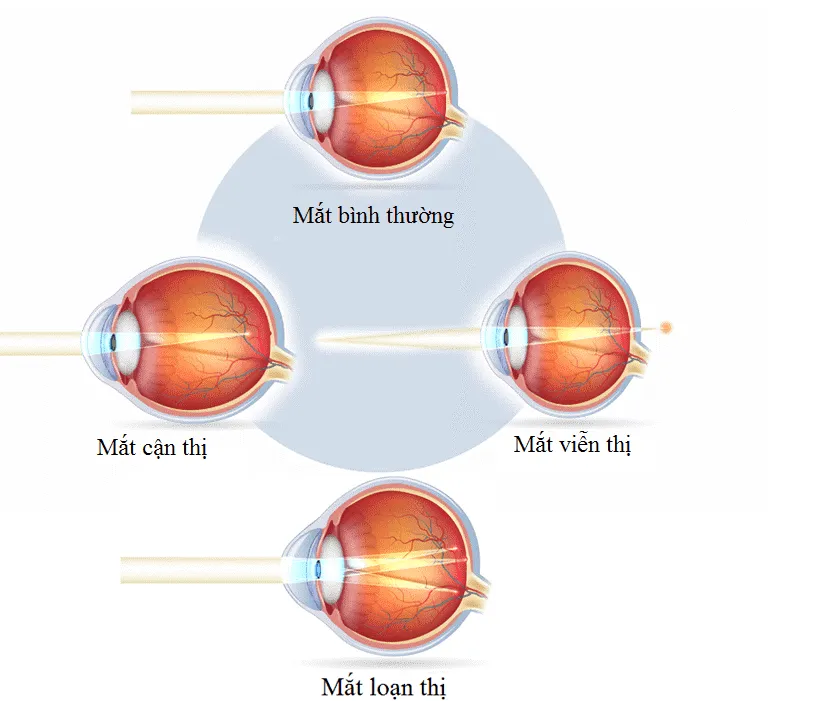
Common refractive errors
Among today’s refractive error treatment methods, LASIK and Phakic ICL (especially EVO ICL) are the two most frequently considered options. What patients are most concerned about is the recovery speed after surgery, which determines how soon they can return to daily activities, study, and work.
Based on clinical data from STAAR Surgical—the global ISO 13485–certified manufacturer of Phakic ICL—and patient education materials, this article offers an in-depth comparison of the recovery differences between Phakic ICL and LASIK to help you make the most appropriate choice.
How do Phakic ICL and LASIK differ in mechanism?
LASIK
LASIK uses a laser to create a corneal flap before reshaping the corneal tissue to adjust curvature. This method delivers fast effectiveness but directly alters corneal structure, which significantly affects the recovery timeline.
Phakic ICL
In contrast, Phakic ICL places a biocompatible Collamer lens between the iris and natural lens without cutting the cornea.
- The Collamer lens is soft, highly biocompatible, FDA-approved, and used in more than 3 million procedures worldwide.
- The procedure takes only 20–30 minutes and does not cause dry eye because it does not affect corneal nerves.
This core difference in mechanism explains the significant variation in recovery speed between the two methods.
LASIK recovery speed
Visual recovery
- Most patients can see clearly within 24–48 hours.
- However, the cornea needs 3–6 months to fully stabilize.
Complications affecting recovery
According to FDA studies referenced in LASIK documentation:
- 30% of patients without prior dry eye experience dry eye after LASIK.
- For those with a history of dry eye, the rate increases to 60%.
Other postoperative issues may include:
- Glare and halos when driving at night
- Corneal flap displacement in case of strong impact
- Recurrent myopia as the cornea weakens over time
These factors mean that while LASIK offers quick initial clarity, full and stable recovery may take several months.
Recovery speed of Phakic ICL (EVO ICL)

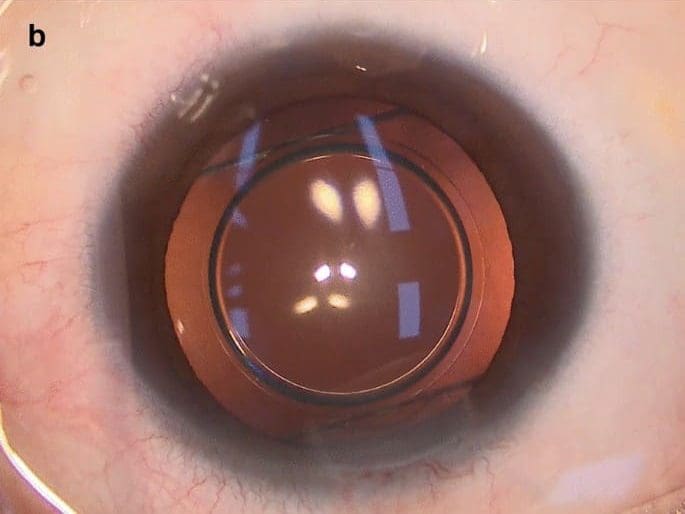
Illustration of EVO ICL lens position inside the eye
Illustration of the Phakic ICL (EVO) lens position inside the eye
According to professional EVO ICL resources:
- Vision improves almost immediately after the procedure.
- Most patients can resume light activities within 1–2 days.
- The procedure does not cause dry eye because corneal nerves remain unaffected.
Why Phakic ICL recovers quickly
- No corneal cutting
- A micro-incision (2.0–2.2 mm) that self-heals without stitches
- Collamer material minimizes inflammatory response
- Does not thin the cornea, reducing structural recovery time
EVO ICL satisfaction data
99.4% of patients reported they would undergo the procedure again due to excellent visual outcomes and recovery experience.
Recovery comparison: Phakic ICL vs. LASIK
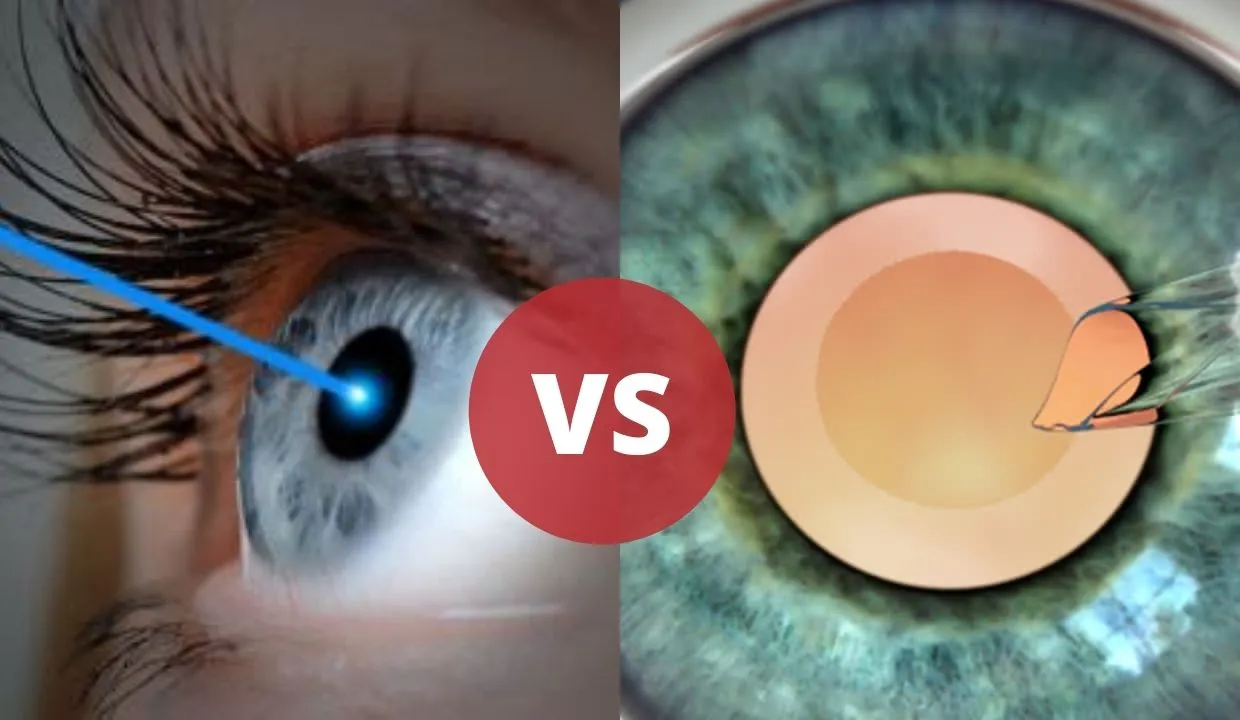
Recovery comparison between Phakic ICL and LASIK
Visual recovery timeline
| Criteria | LASIK | Phakic ICL |
|---|---|---|
| Initial clarity | 24–48 hours | Almost immediate |
| Full recovery | 3–6 months | 1–2 weeks |
| Stability | May fluctuate for 6 months | Quick and stable |
Return to daily activities
| Activity | LASIK | Phakic ICL |
|---|---|---|
| Office work | 1–2 days | 1 day |
| Light gym | 1 week | 3–5 days |
| Intense sports | 1 month | 2 weeks |
| Eye makeup | 1–2 weeks | 3–5 days |
Factors slowing recovery
- LASIK: dry eye, glare, flap healing.
- ICL: mainly requires monitoring eye pressure in the first 24 hours; mild symptoms resolve within days.
Cost
The cost of refractive surgery varies depending on the chosen method and lens type.
- LASIK: approximately 42,000,000 – 45,000,000 VND for both eyes.
- Phakic ICL: around 90,000,000 VND for both eyes, requiring a deposit of about 55,000,000 VND to order custom lenses.
Note: These costs typically include protective eyewear, postoperative eye drops, and one year of follow-up appointments.
Although Phakic ICL has a higher cost, it offers superior benefits such as sharper vision, rapid recovery, and suitability for patients with thin corneas or high myopia. This is why its popularity continues to rise.
Postoperative risks affecting recovery
LASIK
- Dry eye (30–60%)
- Flap displacement
- Recurrent myopia
- Unsuitable for thin corneas
Phakic ICL
According to the STAAR patient booklet:
- Temporary intraocular pressure rise
- Lens reaction (rare: 1/5000)
- Cataract risk in older or very high-myopia patients
Notably, Phakic ICL does not cause dry eye—a finding supported by clinical studies.
Which method recovers faster?
For functional recovery such as clear vision, mobility, or returning to light work, Phakic ICL delivers near-instant improvement and greater stability. Most patients can resume normal routines within 1–2 days because the cornea is untouched and dry-eye complications do not occur.
Structurally, LASIK requires several months for the cornea to fully stabilize due to flap creation and tissue removal. Meanwhile, ICL avoids corneal alteration entirely, using a micro-incision that heals quickly and causes minimal fluctuation. Therefore, for individuals needing extremely fast recovery for work, travel, or exams, Phakic ICL is often the superior option.
When should you choose Phakic ICL instead of LASIK?
Choose Phakic ICL if you:
- Have high myopia (–8D to –20D) or significant astigmatism
- Have thin corneas
- Suffer from chronic dry eye
- Want fast recovery with fewer complications
- Prefer a non-corneal procedure
- Want a reversible solution based on FDA documentation
Choose LASIK if you:
- Have mild to moderate myopia
- Have sufficient corneal thickness
- Prefer a lower-cost solution
- Do not have dry-eye issues
While LASIK suits many common refractive error cases, Phakic ICL excels in recovery speed, visual quality, and long-term stability. By preserving corneal structure and using high-grade biocompatible Collamer, EVO ICL is an ideal option for those seeking fast, safe, and precise visual correction.
To determine the most suitable method, patients should undergo a comprehensive evaluation: myopia level, astigmatism, anterior chamber depth, endothelial cell count, and overall eye health—following STAAR Surgical’s clinical standards.

 07/03/2026











 0916.741.763
 Appointment