

 vi
vi 06-Jan-2026
 27,645
 What Is Congenital Astigmatism?

Vision of an eye with congenital astigmatism compared to a normal eye
Congenital astigmatism is a refractive error that appears from birth or during the early years of life, caused by uneven development of the eye’s structure. When astigmatism is present, light entering the eye does not focus properly on the retina, causing images to appear blurred, distorted, or unclear at both near and far distances.
Unlike myopia or hyperopia, congenital astigmatism not only reduces visual acuity but also affects visual perception, hand–eye coordination, and the overall development of a child’s visual system if not detected early.
Structurally, congenital astigmatism commonly originates from:
- Irregular curvature of the cornea (corneal astigmatism)
- Abnormalities of the crystalline lens (lenticular astigmatism)
In many cases, children with mild congenital astigmatism are difficult to identify unless they undergo regular eye examinations.
Signs of Congenital Astigmatism

Signs of congenital astigmatism
Young children are often unable to clearly describe blurred vision or eye discomfort. Therefore, parents play a crucial role in observing abnormal signs.
Common signs of congenital astigmatism include:
- Frequent squinting or closing one eye when looking
- Tilting the head or leaning very close to books or screens
- Eye fatigue or tearing when concentrating for long periods
- Frequent eye rubbing or complaints of headaches with no clear cause
- Difficulty concentrating when drawing, assembling puzzles, or reading
- More clumsiness compared to peers of the same age
- Possible strabismus or amblyopia if left untreated
These signs are often mistaken for normal habits, causing many cases of congenital astigmatism to be detected late.
Causes of Congenital Astigmatism
Most cases of congenital astigmatism are related to genetic factors. If one or both parents have refractive errors, especially astigmatism, the risk of congenital astigmatism in children is higher.
In addition, other causes and risk factors include:
- Infections during pregnancy affecting fetal eye development
- Birth-related trauma
- Premature birth or low birth weight
- Congenital structural abnormalities of the eye
These factors may cause uneven development of the cornea or crystalline lens, leading to astigmatism from a very early stage.
Can Congenital Astigmatism Be Completely Cured?
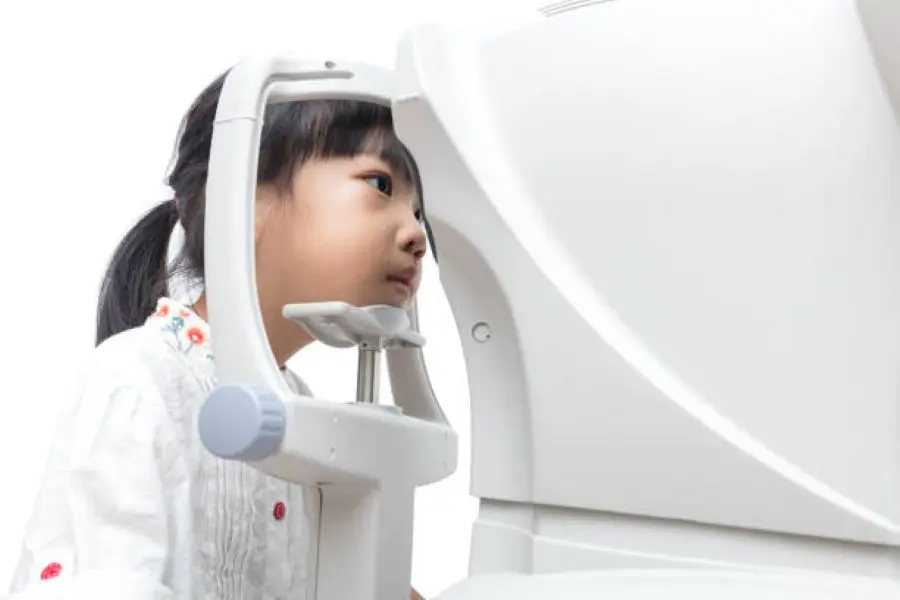
Can congenital astigmatism be completely cured?
This is the question that concerns many parents the most.
From a medical perspective, congenital astigmatism cannot be “completely cured” in young children because it is related to the eye’s structure. However, the good news is that congenital astigmatism can be very well controlled if detected early and monitored appropriately.
In childhood, the goal of treatment is not to “eliminate” astigmatism, but to:
- Help children see clearly so the eyes can develop normally
- Prevent amblyopia and strabismus
- Limit the progression of astigmatism over time
With proper intervention, children with congenital astigmatism can still study, live, and develop vision that is nearly normal.
Current Treatment Methods for Congenital Astigmatism
1. Wearing correctly prescribed glasses
This is the most common and safest method for children with congenital astigmatism. Glasses help redirect light so that images focus correctly on the retina, thereby improving vision and reducing eye strain.
Early use of glasses also plays a critical role in preventing amblyopia—the most serious complication of congenital astigmatism.
2. Rigid gas permeable (RGP) contact lenses
In certain special cases, doctors may prescribe rigid contact lenses to better correct the corneal surface. However, this method requires good cooperation from the child and close monitoring by specialists.
3. Supportive visual training
Appropriately designed visual exercises can help improve coordination between the two eyes, enhance accommodative ability, and support effective management of congenital astigmatism. These exercises should be performed under the guidance of an ophthalmologist or optometry specialist.
Care and Prevention of Congenital Astigmatism Progression
In addition to treatment, daily lifestyle and habits significantly influence the progression of congenital astigmatism.
Parents should:
- Limit the use of electronic devices
- Ensure adequate lighting during study and reading
- Encourage outdoor activities for 1–2 hours per day
- Remind children to take regular breaks when doing near work
- Maintain a diet rich in vitamins A, C, E, zinc, and omega-3
These factors help promote healthy eye development and reduce the risk of increasing astigmatism over time.
When Can Astigmatism Be Treated Definitively?
When children reach adulthood and their vision becomes stable (usually after the age of 18), refractive surgery may be considered to permanently improve vision, provided medical criteria are met.
However, surgery should only be considered when:
- Astigmatism is stable
- There are no accompanying eye diseases
- A thorough examination and consultation with an eye specialist have been completed
Congenital astigmatism is not a dangerous condition if detected early and managed properly. The most important factor is that parents do not overlook subtle signs and maintain regular eye examinations for their children from an early age.
Early intervention not only helps children see more clearly today, but also protects long-term vision, creating a strong foundation for learning, physical activities, and overall quality of life in the future.
 23/02/2026











 0916.741.763
 Appointment