

 vi
vi 08-Sep-2025
 99,465
 Introduction
For professional athletes, every fraction of a second in reflexes and every detail in vision can determine victory or defeat. Astigmatism causes images to become distorted and blurry, significantly affecting orientation, reaction time, and coordination. There are three common correction methods for athletes: eyeglasses, toric contact lenses, and Phakic ICL surgery – each with its own advantages and limitations.
Limitations of Eyeglasses in Competition

Eyeglasses can restrict athletes’ peripheral vision and easily slip during intense movement
In sports, especially those requiring wide-field observation such as football, basketball, or badminton, eyeglasses often become an obstacle. The frame restricts peripheral vision, slowing down athletes’ reactions when opponents move from the sides. In addition, during high-intensity matches, glasses may shift or fall off after collisions, disrupting the athlete’s rhythm. These small inconveniences directly affect concentration.
Moreover, in humid environments or when sweating heavily, lenses fog up easily, forcing athletes to wipe them constantly, which significantly reduces continuity during competition.
Toric Contact Lenses and Their Effectiveness
Unlike eyeglasses, toric contact lenses fit snugly on the cornea without a frame, providing almost natural peripheral vision. This is a major advantage in situations where athletes need to scan the entire playing field.
However, contact lenses have one major drawback: the risk of dry eye. According to numerous studies, when competing in windy, air-conditioned, or prolonged conditions, moisture on the corneal surface decreases, causing dryness, fatigue, and frequent blinking. This not only creates discomfort but also directly impacts performance, as even fractions of a second lost in focus can change the outcome.
Additionally, during intense physical activity and heavy sweating, dust and debris can easily stick to lenses. Without proper hygiene, this increases the risk of eye infections – a concern that ophthalmologists often warn long-term athletes using contact lenses about.
Phakic ICL – A Vision Solution for Athletes
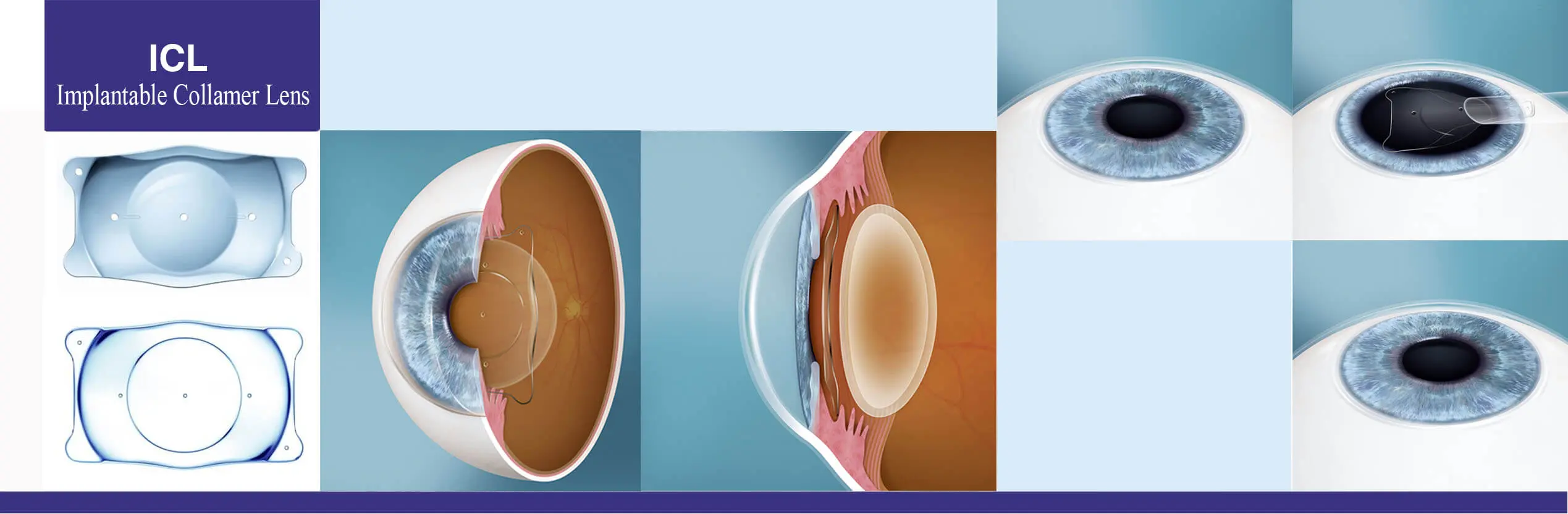
Illustration of Phakic ICL lens placement in the eye
Phakic ICL (Implantable Collamer® Lens) is a phakic intraocular lens placed behind the iris and in front of the natural lens. It is an advanced technology that corrects myopia and astigmatism from 1.0D to 4.0D without altering the cornea.
Unique Benefits for Athletes
1) Does Not Cause Dry Eye
Unlike contact lenses, Phakic ICL does not sit on the corneal surface but is positioned behind the iris and in front of the natural lens. Because it does not touch the corneal surface, Phakic ICL does not interfere with the tear film – a key factor in maintaining natural eye moisture. This helps astigmatic patients, especially athletes competing in dry, hot conditions or under intense lighting, keep their eyes comfortable, avoiding irritation, excessive blinking, and distraction.
2) Sharp Vision Day and Night
International clinical studies have shown that Phakic ICL significantly improves night vision quality, reducing glare and halos around lights – challenges often faced by athletes competing at night or in brightly lit arenas. This enables them to track the ball, teammates, and opponents with precision, even when adapting to changing light conditions.
3) Stability During Intense Activity
Another standout advantage of Phakic ICL is its absolute stability. The lens is fixed inside the eye and cannot slip or fall out during sprints, jumps, or heavy collisions. Unlike eyeglasses that may fall off or contacts that may shift, Phakic ICL ensures confidence and safety, allowing athletes to fully focus on performance.
4) Long-Term Safety
Phakic ICL is made from Collamer® – a biocompatible material exclusive to STAAR Surgical, derived from collagen and highly compatible with the human body. Collamer not only ensures safety but also provides UV protection, reducing the risk of retinal damage caused by sunlight – a key benefit for outdoor athletes.
Most importantly, Phakic ICL is a flexible, future-proof solution: the lens can be removed or replaced by a doctor if necessary, giving long-term adaptability for vision needs.
Comparison Table: Eyeglasses, Toric Contact Lenses, and Phakic ICL
| Criteria | Eyeglasses | Toric Contact Lenses | Phakic ICL |
|---|---|---|---|
| Peripheral vision | Restricted | Wider, more natural | Completely natural |
| Affected by sweat/collision | High | Moderate | Not affected |
| Dry eye | No | Frequent | Does not cause dry eye |
| Night vision | Limited by glare | May cause dryness, glare | Significantly improved, reduced halos |
| Stability in competition | Low | Moderate | Very high |
| Infection risk | Low | Moderate – high | Very low |
| Recovery after competition | No change | Possible eye fatigue | Quick recovery, stable |
| Long-term cost | Low but requires frequent replacement | Moderate, with maintenance cost | Higher upfront but sustainable |
International Studies on Phakic ICL and Sports

STAAR Surgical symposium
International clinical studies (Am J Ophthalmol 2021, Clin Ophthalmol 2022) and official STAAR Surgical documents (brochure and PIB) demonstrate that over 90% of patients achieved uncorrected visual acuity equivalent to or better than their corrected vision before surgery. In particular, global surveys report that 99.4% of Phakic ICL patients would choose the procedure again due to visual quality and long-term comfort.
For athletes, these figures carry significant meaning: stable, sharp vision not only helps them react faster on the field but also reduces risks from eye fatigue, dryness, or delayed reflexes in demanding conditions such as nighttime matches, bright floodlights, or high-speed movements. In other words, Phakic ICL provides not only clear sight but also direct support for professional athletic performance.
Frequently Asked Questions for Athletes
Do astigmatic athletes face limitations if they only use eyeglasses?
Yes. Peripheral vision is restricted, and glasses may fall during collisions.
How much do toric contact lenses improve peripheral vision for athletes?
They expand vision more than glasses but still pose risks of dryness and lens shifting during intense activity.
Why does dry eye from contact lens use directly impact performance?
Dry eye reduces accuracy, increases blinking, and causes irritation, leading to loss of focus.
Does Phakic ICL really help athletes see better at night?
Yes. Phakic ICL has been proven to improve night vision and reduce halos.
Which correction should young athletes choose for long-term development?
If astigmatism is mild and the eyes are still developing, toric contact lenses may suffice. However, once vision stabilizes and professional performance is required, Phakic ICL is the safest and most lasting choice.
 23/02/2026











 0916.741.763
 Appointment