

 vi
vi 07-Dec-2025
 34,200
What determines the rate of myopia progression in each person?
Myopia is becoming the “visual epidemic” of the 21st century. International studies predict that by 2050, approximately 50% of the global population will be myopic, with about 10% developing high myopia. In Vietnam, this rate has exceeded 38%, with the fastest increase observed in school-aged children.
Even more concerning, myopia does not stop progressing. Once it appears, the degree of myopia tends to increase over time, especially as the axial length of the eye continues to elongate, the primary cause of progressive myopia and dangerous complications such as retinal detachment, macular degeneration, and early cataracts.
So, what determines the rate of myopia progression in each person? Below are five key factors highlighted by ophthalmologists, and you can begin controlling them today.
1. Not having regular eye examinations
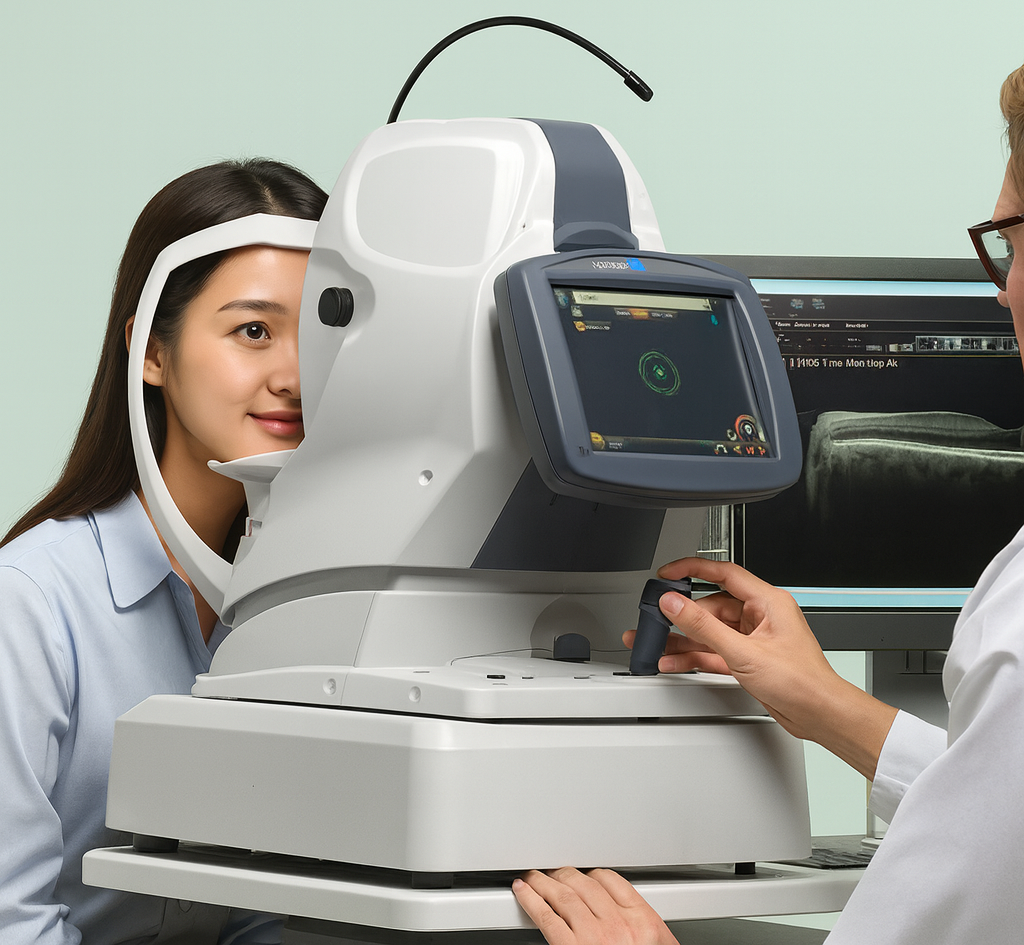
People with high myopia should have a retinal exam every 6 months to detect abnormalities early and prevent progression
Many people only visit an eye doctor when they experience blurriness, eye strain, or difficulty seeing clearly. However, by the time symptoms appear, the eyes may already have undergone significant structural changes.
Those with myopia, especially high myopia, need regular eye check-ups to:
- Detect early signs of retinal detachment, a condition that can lead to vision loss.
- Monitor changes in axial length, the key factor that determines the rate of myopia progression.
- Evaluate retinal health every 6 months to promptly address abnormalities.
Skipping regular examinations allows myopia to progress silently, leading to higher degrees of myopia and greater risks of complications later in life.
2. Wearing incorrect prescription glasses
Many parents believe that undercorrecting the prescription helps children avoid “dependence on glasses,” or that overcorrecting helps them see better. However:
- Wearing glasses with a lower prescription forces the eyes to accommodate constantly → accelerating myopia progression.
- Wearing glasses with a higher prescription strains the eyes, causing headaches, fatigue, and further increasing the risk of progression.
The most important rule is wearing the correct prescription, determined by specialized diagnostic equipment and an ophthalmologist. When the eyes must work harder to see clearly, the axial length continues to elongate, causing faster progression.
For children aged 8–18, a period of rapid eye growth, wearing incorrect glasses may cause an increase of 1.0D–2.0D per year.
3. Excessive use of digital devices

Digital devices cause prolonged near focusing, increasing myopia progression
In the digital age, children and adults spend 5–9 hours per day on screens. Prolonged near work places the eyes in a state of continuous accommodation, leading to:
- Rapid annual myopia progression
- Dryness and irritation
- Accommodation spasm and transient blurred vision
- Higher risk of progressive myopia
Studies have confirmed that prolonged near work is the strongest factor contributing to school-age myopia and accelerates its progression each year. To reduce the risk, experts recommend:
- Following the 20-20-20 rule
- Avoiding continuous screen time longer than 45 minutes
- Maximizing exposure to natural light
- Increasing outdoor activity to at least 2 hours per day
4. Keeping an excessively close viewing distance
A viewing distance that is too close forces the eyes to accommodate intensely, altering the shape of the eyeball and accelerating myopia progression.
The ideal viewing distance recommended by specialists includes:
- 25–35 cm when reading
- 50–60 cm when using a computer
- 2–3 m for a 40-inch TV
- 2.5–4 m for a 50-inch TV
Additionally, reading while lying down, moving, or in poor lighting conditions increases visual strain, causing faster myopia progression. This risk applies not only to children but also to adults working long hours on computers.
5. Poor nutritional intake
To maintain stable vision, the eyes require essential nutrients. When the body lacks these nutrients, the eyes tire easily, become dry, and lose their ability to accommodate, creating favorable conditions for myopia progression.
Important nutrients include:
Beta-carotene
Beta-carotene is the precursor of vitamin A, playing an important role in maintaining healthy vision and improving low-light visibility. It is abundant in carrots, pumpkin, papaya, and sweet potatoes — foods that should be included regularly to support optimal eye function.
Vitamin A
Vitamin A helps protect the cornea, supports accommodation, and reduces the risk of dry eye. Adequate intake enhances eye resilience against environmental damage. Rich sources include egg yolks, liver, milk, tomatoes, and dark leafy green vegetables.
Crom (Chromium)
Chromium is often overlooked but significantly affects the structure of the eyeball. Chromium deficiency may cause eye protrusion, contributing to faster myopia progression. It is found in beef liver, grape juice, and eggs, essential additions for maintaining stable vision.
Kẽm (Zinc)
Zinc enhances metabolic activity within the eyes, supports tear gland function, and reduces dryness, irritation, and fatigue from prolonged focusing. It also contributes to recovery after excessive eye strain. Beef, seafood, chicken, and eggs are excellent sources of zinc.
A nutrient-poor diet weakens the eyes, increases fatigue, and accelerates myopia progression compared to individuals with balanced nutritional intake.
Myopia is more than a refractive error. When myopia increases rapidly and uncontrollably, the risk of severe complications rises, affecting long-term vision. By controlling the factors above, although each may impact individuals differently, you can significantly slow the progression of myopia.

 07/03/2026












 0916.741.763
 Appointment