

 vi
vi 11-Jan-2026
 14,250
What Is Presbyopia?

3 common misconceptions in presbyopia treatment
Presbyopia is one of the most common vision changes people experience after the age of 40. However, despite its prevalence, proper understanding of presbyopia treatment remains limited. Many people accept blurred near vision when reading, using a phone, or doing close-up work as an “inevitable part of aging,” while modern ophthalmology now offers far more effective solutions than in the past.
Clinical practice shows that many patients seek medical care only after experiencing significant vision decline, persistent eye strain, headaches, and reduced quality of life—largely due to misconceptions about presbyopia and its treatment options. Associate Professor, PhD, MD Tran Hai Yen of Hai Yen Eye Care Center, who has many years of experience in eye examinations for older adults, notes that a considerable number of patients misunderstand presbyopia and attempt incorrect self-treatment before consulting an eye doctor. Below are the three most common misconceptions:
Misconception 1: Presbyopia Is the Same as Farsightedness

3 common misconceptions in presbyopia treatment
This is a very common misunderstanding, especially among middle-aged and older adults. The reason is that both presbyopia and farsightedness make it difficult to see objects up close, requiring people to hold books or phones farther away to read clearly.
However, in essence, presbyopia and farsightedness are completely different.
Presbyopia is a natural physiological aging process of the eye. Over time, the crystalline lens gradually loses its elasticity, and accommodative ability declines, making it harder for the eyes to focus on near objects. Almost everyone will experience presbyopia, typically starting after the age of 40, regardless of whether they previously had myopia, hyperopia, or completely normal vision.
In contrast, farsightedness is a refractive error that often appears in childhood or earlier in life. It is related to the anatomical structure of the eyeball and can remain stable over a long period of time.
Confusing these two conditions leads to mistakes in treatment. Some people buy farsighted glasses to use when they develop presbyopia, only to experience dizziness, eye strain, or poorer distance vision. This highlights that accurate diagnosis is the first and most important step in presbyopia treatment.
Misconception 2: Presbyopia Can Be Self-Diagnosed and Treated with Over-the-Counter Glasses
Many people who begin to notice blurred small print think that “buying reading glasses is enough.” In reality, the market offers a wide range of ready-made reading glasses that are affordable and convenient. However, purchasing glasses without a comprehensive eye examination is a common mistake and carries potential risks.
Reading glasses are not simply about “making text clearer.” Choosing the right glasses depends on many factors, such as:
- The actual degree of presbyopia in each eye
- Whether myopia, hyperopia, or astigmatism is also present
- The nature of one’s work (extensive reading, computer use, driving, etc.)
- Lifestyle and daily visual needs
In addition, there are many types of reading glasses available, including single-vision, bifocal, multifocal, and intermediate lenses. Each type is suitable for different user groups and purposes.
Especially for individuals over 40, routine eye examinations are not only for determining the correct prescription, but also for early detection of serious eye conditions such as glaucoma, cataracts, and macular degeneration. Relying solely on ready-made glasses may cause many eye diseases to go unnoticed until they have progressed to advanced stages.
Misconception 3: Presbyopia Means Wearing Glasses for Life
3 common misconceptions in presbyopia treatment
This is perhaps the biggest psychological barrier that prevents many people from exploring modern presbyopia treatment options. For many, reading glasses are not only inconvenient but also a symbol of “getting older,” affecting confidence and quality of life.
The good news is that glasses are no longer the only option. Advances in modern ophthalmology have introduced many effective presbyopia treatment methods, tailored to different eye conditions and visual needs.
Phaco Surgery and Multifocal Intraocular Lens Implantation
This solution is commonly applied to patients with presbyopia accompanied by cataracts or those who wish to comprehensively improve their vision. The aged natural crystalline lens is replaced with a multifocal intraocular lens, allowing patients to see clearly at far, intermediate, and near distances.
Intraocular lenses are designed with high biocompatibility, remain in the eye long-term, and can significantly reduce dependence on reading glasses after surgery.
Corneal Inlay Procedure
Inlay is a delicate technique in which the surgeon places an ultra-thin lens into the cornea of one eye. This method enhances near and intermediate vision, while the other eye remains optimized for distance vision.
The advantages of corneal inlay include minimal invasiveness, quick recovery time, and suitability for patients who do not yet wish to undergo deeper intraocular procedures.
The Presbyond Solution
Presbyond is considered one of the most advanced and comprehensive presbyopia treatment methods available today. This technique combines excimer laser refractive surgery with precise control of higher-order aberrations to increase the depth of field of clear vision.
The surgeon deliberately designs vision for each eye: the dominant eye is optimized for clear distance vision, while the non-dominant eye is optimized for near vision. When both eyes work together, patients can see clearly across multiple distances without the need for glasses.
In particular, Presbyond can be applied to:
- Patients with presbyopia combined with myopia, hyperopia, or astigmatism
- Patients who have previously undergone LASIK
- Patients who have had cataract surgery with monofocal lenses but are not satisfied with their near vision
The treatment process is quick, painless, and vision improvement is noticeable soon after surgery.
Presbyopia Treatment
Presbyopia is not a dangerous disease, but if it is not properly understood and treated, it can significantly affect quality of life. Today, presbyopia treatment is no longer limited to wearing glasses, but instead focuses on helping middle-aged and older adults maintain flexible, comfortable, and confident vision in daily activities.
The most important step is a comprehensive eye examination and consultation with an experienced ophthalmologist to choose the most suitable solution for each individual’s eye condition and personal needs. Every pair of eyes is different, and effective presbyopia treatment always requires a personalized approach.

 25/02/2026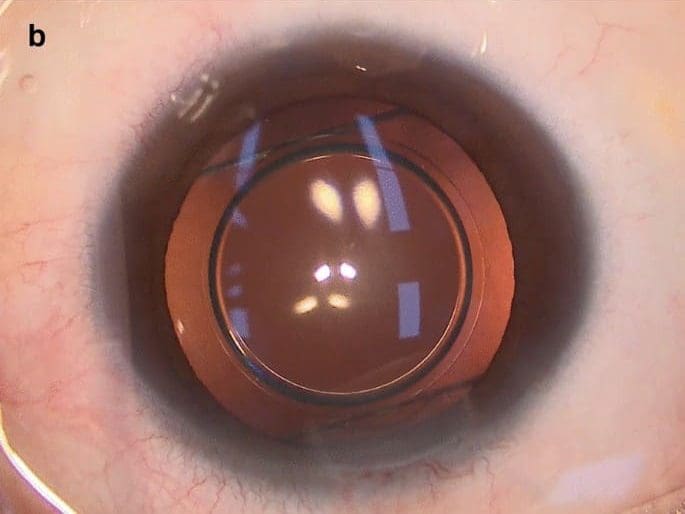










 0916.741.763
 Appointment