

 vi
vi 03-Mar-2026
 44,745
 What Is Phakic ICL Surgery?

Phakic ICL Surgery at Hai Yen Eye Care Center
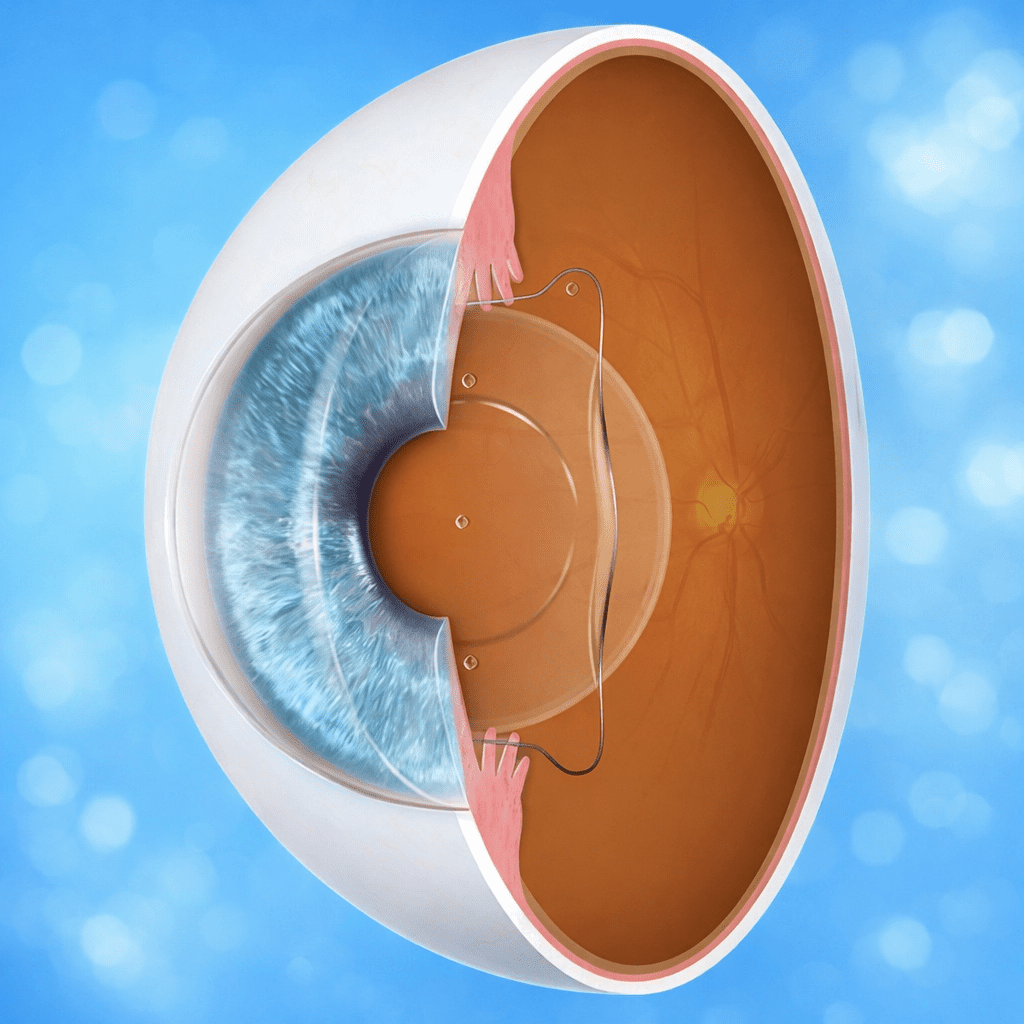
In recent years, Phakic ICL (Implantable Collamer Lens) has been considered a significant advancement in refractive error treatment, especially for individuals with high myopia, thin corneas, or those who are not eligible for laser surgery. This method involves implanting a custom-designed intraocular lens, tailored to each eye’s specific measurements, into the space behind the iris and in front of the natural crystalline lens.
Unlike laser-based procedures that reshape and remove corneal tissue, Phakic ICL works by adding an ultra-thin lens to the eye’s natural optical system. As a result, light is precisely focused onto the retina, delivering sharp vision while completely preserving the corneal structure.
The ICL lens is made from Collamer®, a highly biocompatible, soft, and transparent material. Once properly positioned, patients almost do not feel its presence inside the eye. This is a key factor that allows Phakic ICL to provide a natural and comfortable visual experience in daily life.
Advantages of Phakic ICL
Advantages of Phakic ICL
1. Wide Treatment Range and Special Indications
One of the outstanding advantages of Phakic ICL is its broad treatment range. This method can correct up to 16 diopters of myopia, 10 diopters of hyperopia, and 6 diopters of astigmatism. Therefore, patients with high refractive errors—who are often limited when considering laser procedures—still have the opportunity to achieve optimal vision.
Phakic ICL is particularly suitable for patients with severe dry eye, thin corneas, or early-stage keratoconus. In addition, for individuals experiencing myopic regression after LASIK who no longer have sufficient corneal tissue for further laser enhancement, ICL is considered a safe and effective alternative solution.
Currently, ICL lenses are manufactured by STAAR Surgical—a global ophthalmic brand with more than 30 years of experience and presence in over 75 countries. More than 1,000,000 Phakic ICL procedures have been performed worldwide, demonstrating the reliability and widespread adoption of this method.
2. Mechanism That Minimizes Dry Eye and Preserves Corneal Structure
Unlike laser procedures that extensively reshape corneal tissue, Phakic ICL requires only a small 2–3 mm incision at the corneal edge to insert the lens into the eye. Thanks to this feature, the corneal surface remains largely unaffected, significantly reducing the risk of postoperative dry eye and lowering the rate of refractive regression.
The lens is positioned separately from critical ocular structures. The surgery does not alter corneal thickness, curvature, or biomechanical stability. Additionally, the lens provides UV protection, helping safeguard internal eye structures such as the crystalline lens and retina.
Another important advantage is reversibility. If necessary, the lens can be removed, allowing the eye’s structure to return almost entirely to its original state. This is a major difference compared to laser procedures, which are irreversible.
3. Fast Visual Recovery and Excellent Visual Quality
Phakic ICL surgery typically takes about 15 minutes per eye. The ultra-small incision allows for rapid recovery. Most patients notice significant visual improvement within 24–48 hours.
Beyond quick recovery, postoperative visual quality is highly rated. Thanks to advanced optical design, ICL helps minimize glare and halos at night while maintaining good contrast sensitivity under various lighting conditions.
At Hai Yen Eye Care, 96% of patients achieve 20/20 vision after surgery, and 99.4% express a high level of satisfaction with their results. These figures reflect the real-world effectiveness of the procedure when performed with proper indication and standardized protocols.
Who Is Suitable for Phakic ICL Surgery?
Who Is Suitable for Phakic ICL Surgery?
Phakic ICL surgery is indicated for individuals aged 18 and above with stable refractive errors. Those with high myopia, thin corneas, or who are not eligible for laser procedures are typical candidates.
In addition, patients must not have serious abnormalities of the cornea or crystalline lens, nor associated conditions such as uncontrolled glaucoma or uveitis. The anterior chamber angle must be sufficiently wide to allow safe lens implantation. To determine eligibility accurately, patients are required to undergo a comprehensive preoperative examination.
Phakic ICL Examination and Surgical Process at Hai Yen Eye Care
At Hai Yen Eye Care, the examination and surgical process for Phakic ICL is developed according to international standards, ensuring high precision and safety.
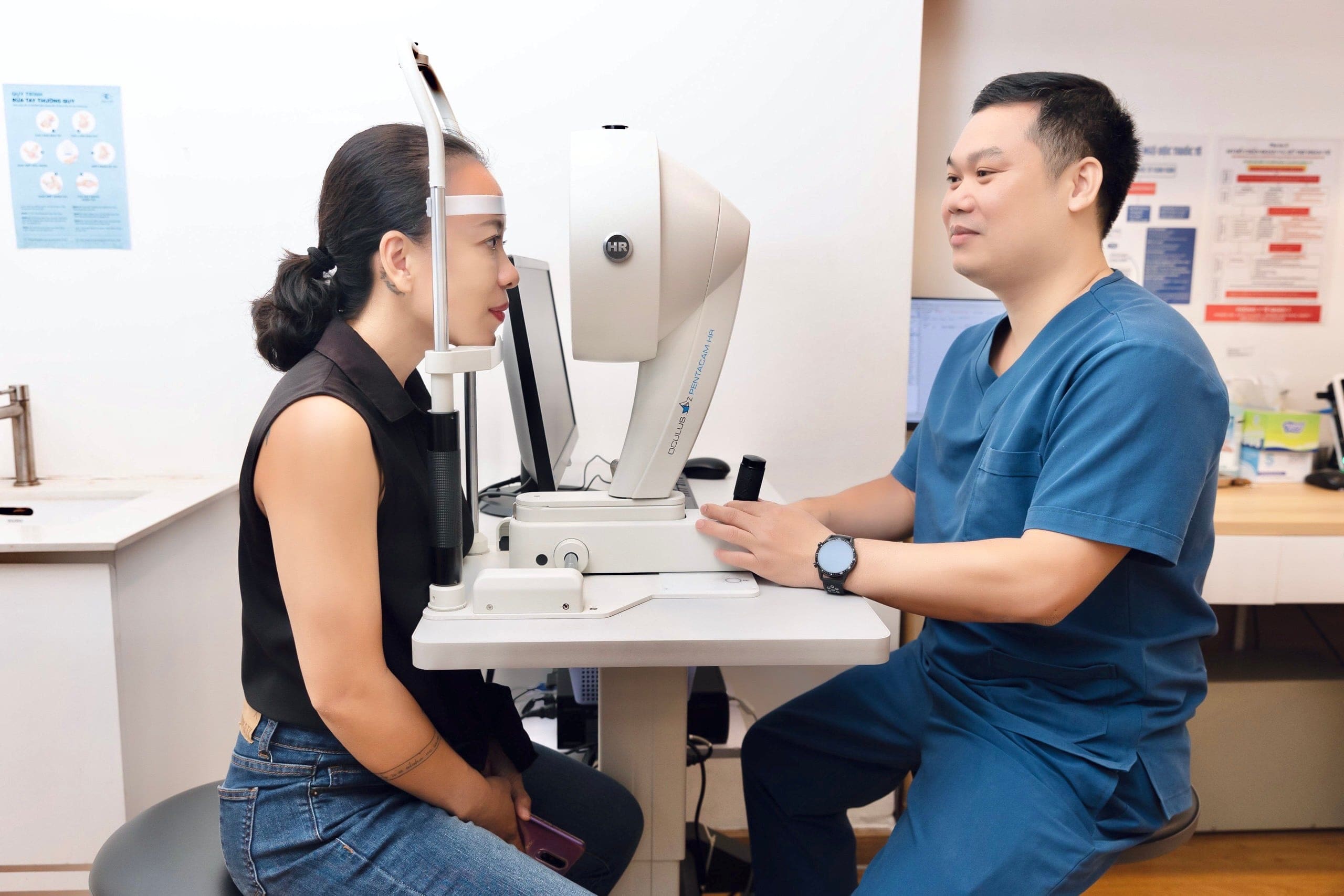
The comprehensive examination typically lasts around two hours. The doctor performs precise refraction testing, corneal topography, anterior chamber depth measurement, and endothelial cell density evaluation. Advanced imaging tests such as OCT and UBM ultrasound are used to assess eye structure and calculate the appropriate lens size.
After gathering complete diagnostic data, the doctor provides detailed counseling regarding indications, benefits, potential risks, and visual prognosis. The lens is then custom-ordered according to each patient’s specific parameters to ensure optimal accuracy.
The surgical procedure is performed gently in a sterile operating room. The eye is numbed with anesthetic drops, so the patient feels no pain. The surgeon creates a small incision at the corneal edge, inserts the folded lens into the eye, and carefully positions it behind the iris. Once completed, intraocular pressure and lens positioning are rechecked.
Patients can return home the same day and attend scheduled follow-up visits. Regular monitoring helps control intraocular pressure, check lens position, and ensure long-term visual stability. To determine whether Phakic ICL is suitable for your eye condition and to receive an accurate cost estimate, you should visit Hai Yen Eye Care directly for consultation with an ophthalmologist based on comprehensive examination results.

.svg) Hotline
Hotline Appointment
 https://haiyeneyecare.com/
 31A Nguyễn Đình Chiểu, Đa Kao Ward, District 1, Ho Chi Minh City
 Opening Hours

 30/09/2026





 0916.741.763