

 vi
vi 21-Dec-2025
 30,495
 Painless Surgical Methods

Top 3 painless surgical methods for myopia correction
Pain sensation has always been the greatest psychological barrier when people with myopia consider eye surgery, especially in cases of high myopia after many years of wearing glasses. In reality, with advances in ophthalmic anesthesia, microsurgical techniques, and modern equipment, most refractive surgeries today are considered “low-pain” or “nearly painless.” However, the level of comfort during surgery is not entirely the same across different methods, nor is it identical among different patient groups.
This article analyzes three refractive surgical methods that are commonly regarded as causing the least discomfort today. The focus is not only on intraoperative sensation, but also on preoperative and postoperative factors, anatomical characteristics of different eye groups, and long-term suitability, especially for patients with high myopia.
1. Phakic ICL
Phakic ICL as a painless surgical solution for myopia and astigmatism
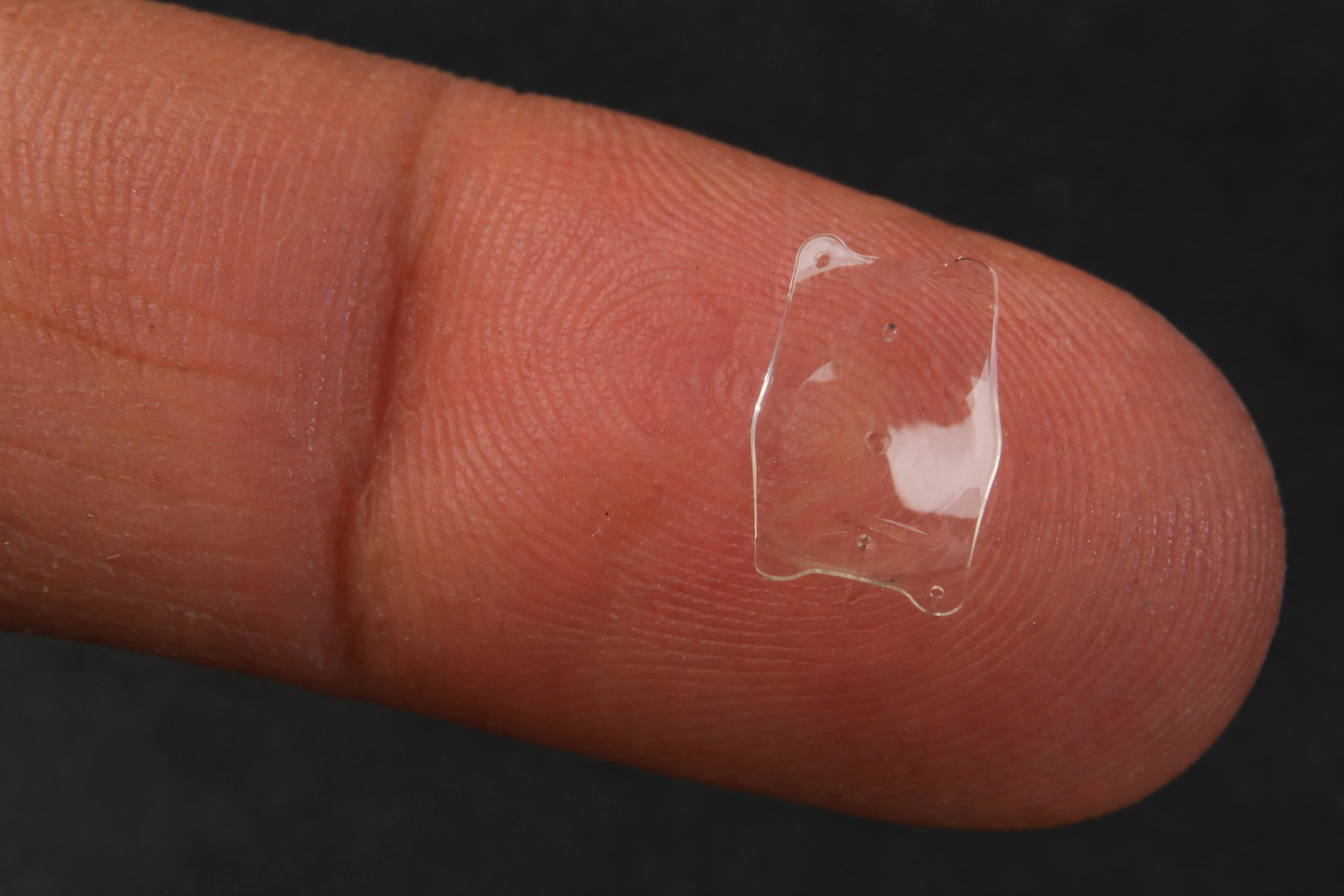
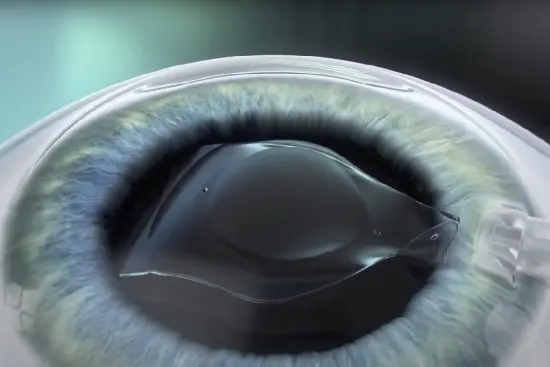
Phakic ICL is considered one of the least invasive methods currently available and is often mentioned when patients search for painless surgical solutions in myopia correction. Phakic ICL involves implanting an intraocular lens inside the eye, positioned behind the iris and in front of the natural crystalline lens. Unlike laser-based procedures, this method does not directly affect the cornea, which is the key reason it is often prioritized for patients with high myopia.
In terms of intraoperative sensation, Phakic ICL is performed under topical anesthetic eye drops. Throughout the lens implantation process, patients remain awake but generally do not experience pain in the usual sense. The most commonly reported sensations are mild pressure or brief foreign-body awareness as the surgeon operates within the anterior chamber. Because there is no corneal tissue ablation, postoperative stinging or surface irritation is typically less pronounced compared to laser refractive surgery.
Another important aspect lies in the postoperative period. Most Phakic ICL patients report relatively rapid and stable visual improvement, along with a lower incidence of prolonged dry eye and other complications. This is particularly meaningful for individuals with high myopia, who already have a higher risk of dry eye due to long-term contact lens use or inherently sensitive corneal structures.
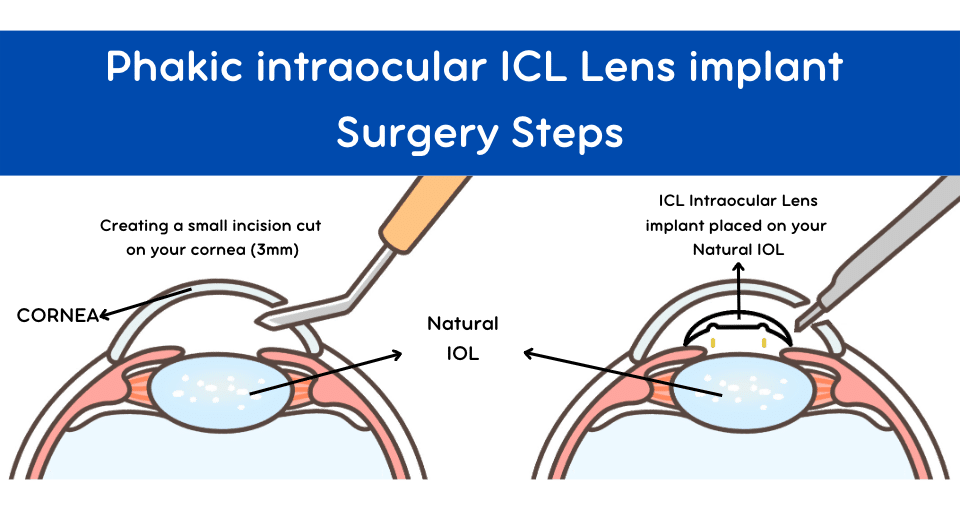
Steps of Phakic ICL surgery
From a clinical perspective, Phakic ICL is not suitable for every patient. Indications depend on anterior chamber depth, endothelial cell density, and overall ocular health. Nevertheless, in patients with high myopia, thin corneas, or those unsuitable for laser surgery, this approach often provides a balanced combination of visual effectiveness and a relatively gentle surgical experience.
Phakic ICL costs at selected reputable centers
| Hospital / Center | Estimated cost (both eyes) |
|---|---|
| Saigon Eye Hospital Can Tho | ~90–110 million VND |
| QT 3P Hikari Eye Center | ~90–110 million VND |
| Saigon Eye Hospital Ngo Gia Tu | ~95–120 million VND |
| Japan International Eye Hospital | ~100–130 million VND |
| Vietnam – Russia Eye Hospital | ~90–115 million VND |
| Hai Yen Eye Care Center | ~85–105 million VND |
Costs may vary depending on the type of lens and individual eye conditions.
2. SMILE
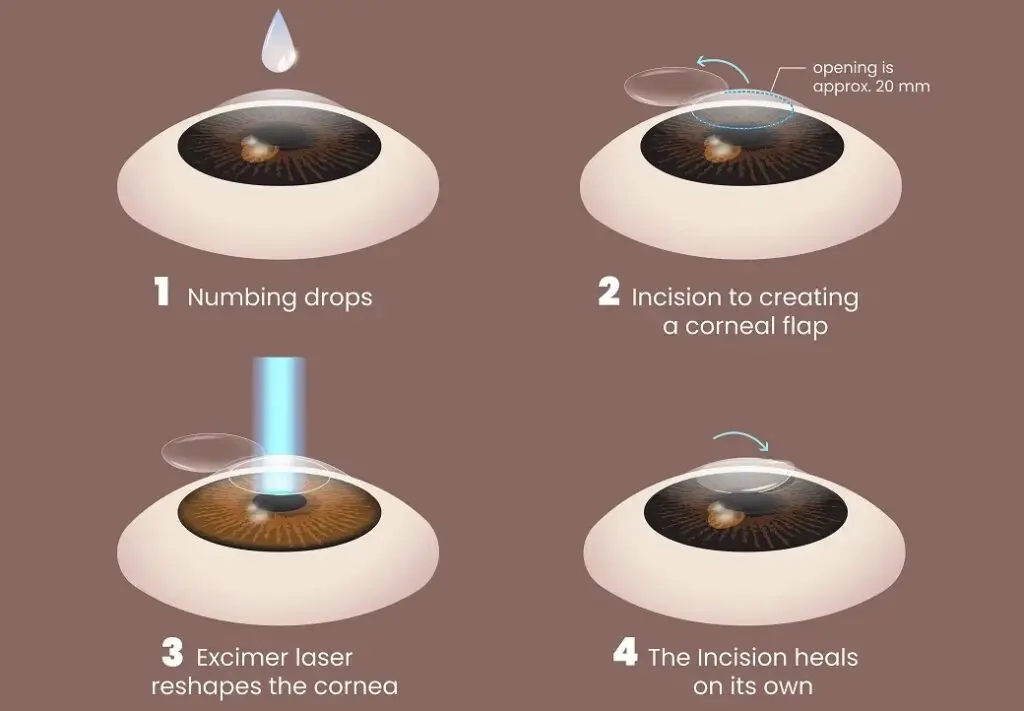
Steps involved in SMILE surgery
SMILE is regarded as one of the least invasive laser-based refractive procedures currently available. This technique uses a very small incision to extract a lenticule from the corneal stroma, thereby reducing the impact on the corneal surface compared to traditional LASIK.
Regarding intraoperative sensation, SMILE is generally considered quite comfortable. Topical anesthesia allows patients to experience little to no pain, with only mild pressure felt for a short duration. After surgery, sensations such as foreign-body awareness or light sensitivity may occur, but they usually subside within a few days, aligning with the expectations of those seeking painless surgical options.
However, when SMILE is considered in the context of high myopia, a cautious approach is necessary. SMILE yields optimal outcomes in cases of mild to moderate myopia. With higher degrees of myopia, a greater volume of corneal tissue must be removed, increasing the requirements for corneal thickness and quality. Only eyes with particularly favorable corneal characteristics are considered suitable, and even then, indications remain selective.
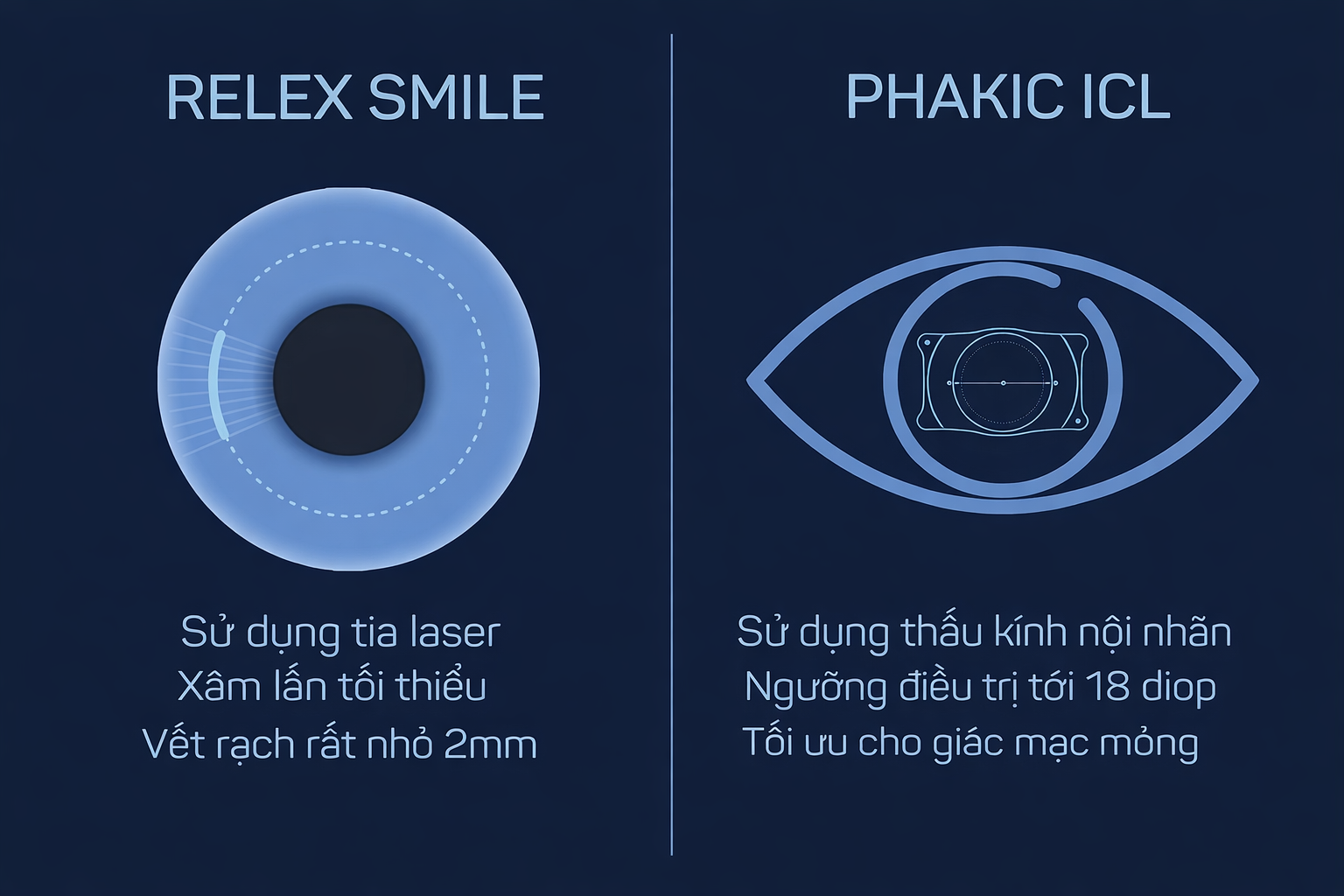
Comparison of characteristics between PHAKIC ICL and RELEX SMILE
Therefore, while SMILE is not an impossible option for high myopia, it is clearly not a universal choice. The perceived comfort during surgery must be carefully balanced against long-term corneal structural safety.
In terms of surgical cost, SMILE generally falls within the mid-range among current refractive procedures, with typical costs ranging from 50–70 million VND. This cost level is influenced by several factors, including the generation of laser technology used, the surgeon’s experience, and the clinical standards of the medical facility.
3. LASIK
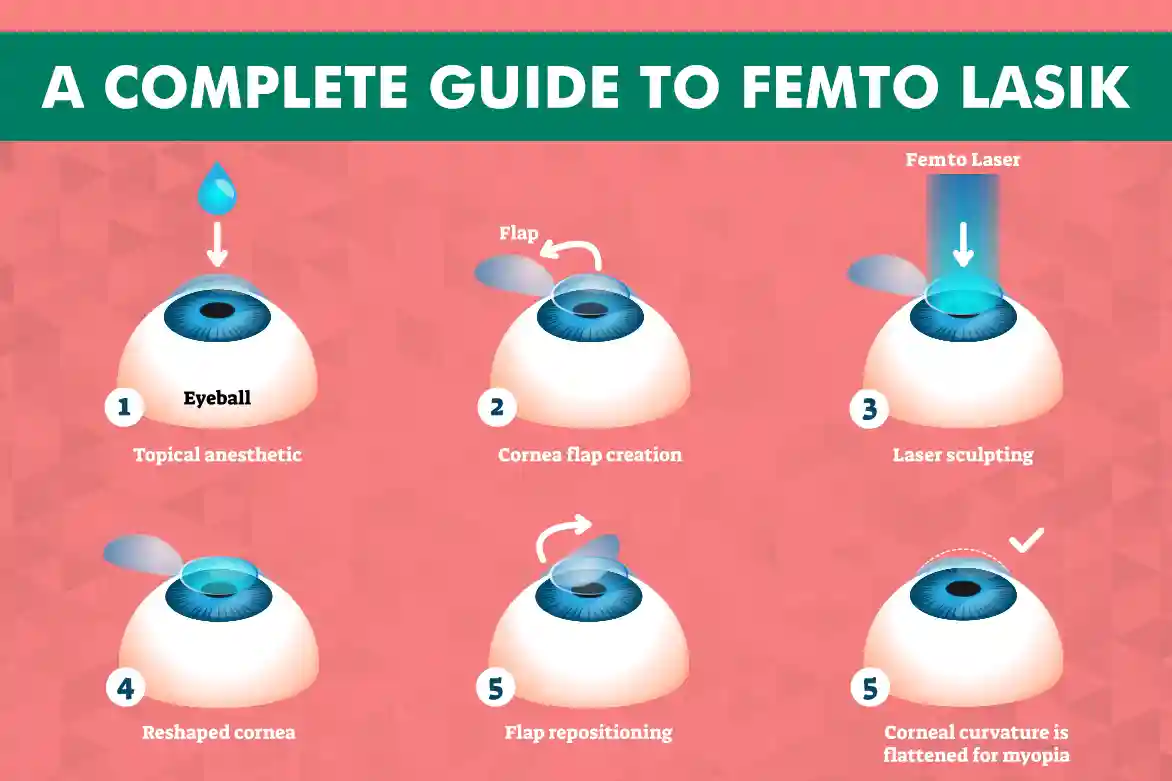
Steps involved in FEMTO LASIK surgery
LASIK has been widely applied in refractive surgery for many years and is often categorized among painless surgical techniques thanks to modern femtosecond and excimer laser systems. With appropriate anesthesia, intraoperative pain during LASIK is generally well controlled, and most patients do not experience true pain, only brief sensations of pressure.
Nevertheless, LASIK directly alters the cornea by creating a flap and ablating stromal tissue. In patients with high myopia, the amount of tissue removed increases substantially, making outcomes more dependent on baseline corneal thickness. Postoperatively, symptoms such as dry eye or mild irritation may persist longer than with SMILE or Phakic ICL, particularly in individuals with preexisting corneal sensitivity. Thus, although LASIK may be considered painless during the procedure itself, the postoperative experience requires careful consideration.
Regarding cost, LASIK is considered the most accessible option among common refractive surgery techniques. The cost of LASIK varies depending on the specific technique applied, such as standard LASIK (15–35 million VND) or Femto LASIK (35–50 million VND), as well as the technology platform and postoperative care provided by each surgical center.
As a result, LASIK is not routinely indicated for certain cases of high myopia, and is only considered when safety parameters are met and patients have been thoroughly counseled regarding both benefits and limitations.
Overall comparison of the three methods
| Criteria | Phakic ICL | SMILE | LASIK |
|---|---|---|---|
| Corneal impact | None | Yes, low degree | Yes |
| Suitability for high myopia | High | Selective | Selective |
| Pain sensation | Very low | Low | Low to moderate |
| Postoperative dry eye | Rare | Low | More common |
| Dependence on corneal thickness | No | Yes | Yes |
| Cost | High | Moderate | Lower |
In current ophthalmic practice, the concept of painless surgery should be understood in a relative and scientific manner. The goal of modern techniques is not to eliminate all sensation during intervention, but to minimize discomfort through appropriate anesthesia, precise microsurgical techniques, and proper selection of methods based on individual ocular structure. This combination ultimately determines the level of comfort experienced by patients.
There is no refractive surgery that is “absolutely painless” or “optimal for every case.” Surgical experience is the combined result of technique, anesthesia, ocular anatomy, and patient psychology. Most importantly, comprehensive examination and direct consultation with an eye specialist are essential to selecting the most appropriate method.
 08/01/2026










 0916.741.763
 Appointment